
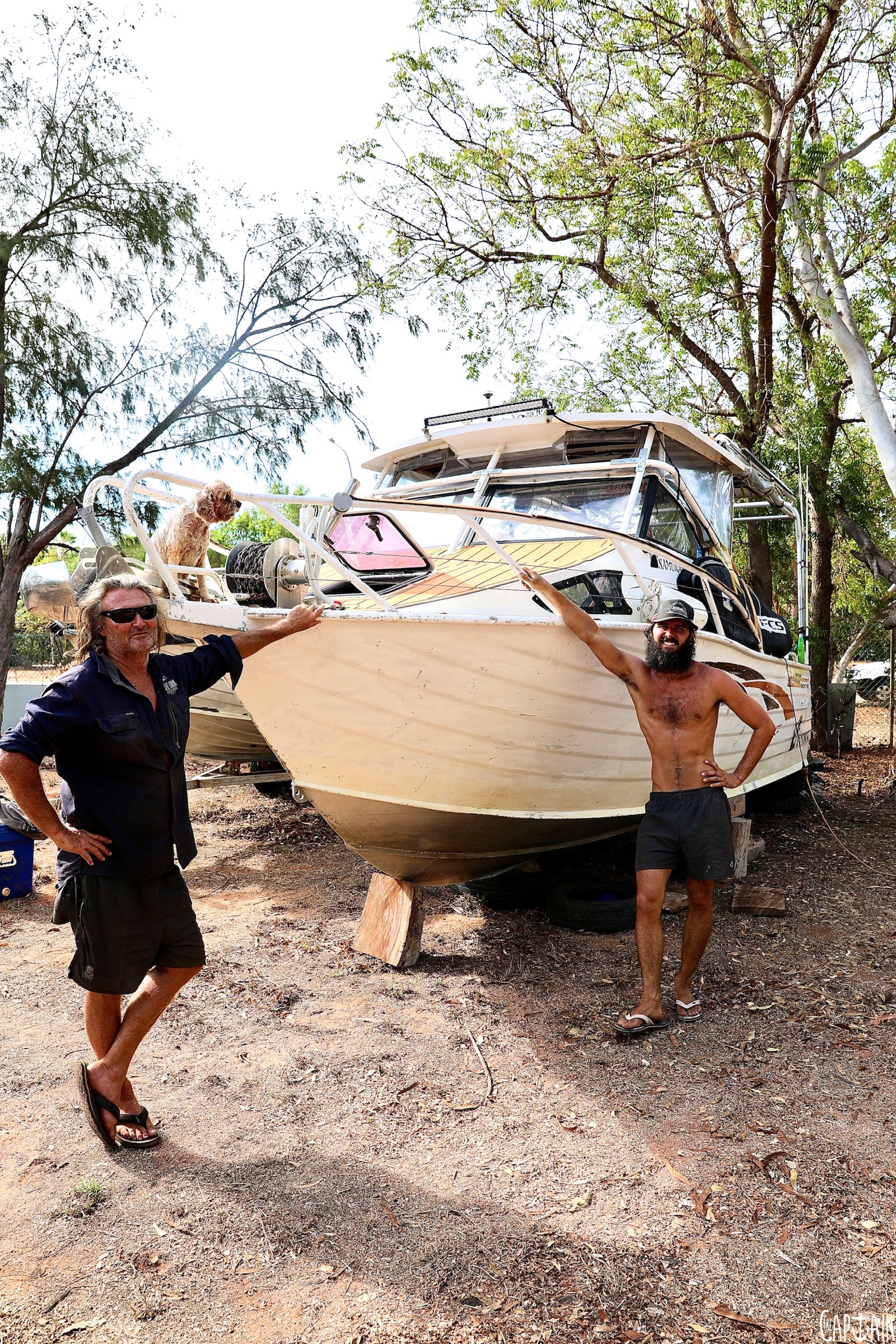
Last year, this father-and-son crew did half a lap of Australia in a 6.6m boat, from Tweed Heads to Broome. Despite a few mishaps, reduced beer intake and personal hygiene issues, they survived to tell the tale.
And what a tale it is. The Captain’s always been a fan of gonzo boat voyages, but this one takes the meat tray. Port to port, east to west, 16,000km at sea. From Tweed Heads NSW to Broome WA, around the pointy end, in 182 days. In a (mostly) floating caravan.
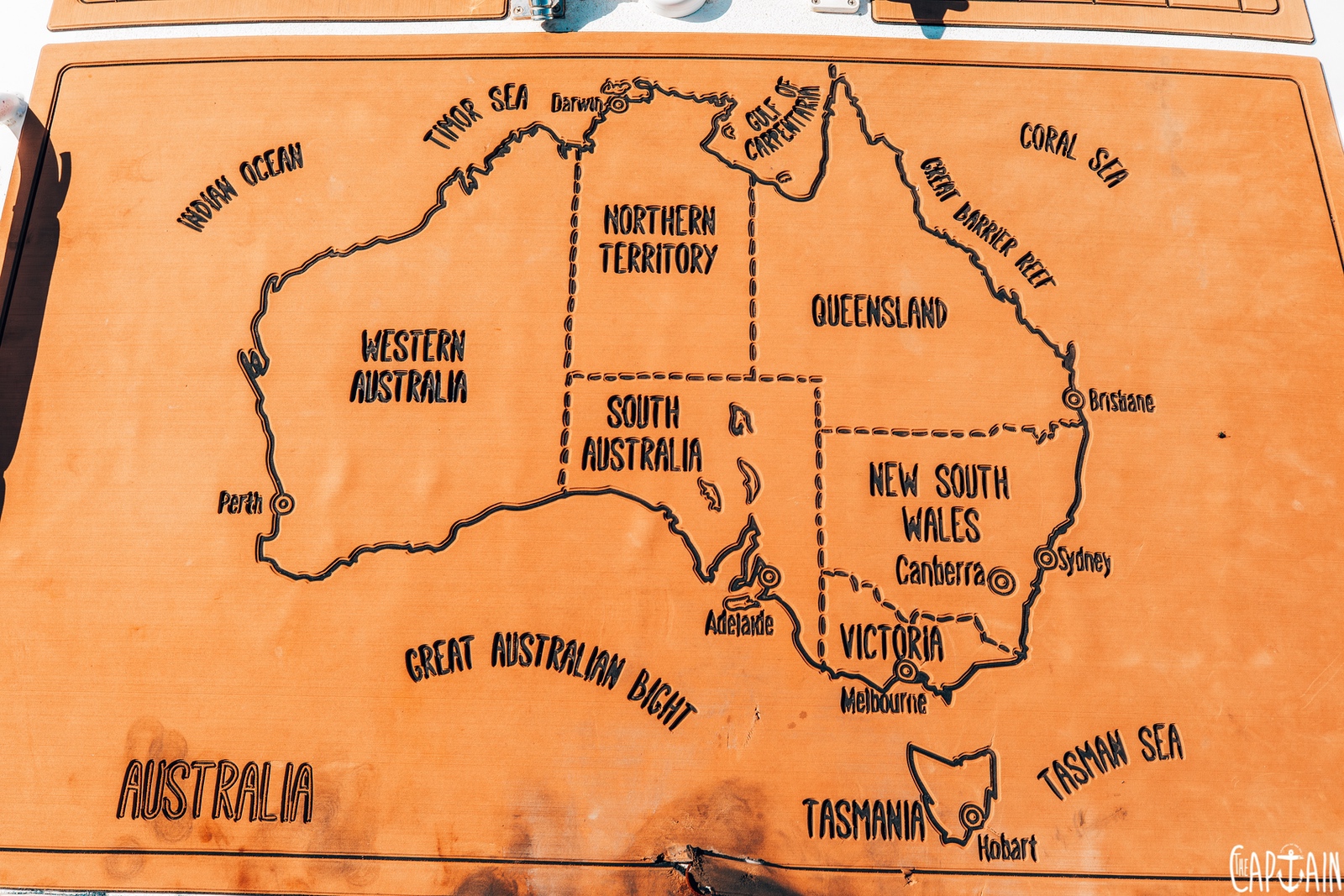
We catch up with Jackson Coffey back home in Tweed Heads. He gives us the drum on a fully sick mate trip with his old man aboard their trusty Trailcraft.
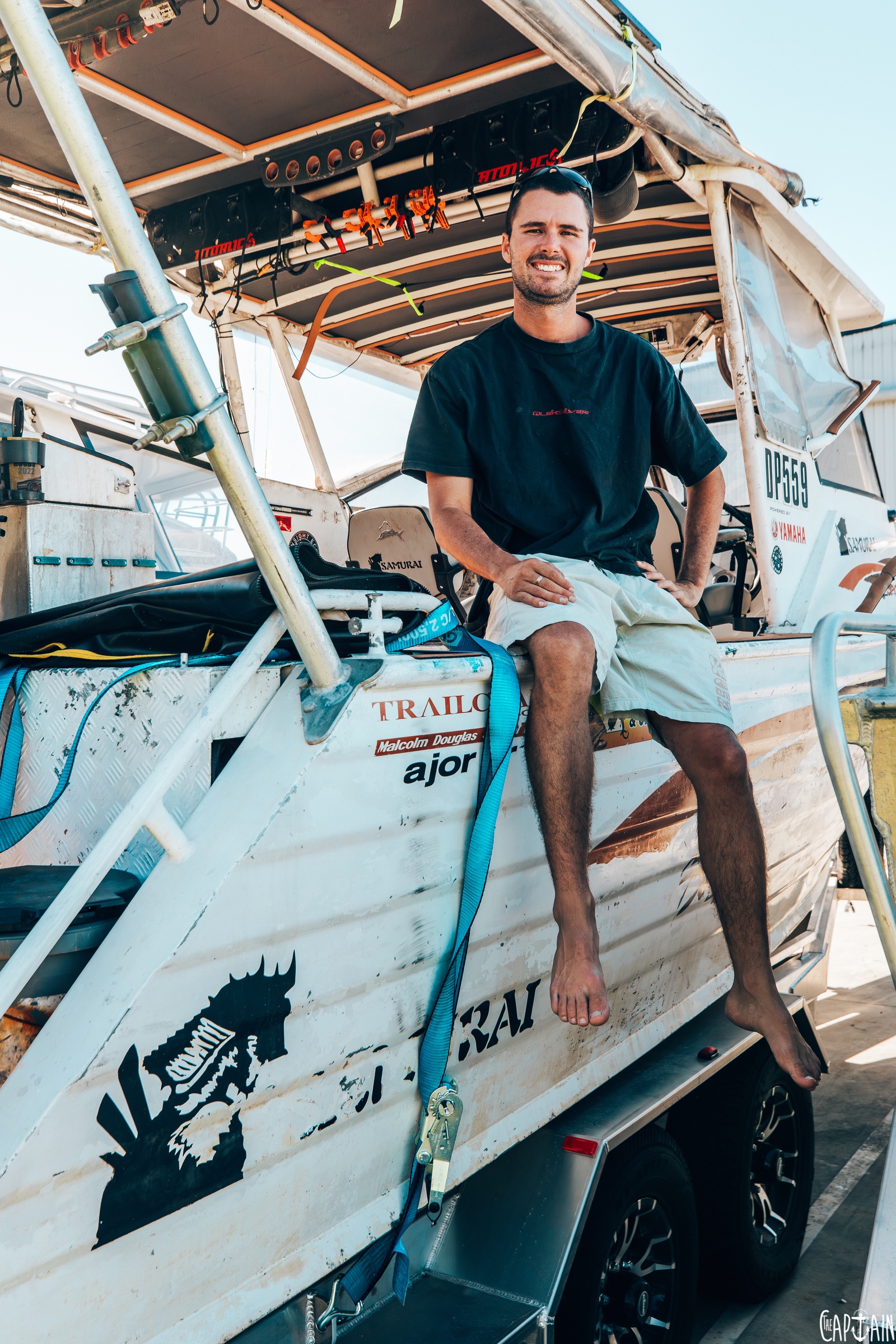
Turns out Jacko’s dad, Jason, is to blame for his itchy feet. “He was a brickie in Sydney, but sold up everything and we chased moments and memories, travelling around for 15 years in buses, caravans, troop carriers — just living a gypsy lifestyle.”
These days, Jacko is known more for his YouTube adventure channel. It wasn’t always so. “I honestly don’t know what I am anymore,” he laughs. “I was paid to surf for a while, but I’ve stumbled into being a YouTuber guy.”
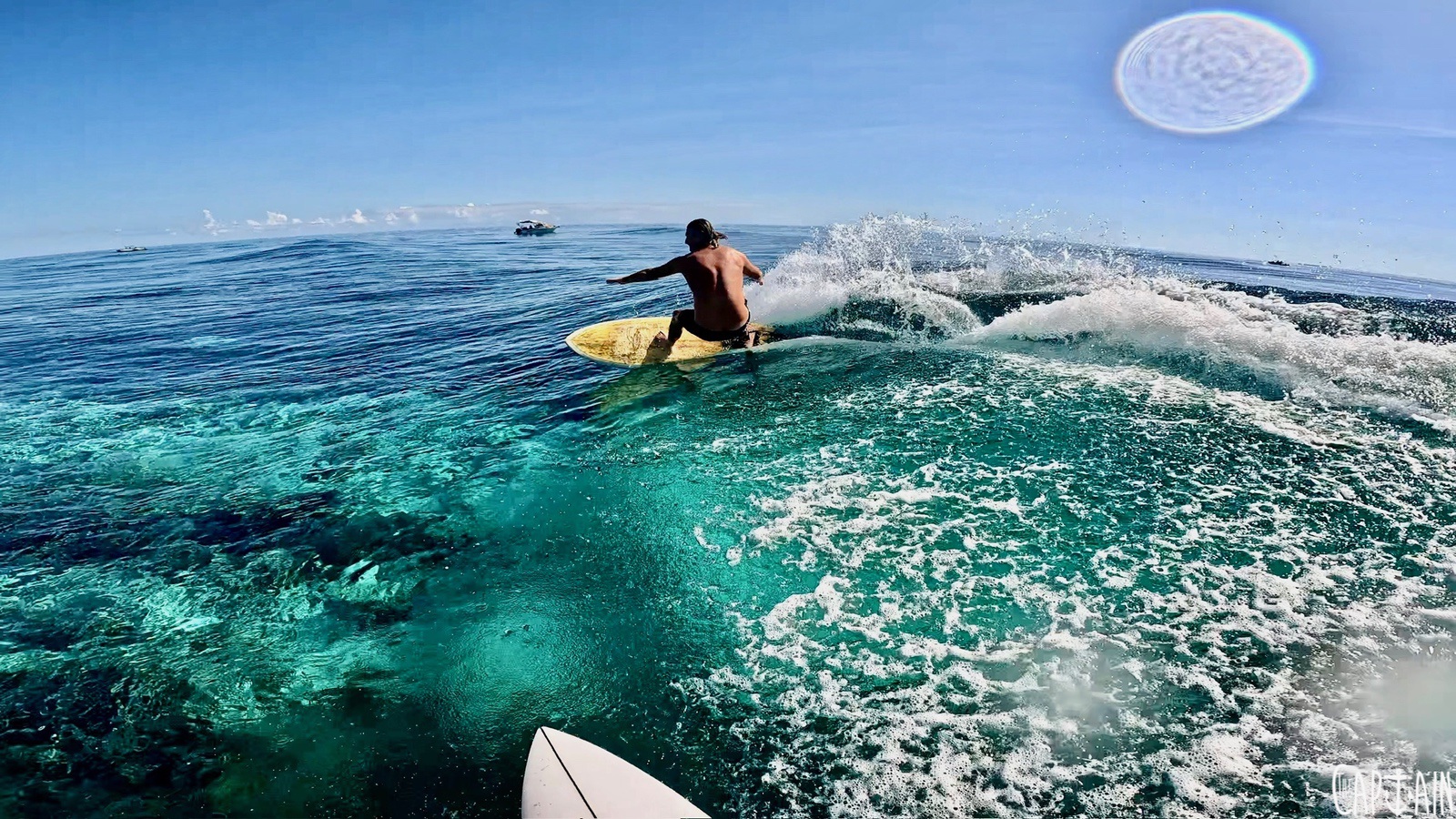
His love of fishing started young, before his grommet period. “I was obsessed with fishing as a kid, but was actually terrified of the ocean until about 11,” he recalls. “Once I started surfing, I became obsessed with that. I wanted to chase the tour and become a pro, travelled all across the globe and was paid to free surf. But I got dropped by my sponsors when I was 20.”

When those sponsorships disappeared, Jacko stacked bricks to pay the bills, but his passion for fishing remained. “I was posting fishing clips on Instagram, then started my YouTube channel. None of it was planned, it just happened.”
BIG TRIP BEGINNINGS
According to Jacko, the idea for the big trip came from the fertile mind of his nomad dad. “In 2024, we did all the islands from Esperance up to Broome, then went around the top to Lizard Island,” he explains. “But doing it like we did, taking the car and the boat, cost us heaps. Then Dad said we should drive the boat from Tweed Heads to the tip (Cape York). I figured we might as well head to Broome because my car and tinny were already there from the year before.”

There wasn’t much, er, planning involved. “We came up with the idea in January and left in April. We’d never talked about a trip like this before. It was just, OK, let’s get a few things on the boat and go.”
Knowledge of the coastline they planned to follow was also rudimentary. “We had literally none,” Jacko admits. “I’d been out to Percy and Lizard islands, but that was it for that whole coastline north of Tweed Heads. When we left, I had a gauge on how to get to 1770 and that’s how we did it the whole way around. We’d figure out how to get from spot to spot, mostly going off the weather.”
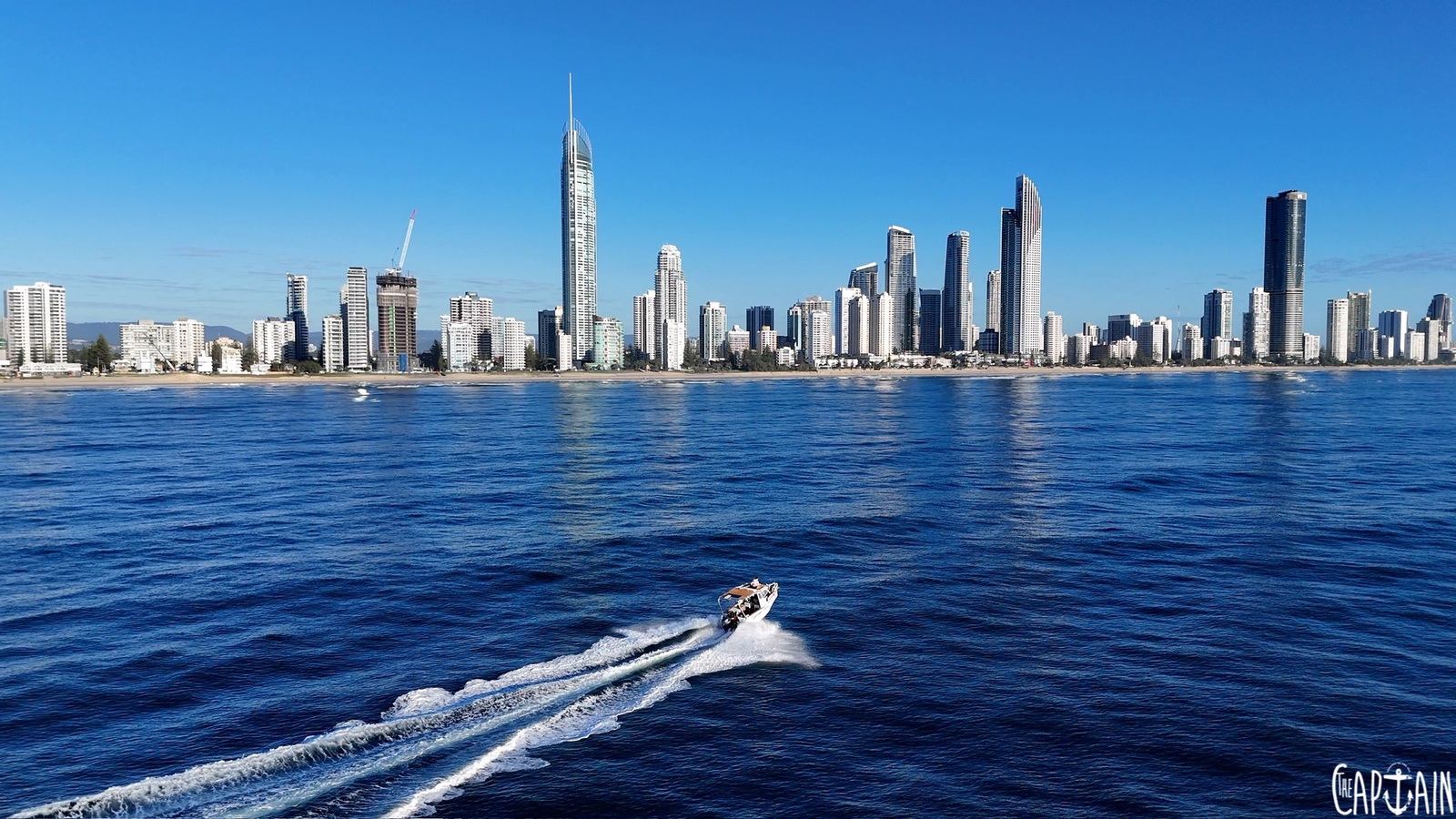
Weather-wise, the Coffey crew left Tweed Heads at the worst possible time. “It was the worst time of year for the east coast, but for the rest of the trip, it was the best time,” he laughs. “We had to brute force through that first two months along the east coast. We got lucky with a two-week period on the reef when we left 1770 for Townsville — nearly 1200km of glass on that stretch.”
IN THE WAKE OF A LEGEND
Meeting the grandson of legendary crocodile hunter and pioneering wildlife filmmaker Malcolm Douglas was a voyage highlight. “He was my idol as a kid.
In his videos, he showed what was possible and gave us ideas about adventures we could have around Australia. The last two weeks of the trip, cruising next to his grandson Owen, in Malcolm’s last boat, was a crazy way to end the voyage. If Malcolm was looking down on us, I hope he was stoked.”
ALL ABOARD
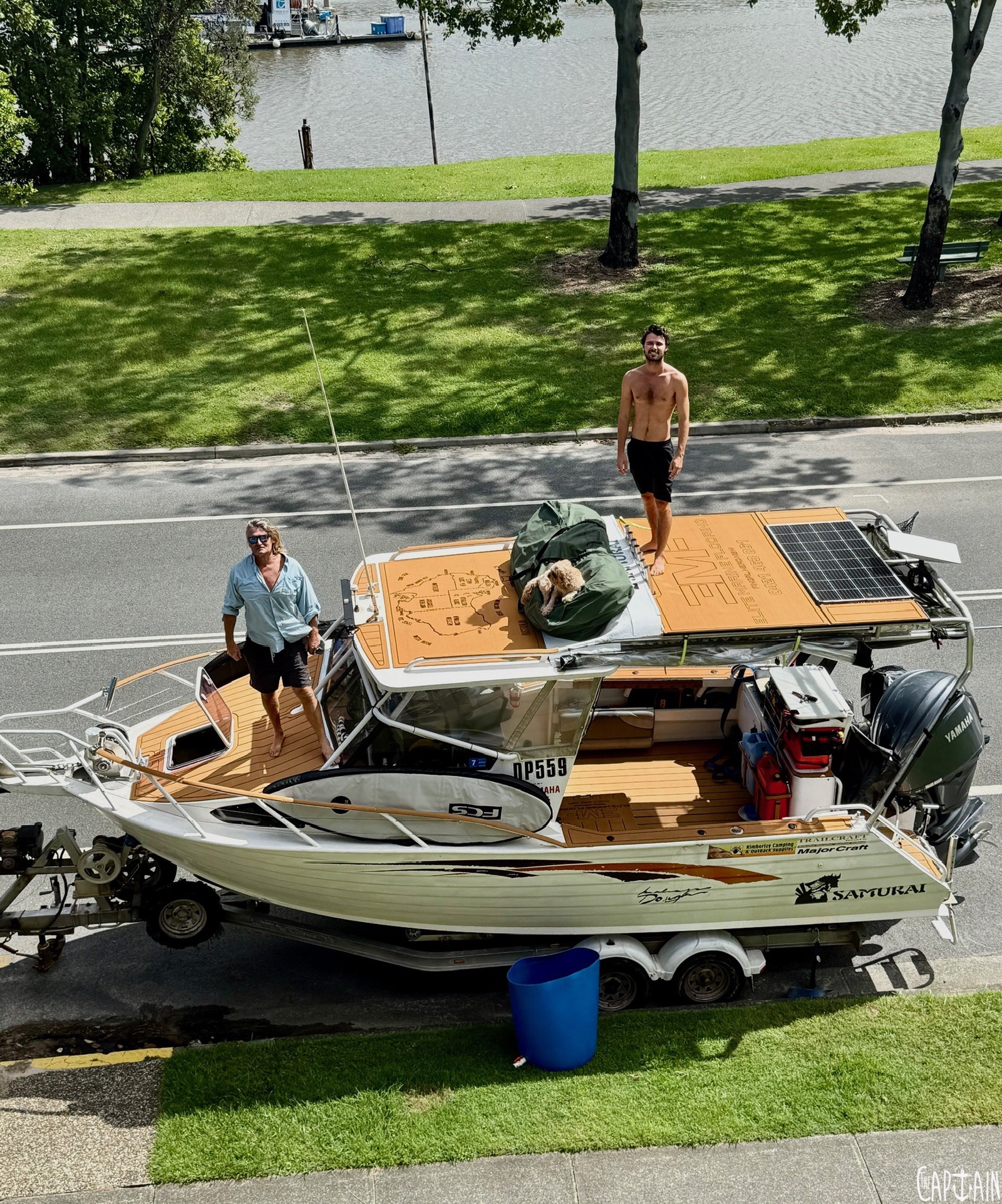
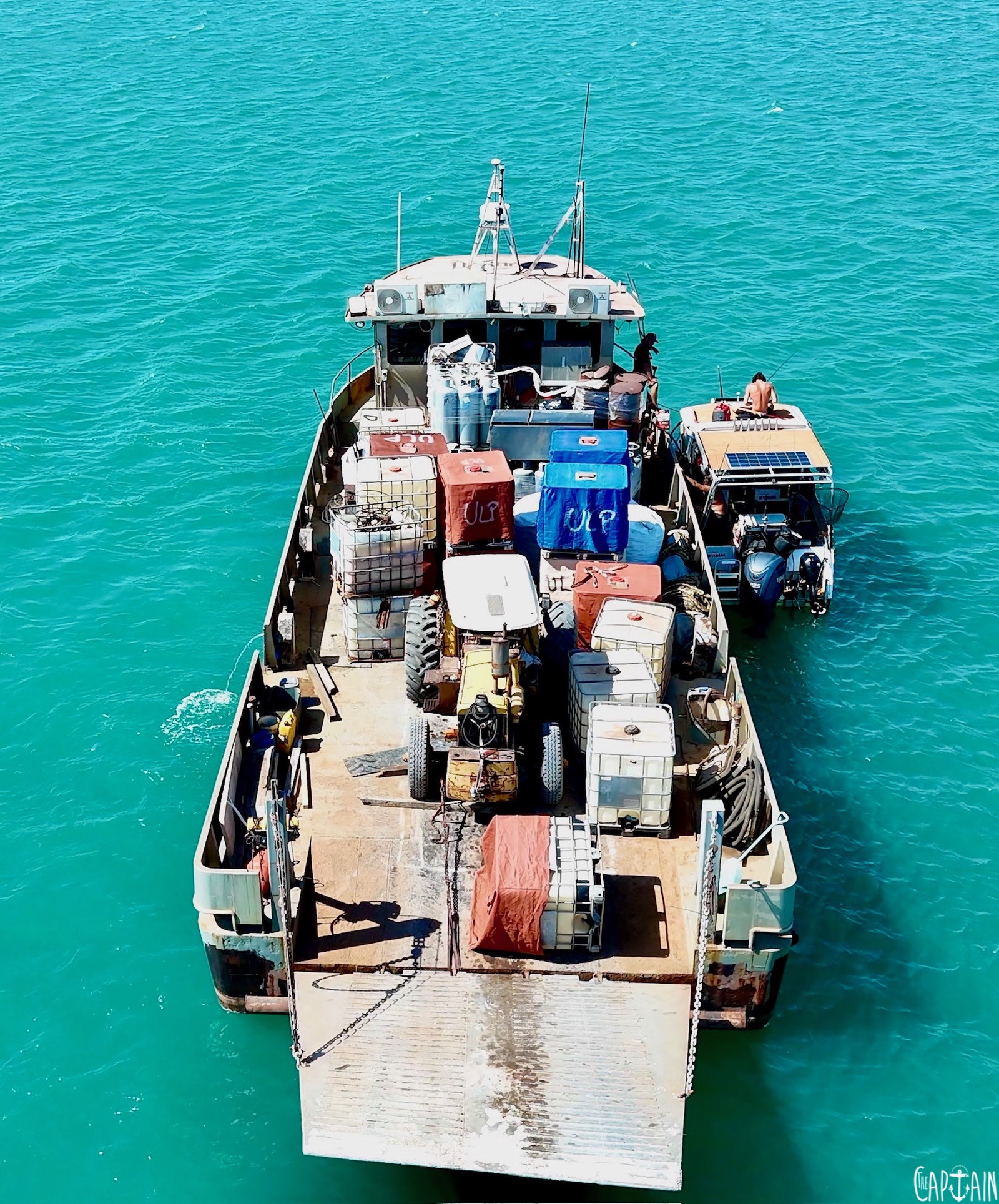
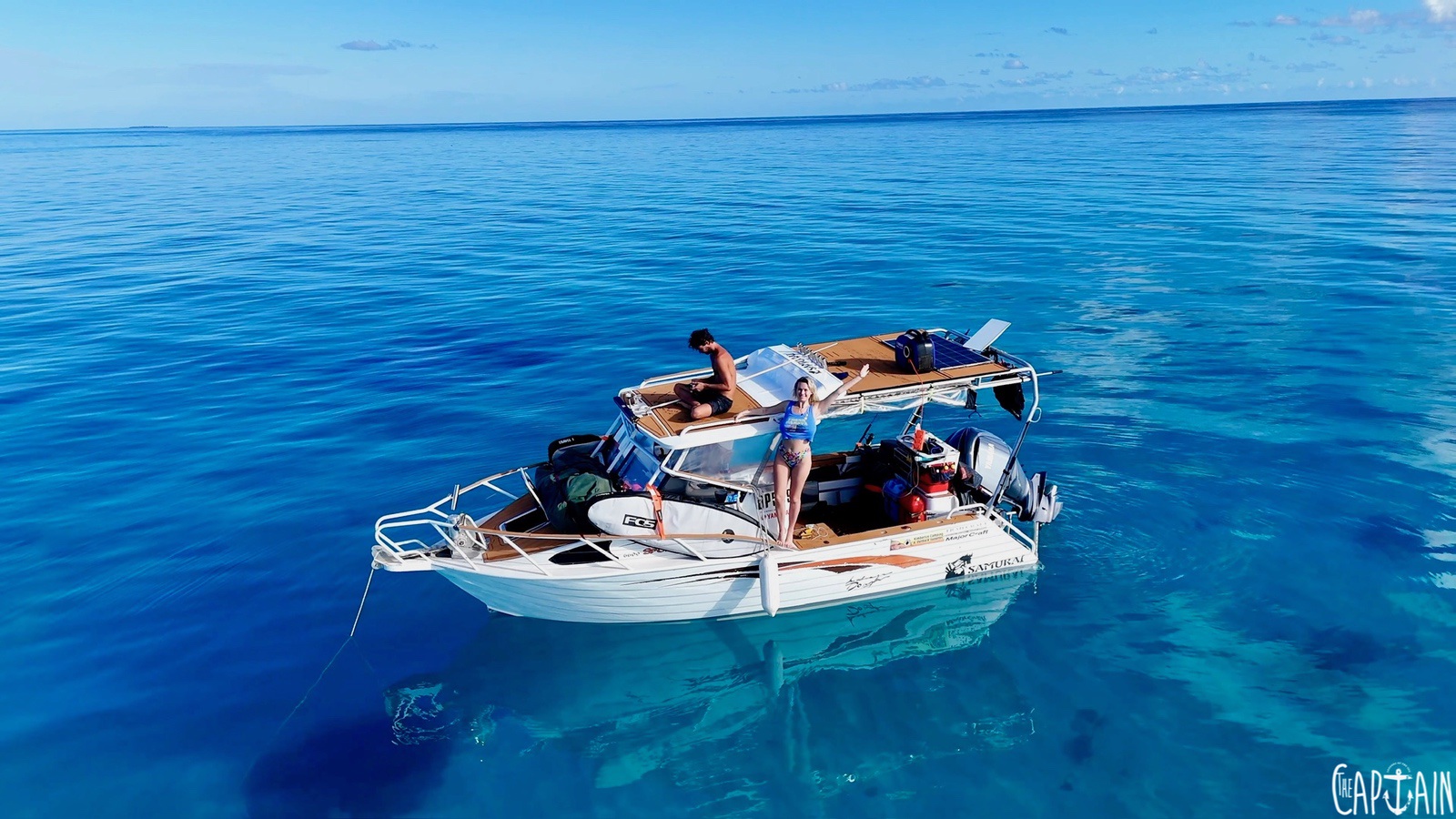
The Trailcraft belongs to Jacko’s sister and his dad. It had proved capable of offshore missions of 300km-plus, but Jacko knew it needed a bigger fuel tank and a few other mods for a voyage halfway round the continent.
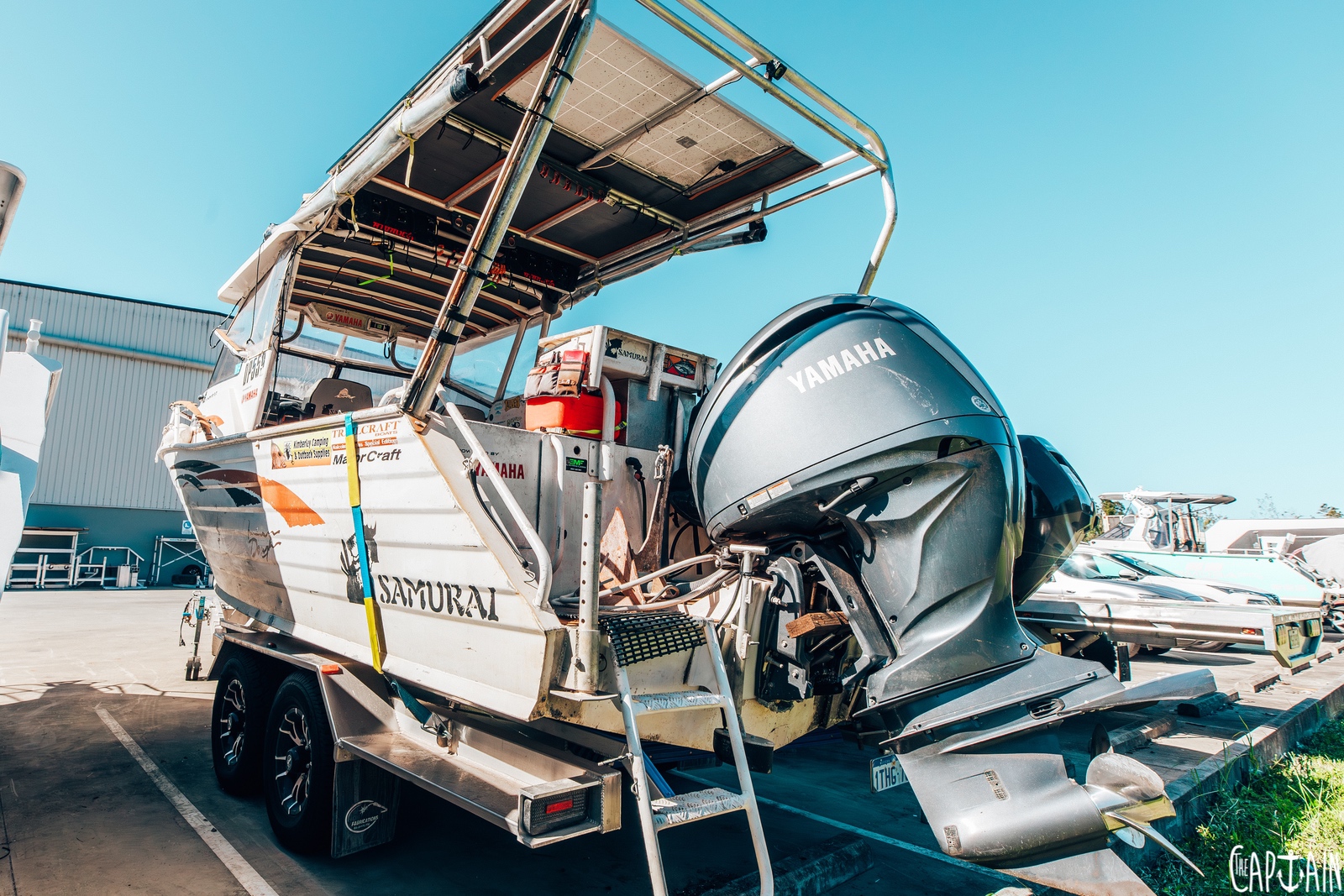
Reefrunner Boats and North East Fabrications in Chinderah came to the party. They also put foam in the floor, replaced the Perspex and installed Elite marine flooring. “That was huge, because the original rubber floor was gross,” he says. “Now, we can clean it off and it dries fast.”

Power came courtesy of two deep-cycle batteries to run the engine, fans, lights and phone chargers, plus a lithium Adventure Kings BatBlock with a rooftop solar panel to spark the fridge. “It’s a bit of a rogue set-up, but it worked because it’s always sunny up north,” Jacko laughs.
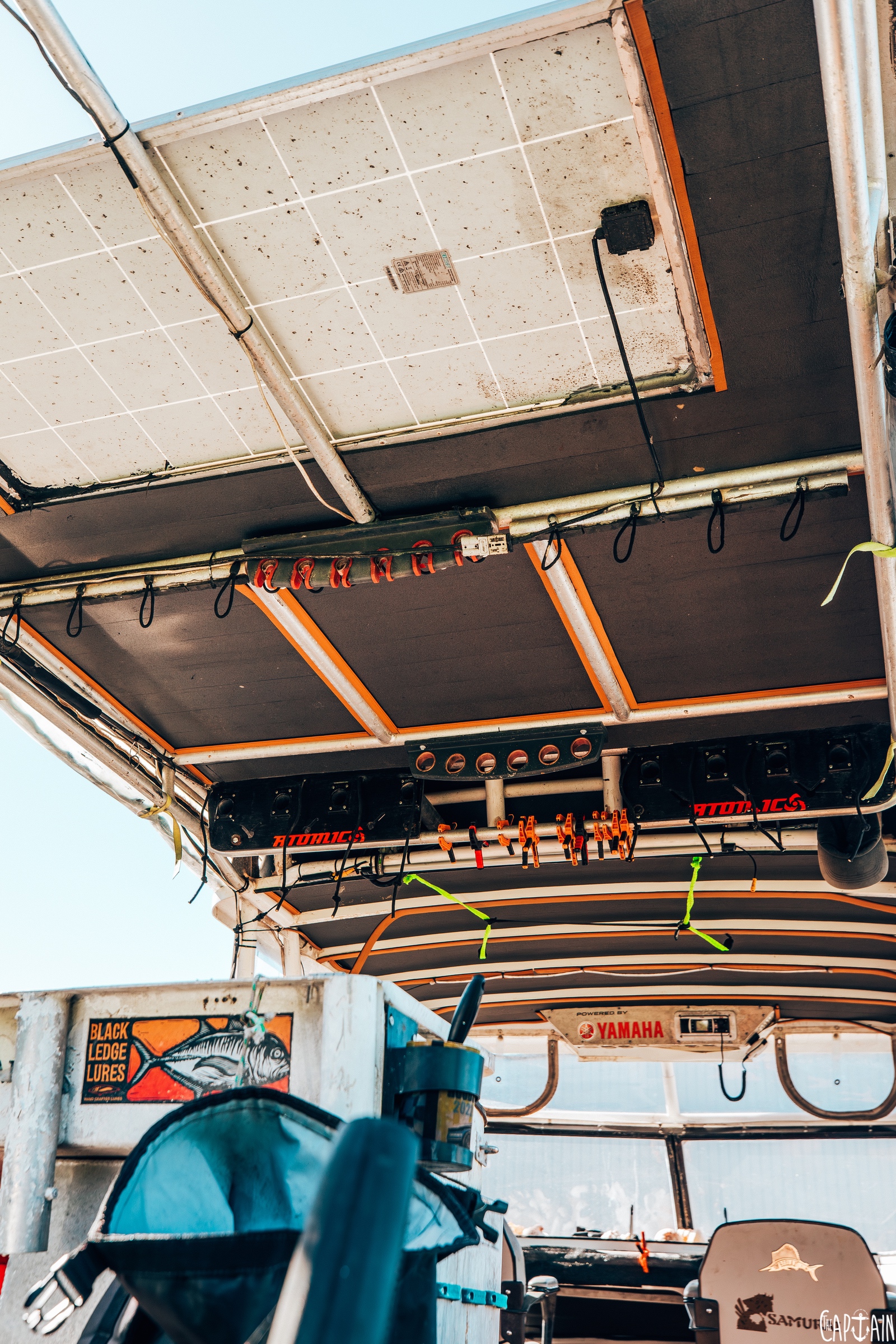
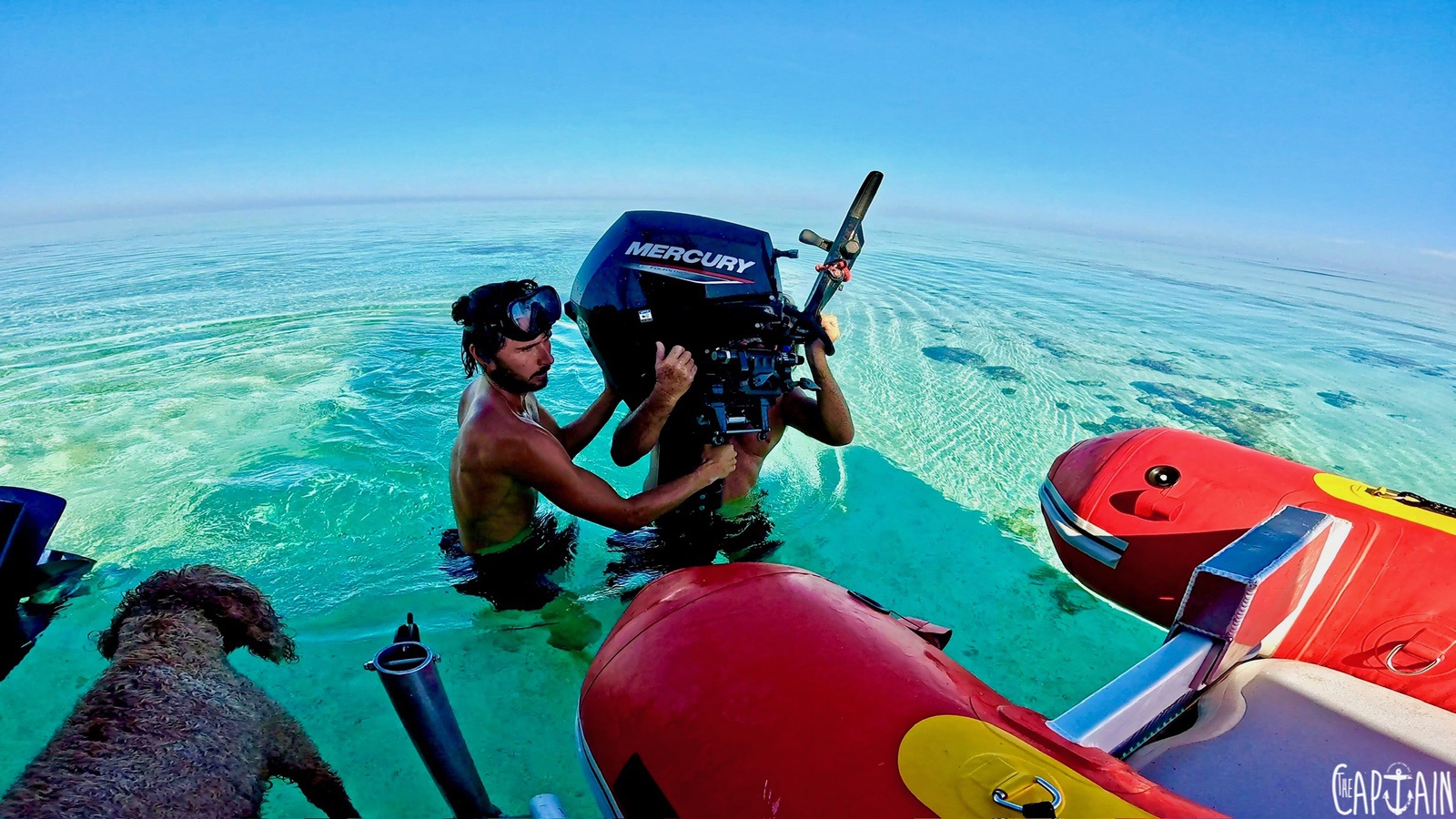
Other last-minute bolt-ons included a Lowrance TM275 transducer with an adjustable mounting bracket, a Savwinch anchor winch and a 15HP Mercury get-out-of-trouble motor.
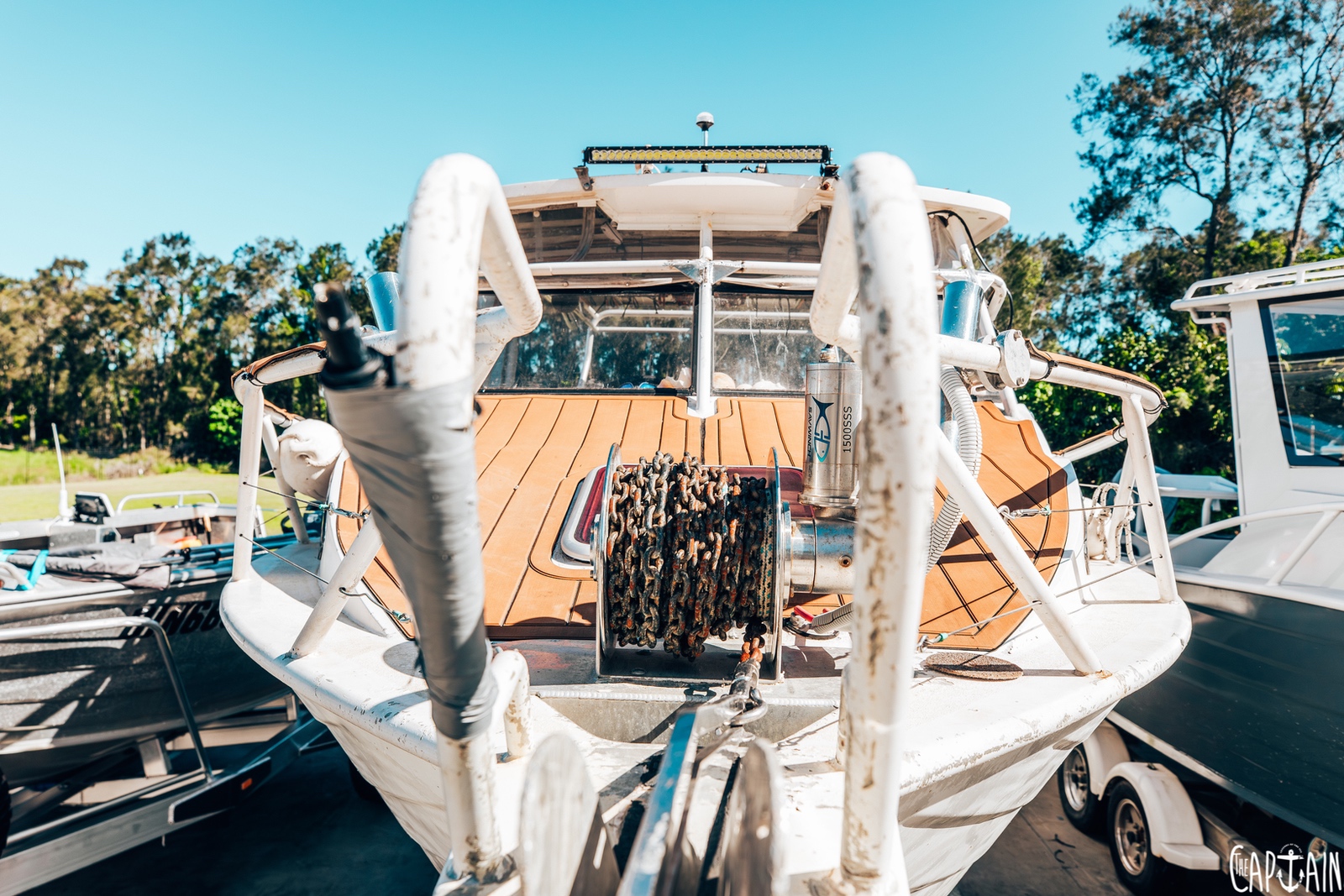
“That was Dad’s idea,” Jackson recalls. “We initially just wanted to save on fuel and didn’t rate it as a safety device until it saved our arses on two occasions. At times, we were 600–700km away from any help, so knowing if one motor broke down, at least we had the little one as insurance was reassuring.”

A Starlink connection was invaluable for Jacko to pump out his weekly video uploads, but he also packed a Garmin inReach as Starlink is only fully reliable within 20km of a land mass.
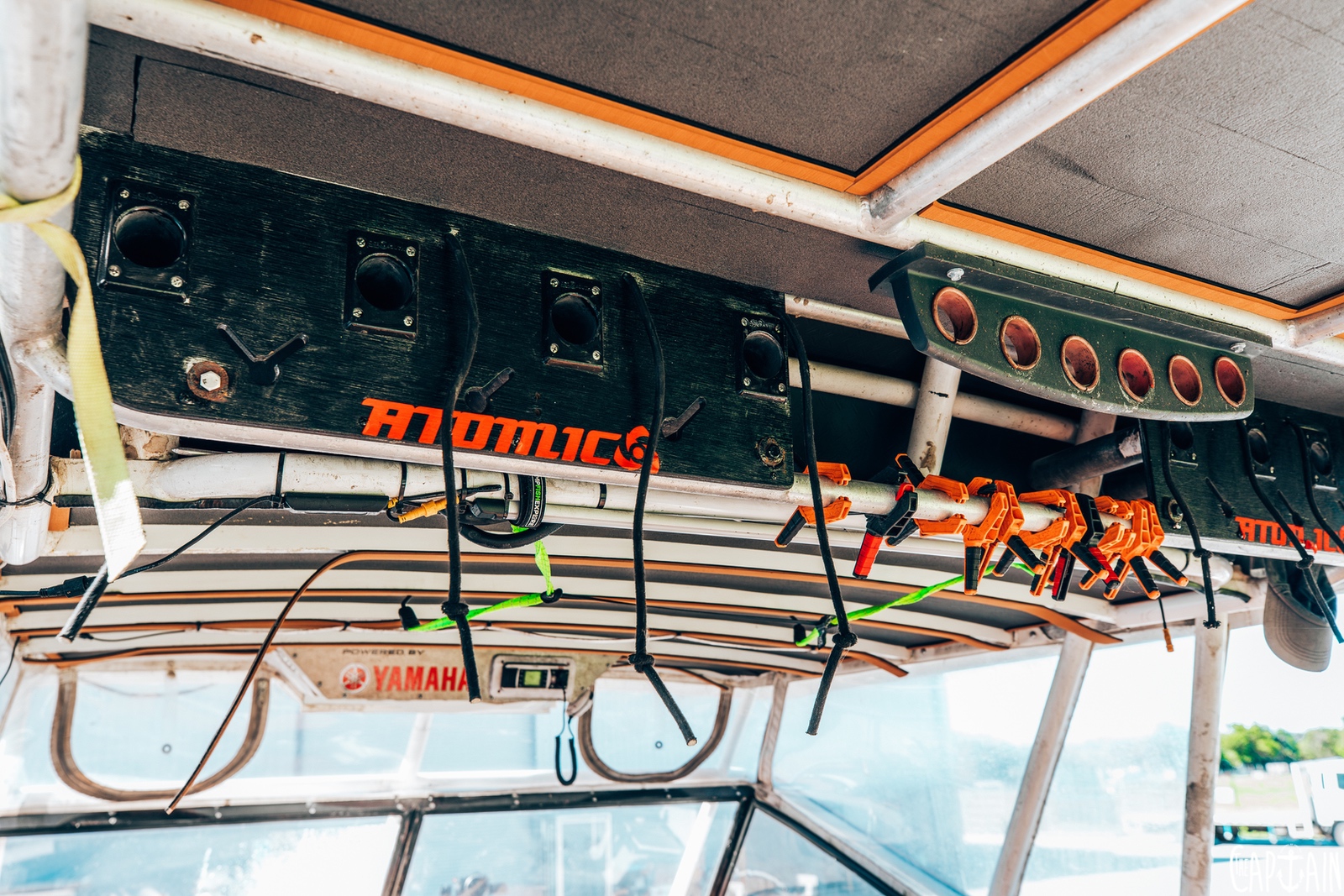
Safety gear included life jackets, flares, EPIRB — plus surfboards. “I can paddle a long way on a surfboard,” he says.
WHAT’S FOR DINNER?
With the freezer stacked with steak and chicken, and vegetables lasting only a few days, the menu got monotonous. “It wasn’t a lavish trip where we were cooking up nice feeds, there’s not enough room to store those luxuries,” Jacko says. “We had heaps of wraps — I never want to see a wrap again in my entire life — and I’d have fish two nights a week, max.”
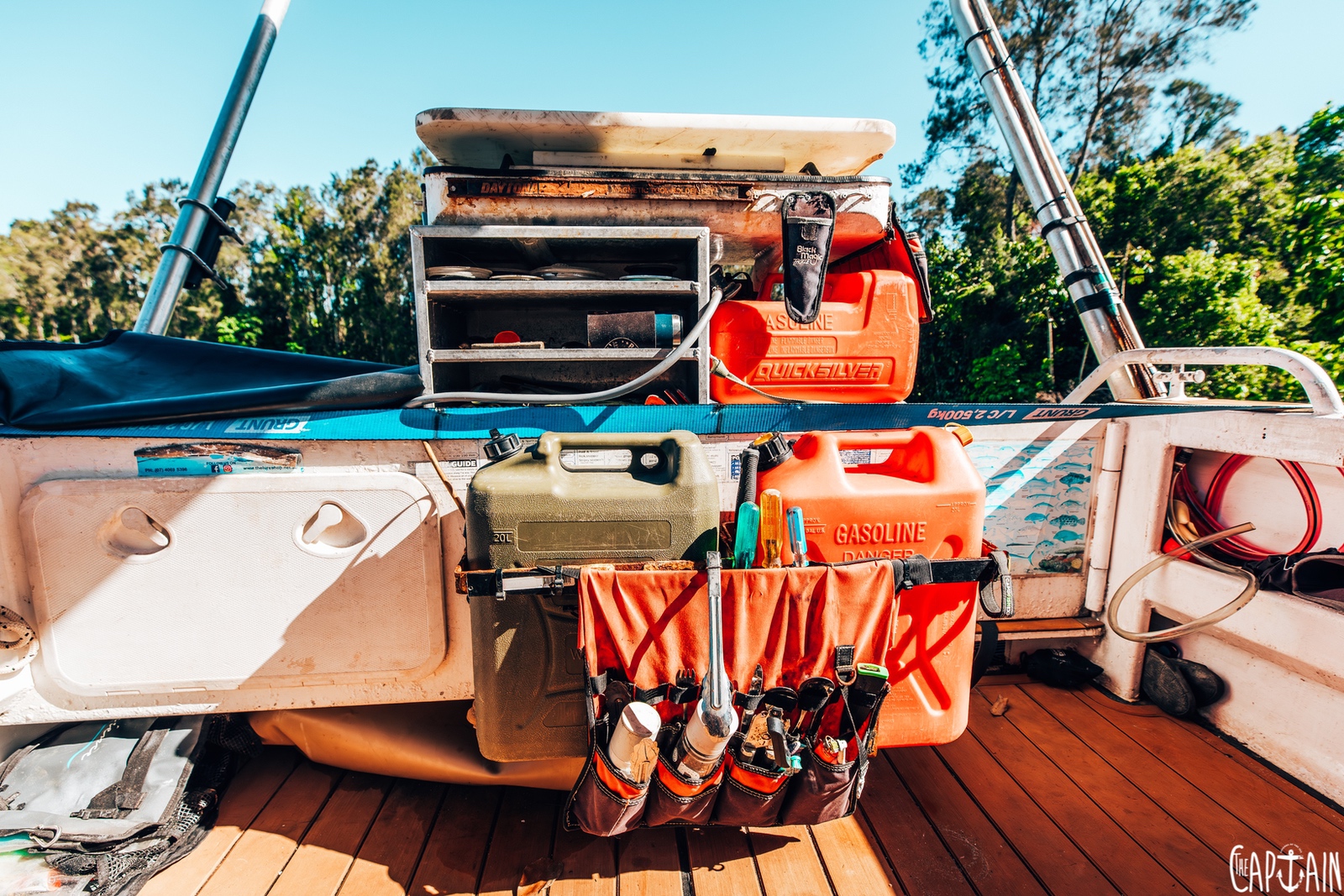
Fishing played a big part in the original “plan”, but reality got in the way. “I didn’t fish as hard this year as in previous years because it turned into more of a survival trip,” he says. “Storage was always a problem. I’d catch a fish and unless it was something like a barra that I could release, there was nowhere to store it. I lost a lot of gear to sharks, as you do.”
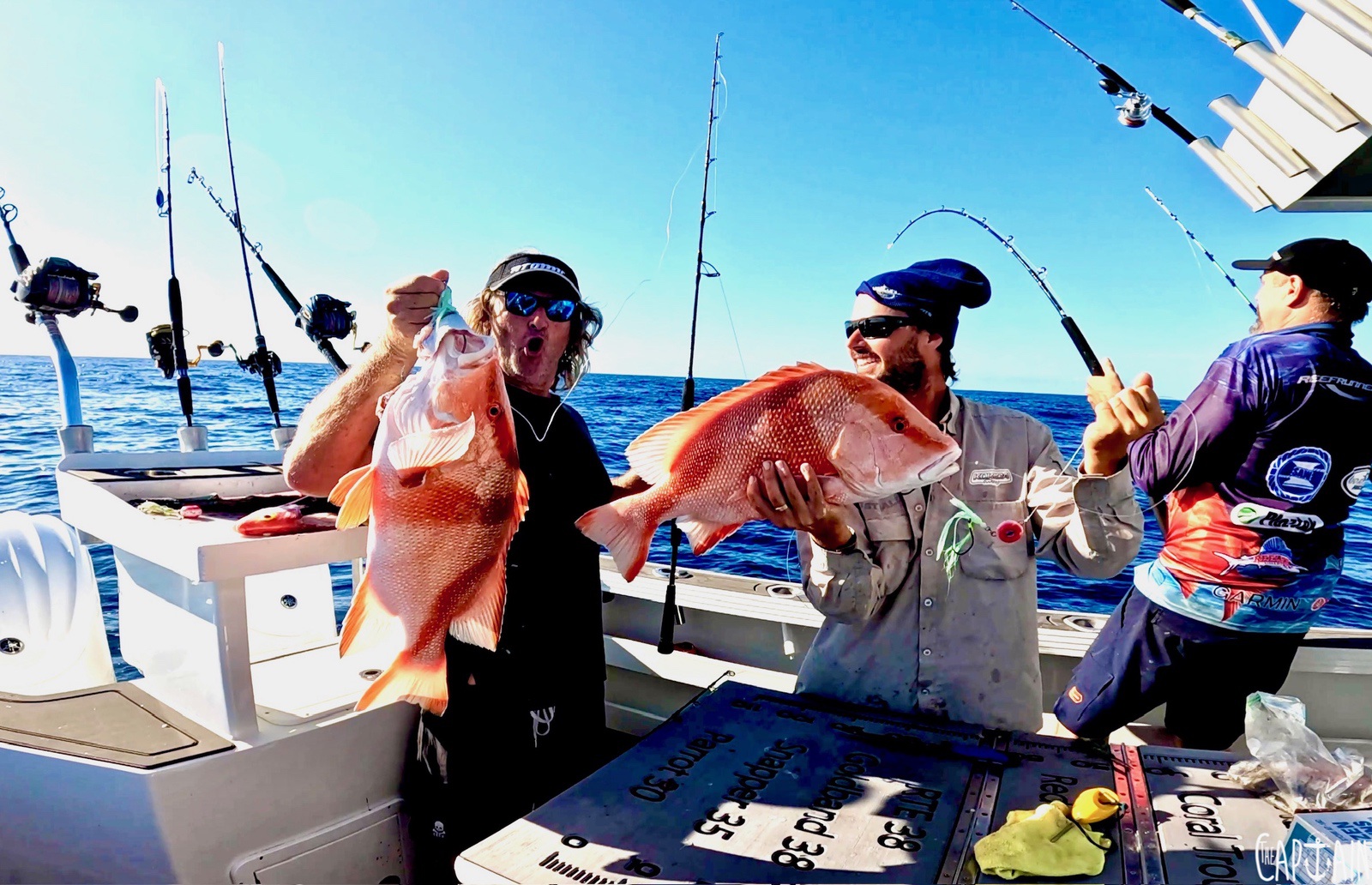
Gear wasn’t the problem, thanks to Jacko’s long-time sponsorship deal with Frogley’s Offshore. “We went to their factory and they loaded us up with an incredible amount of gear, which got us through the trip. I gave away more lures than we lost. In these remote communities, I’d hand them out if I saw any kids fishing when we pulled up to the dock.”
AND THEY’RE OFF!
The boys were supposed to leave before Cyclone Alfred hit, but the big blow delayed them for two weeks. Jacko got a bit anxious. “I didn’t know what I was getting myself into and whether I could pull it off. I’d done a lot of radical missions, but never lived on a boat for six months with my dad. I’d been talking up the trip online and didn’t want to sink just outside the Tweed Bar. So it was a relief once we got out on the water and realised the boat was handling it.”
First stop was Moreton Island, where they sorted stuff out. “The little motor worked well, we hadn’t even known if it would run.”
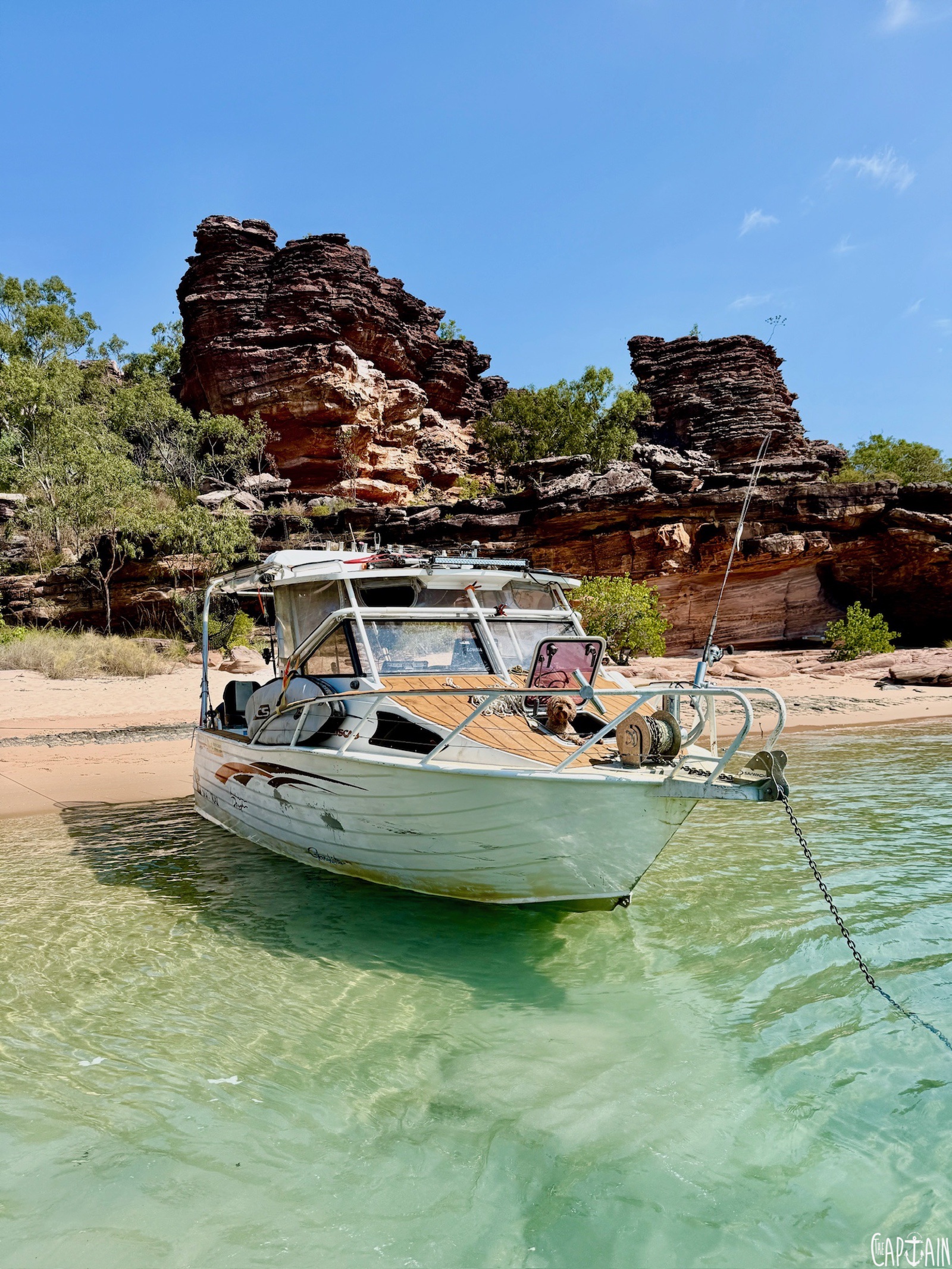
Further north, inside the Bunker Group, there was no wind for a week and life was good. But at 1770, they hit savage weather, which kept them hugging the coast.
“We’d been out there with the Reefrunner boys and caught a bunch of reds,” Jacko recalls. “I surfed the Great Barrier Reef — it was a dream day. But then the weather turned nasty.”
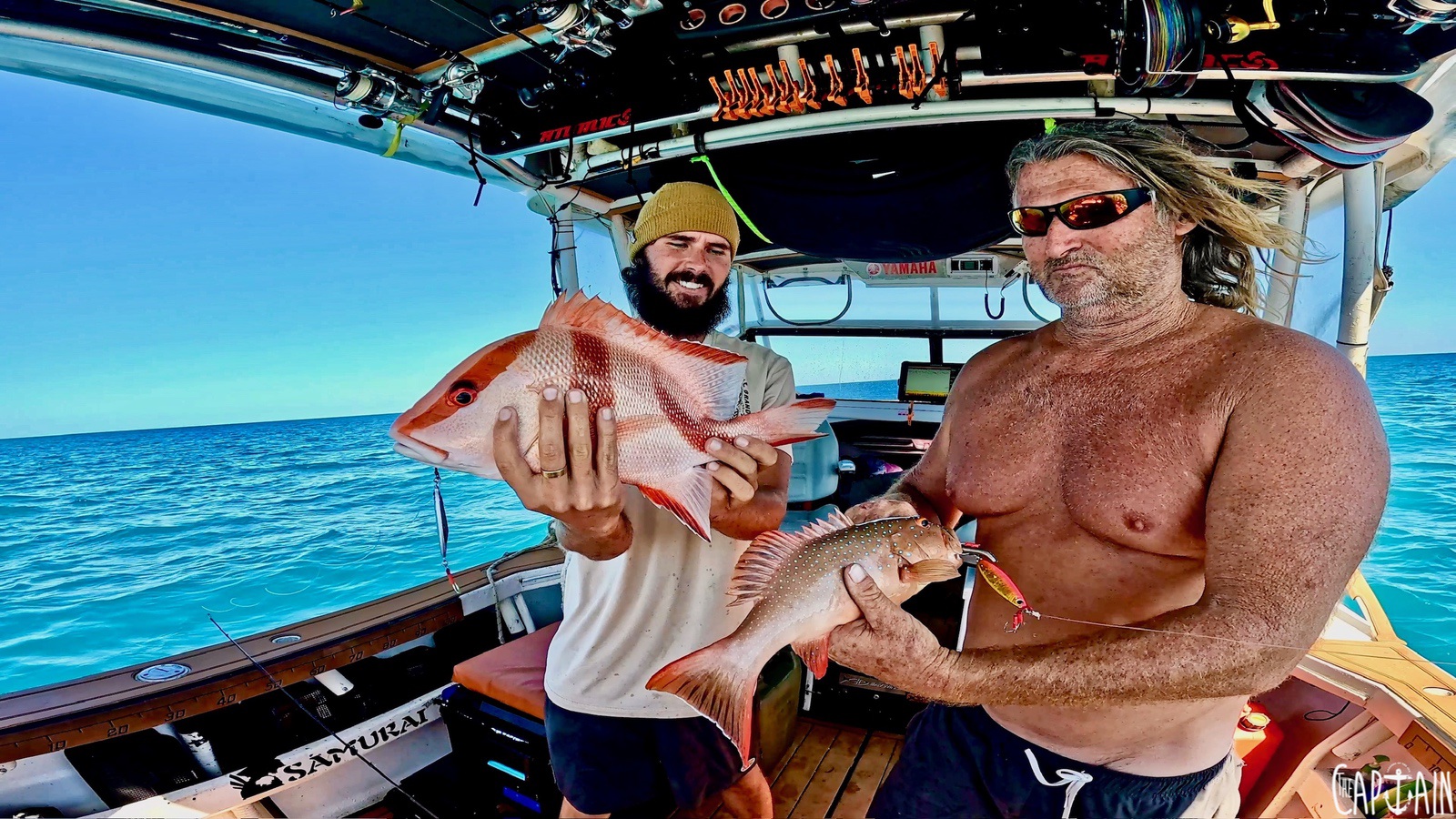
At Cooktown, the Trailcraft got a welcome service. “We’re not mechanics, but we’re pretty good at bodging up things. We can fix broken bits, but with major mechanical stuff, we’re hopeless.”
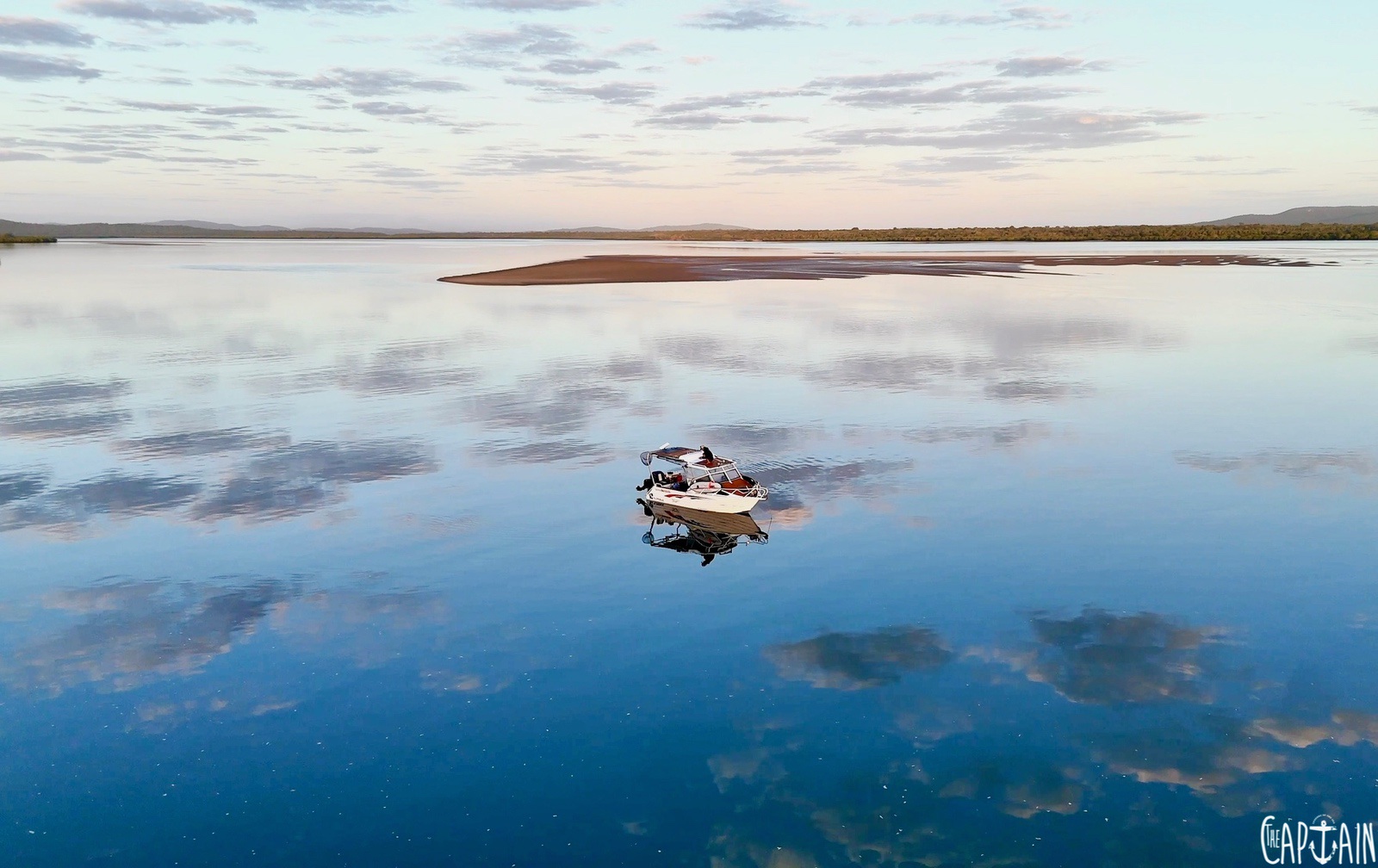
Heading from there to the tip of the country proved absolutely hectic (more on that later). “The highlight was when we went into Lockhart River and stayed at Turtle Creek Ecolodge. It was our first time off the boat after a month and a half and we’d gone through so much stress thinking we were going to sink it. I went out with the Indigenous boys for some hell barra fishing.”

Next stop was Albany Island and a week off for more running repairs.
“There were a couple of cracks at the start of the trip and we must have dinged it again on the way up,” Jacko says. “We were taking in 100L of water a day and with the weight we already had, it was stressing the boat. There was also stuff clogging the fuel tank and making the motor miss — not good in the middle of nowhere.”

GULF COUNTRY
Job done, the plan was to leave Albany and shoot the narrow gap between Crab Island and the mainland as they went down the western side of the tip into the gulf. But Jacko hadn’t counted on the region’s nightmare tides. “We tried to time it so it’d be high tide when we went through, but even though the tide was up at Albany, just 30km away, it was low at Crab, so we had to go around.”
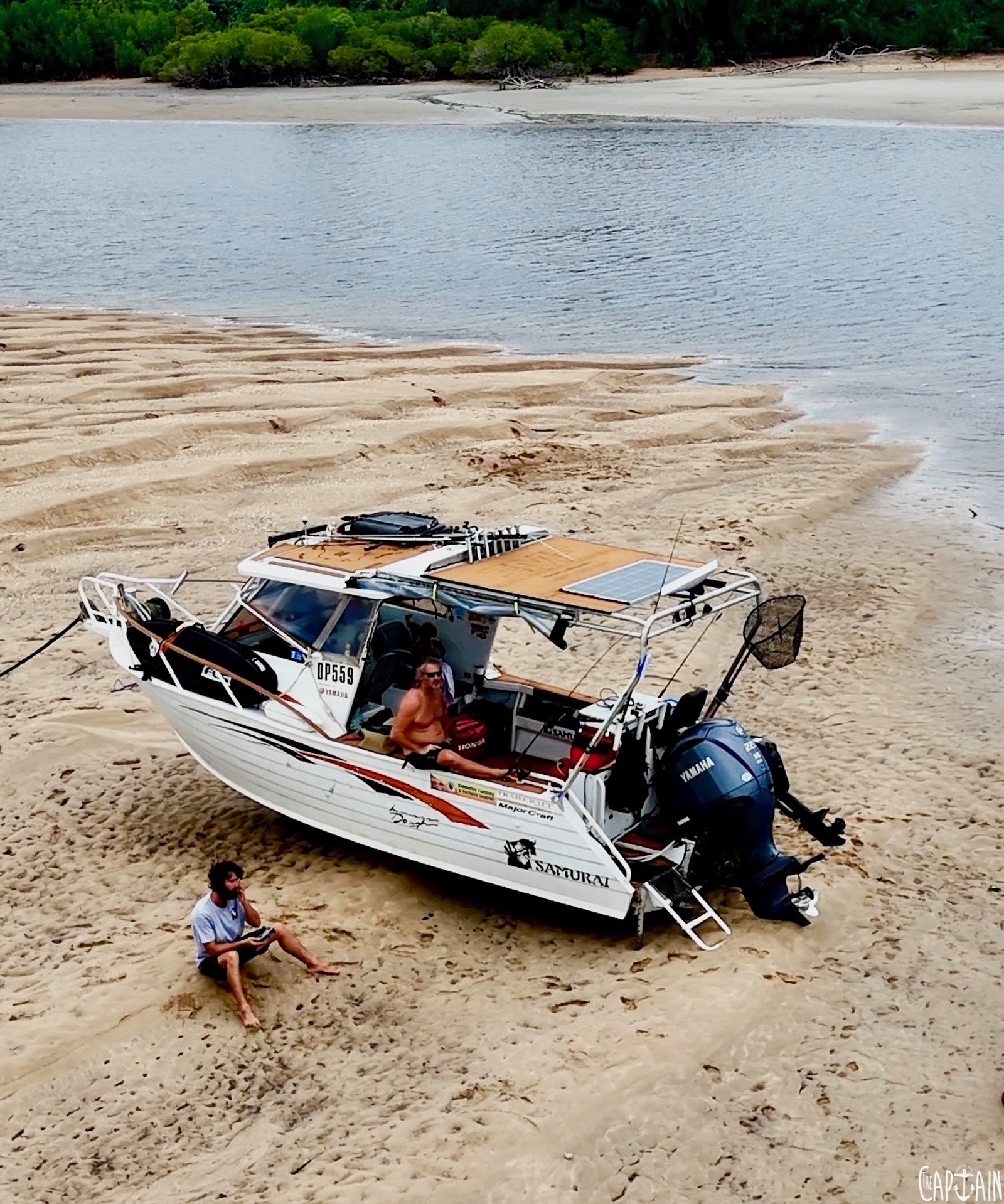
The boys also didn’t factor in the gulf’s unique diurnal tidal cycle, meaning there’s only one high and one low tide each day. “So we had two hours each morning to get from one river to the next before we were stuck until the following morning. We hopped river to river down the coast to Karumba.”
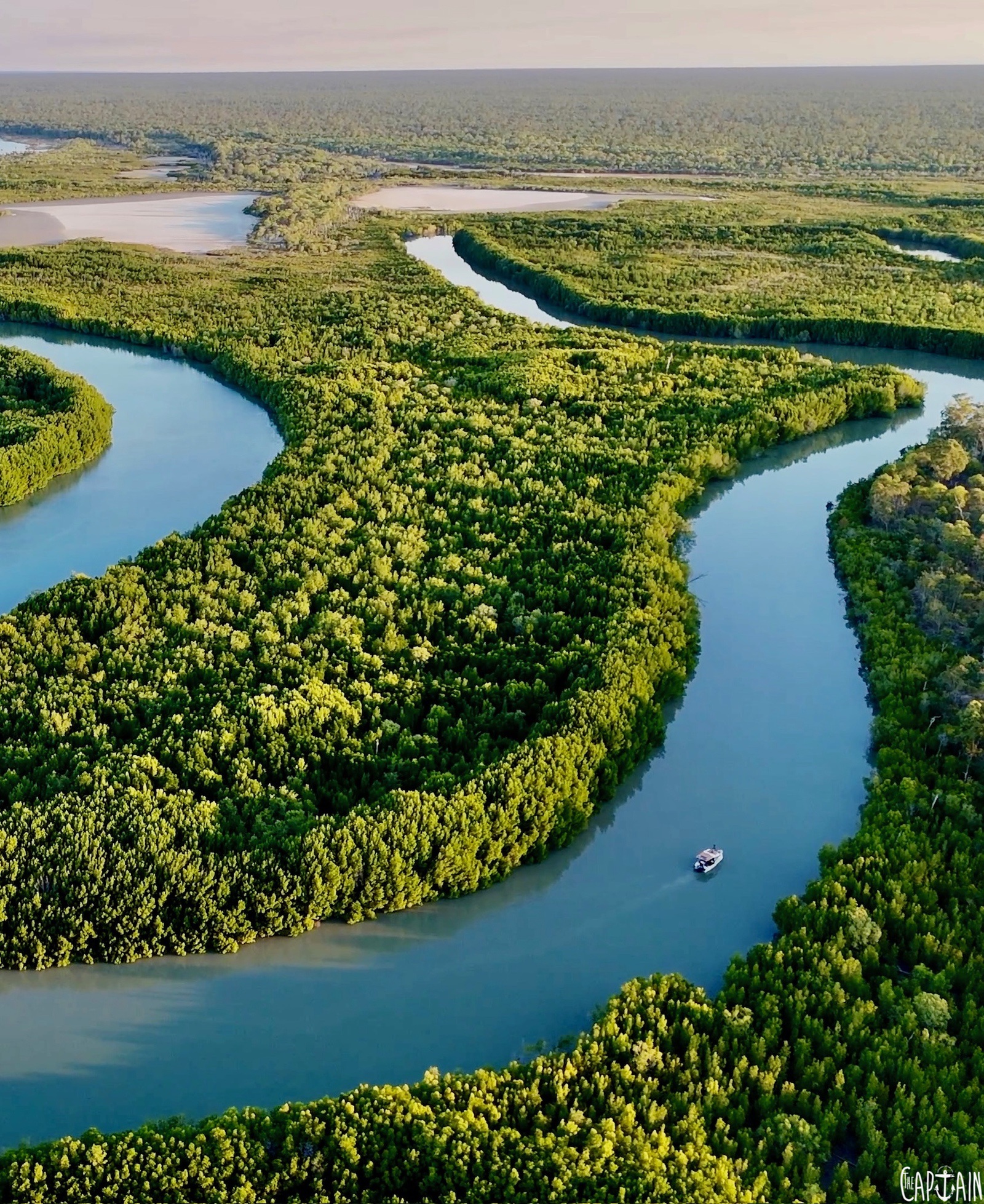
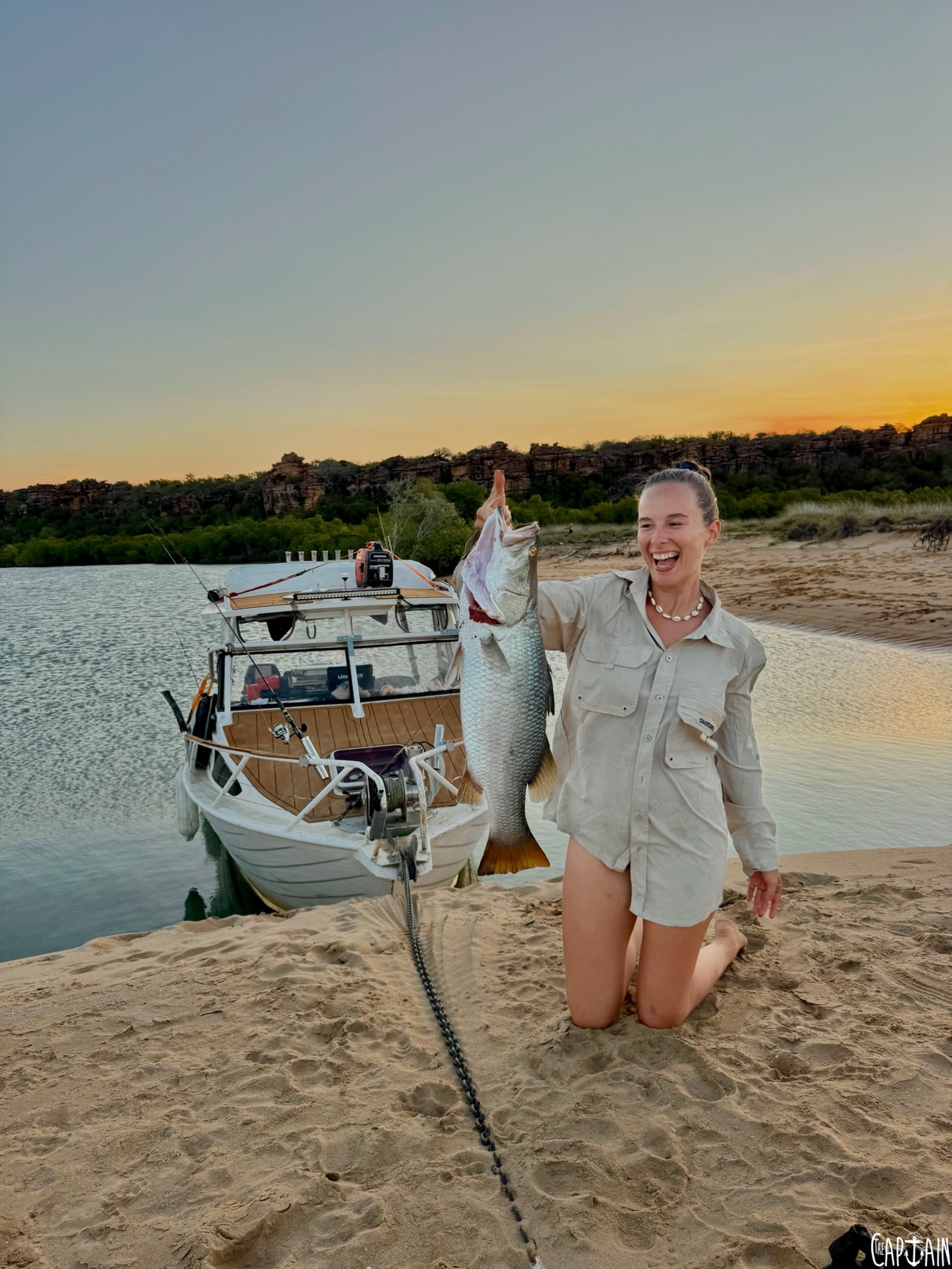
That’s where they ran into Matty Scholz from Pelagic Pursuit — barra time. “I caught my highlight fish for the trip,” Jacko says. “First I got a 1m barra, then a 1.28m one, which I’ll probably never beat. I was stoked.”
Next stop Mornington Island, just a one-day pitstop because more evil weather was coming. All the way across the gulf, the Trailcraft was stalked by a 200km-long Morning Glory cloud, aka “sky tsunami”.
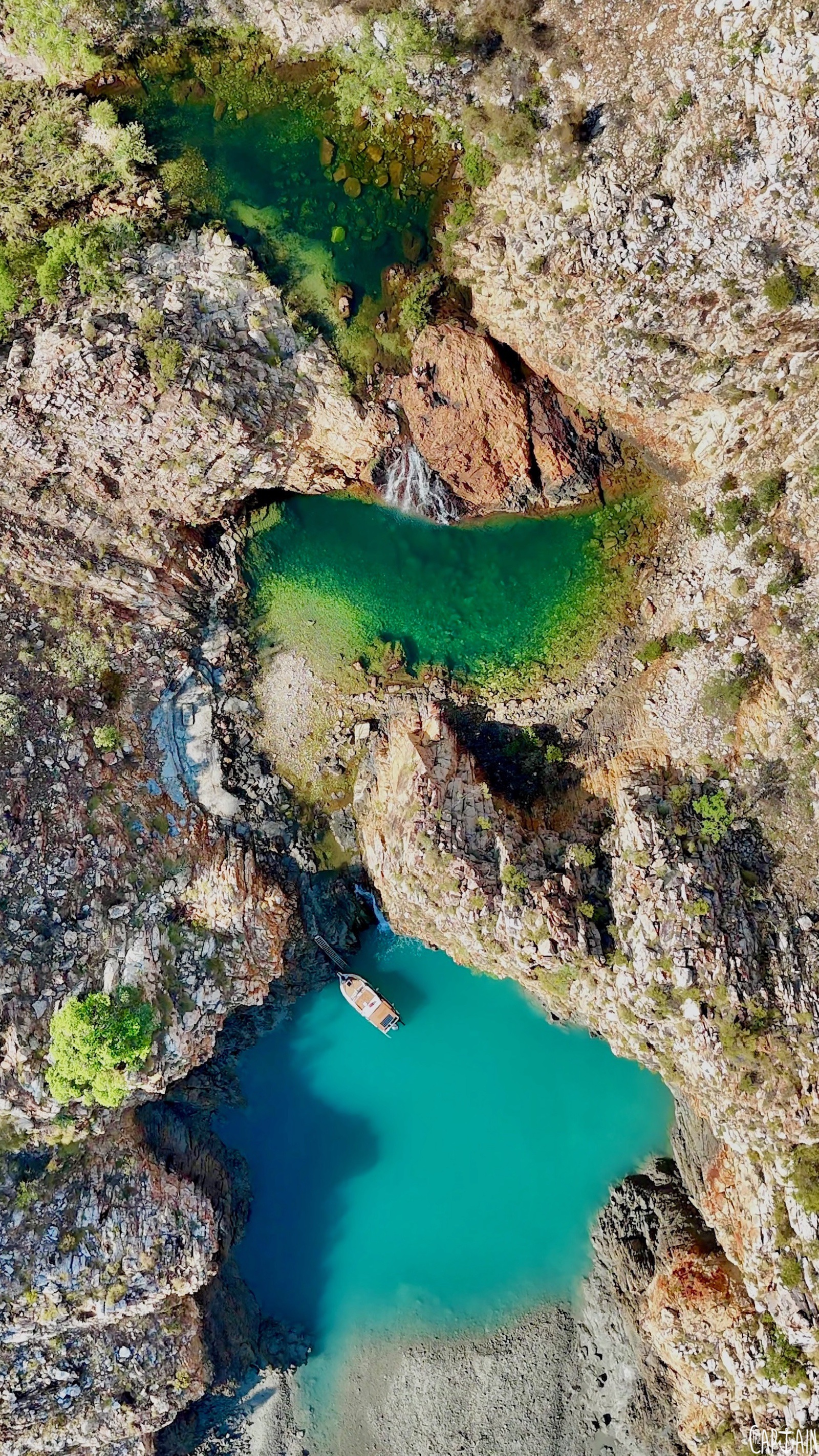
After a lap of Groote Eylandt and more fishing with the locals, the mission continued — first another service stop at Nhulunbuy, then threading the needle through a maze of islands to Elcho Island and yet more fishing. (Captain’s note: And lure giveaways.) “We had a hell time catching bluebone.”
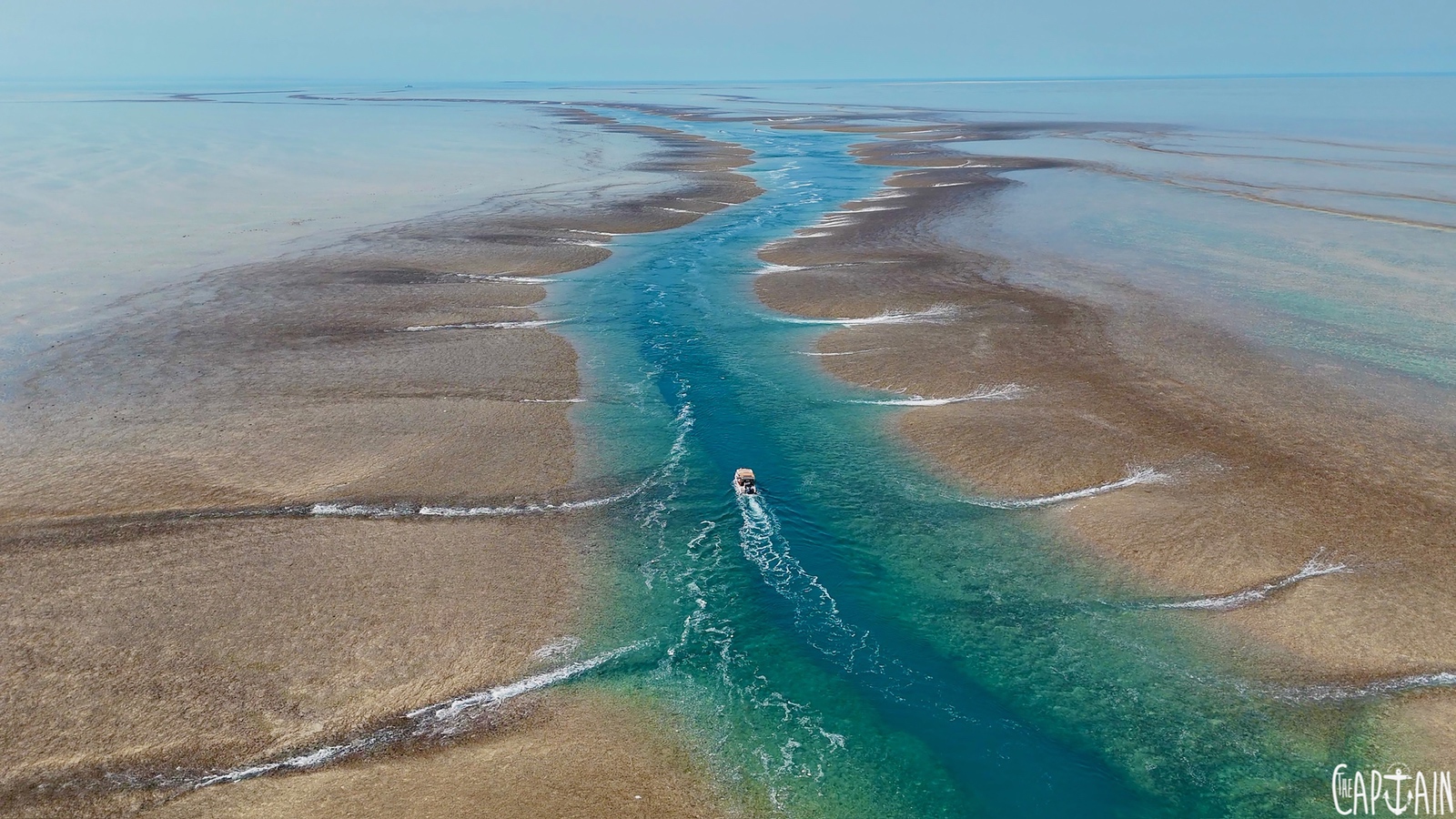
From there, the plan was to get to Darwin in two days and gear up for the Kimberley, before finishing the voyage at Broome.
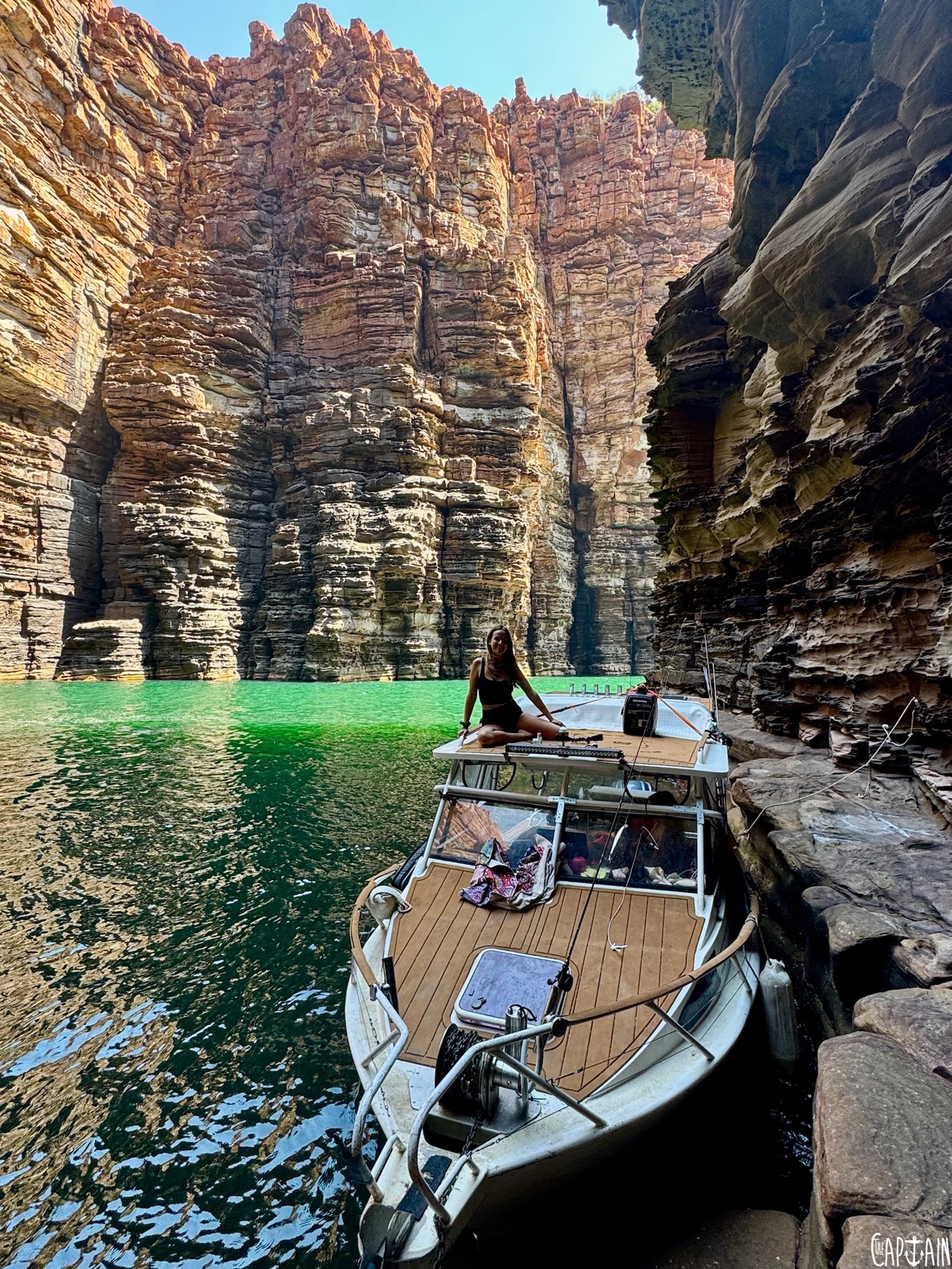
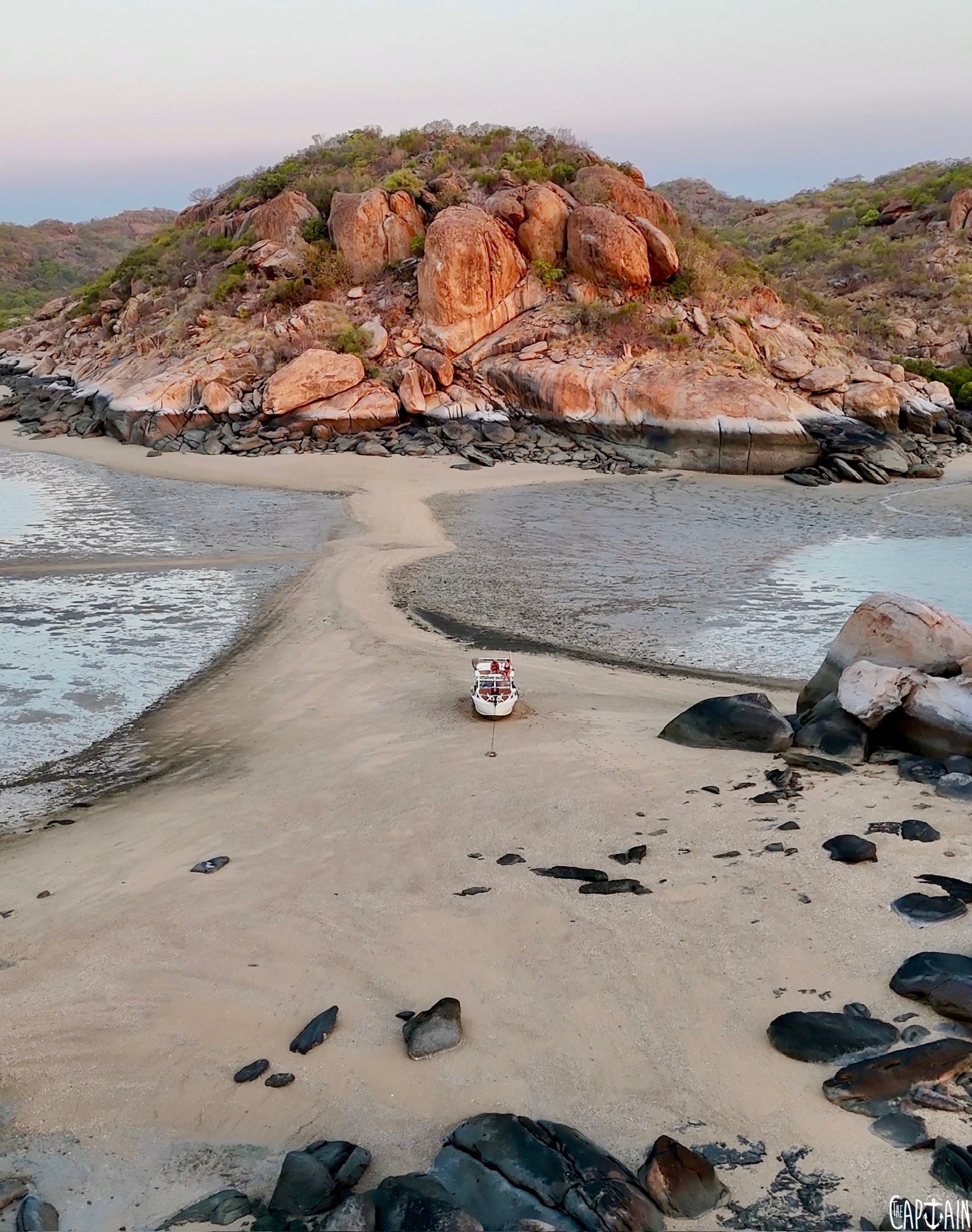
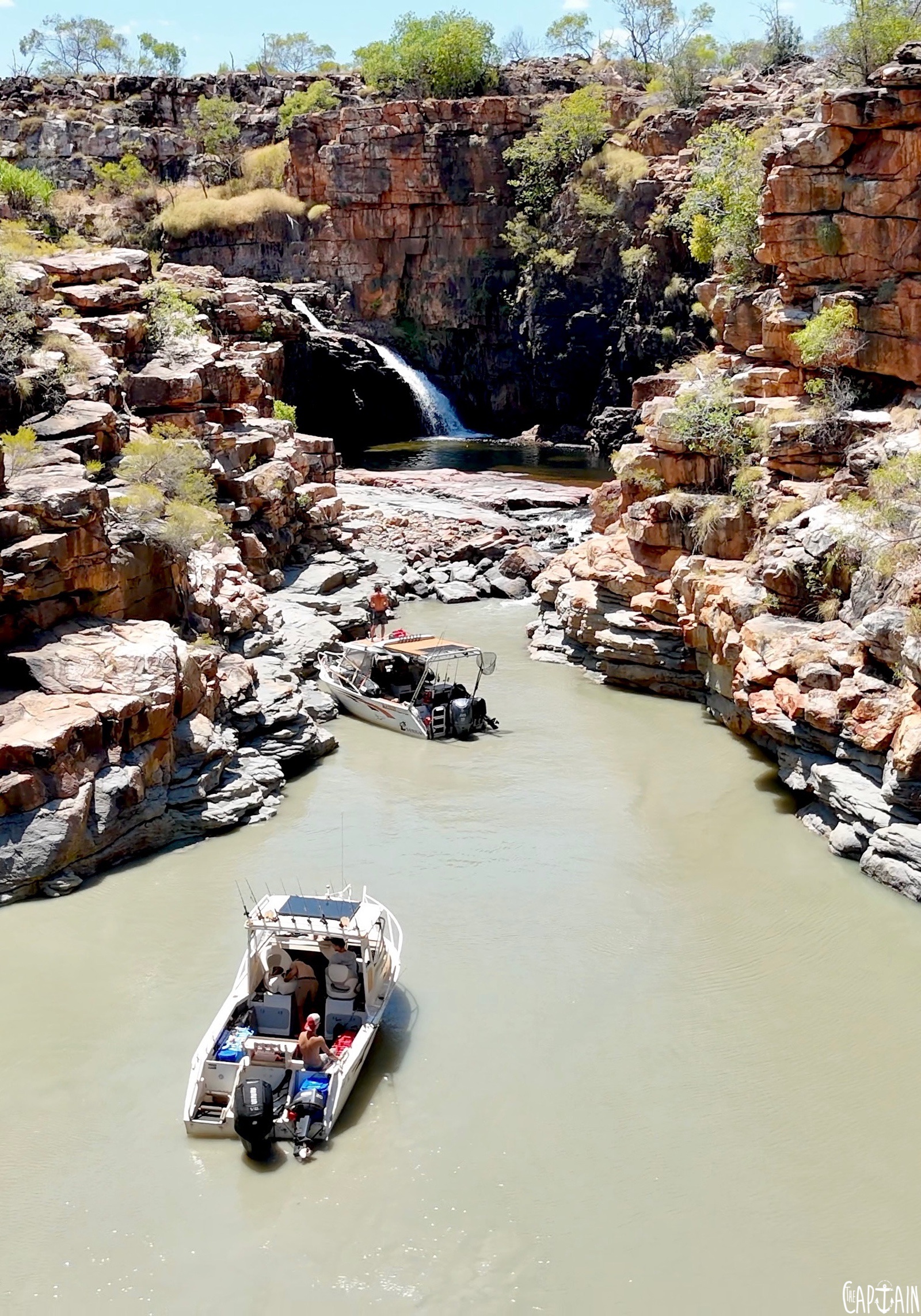
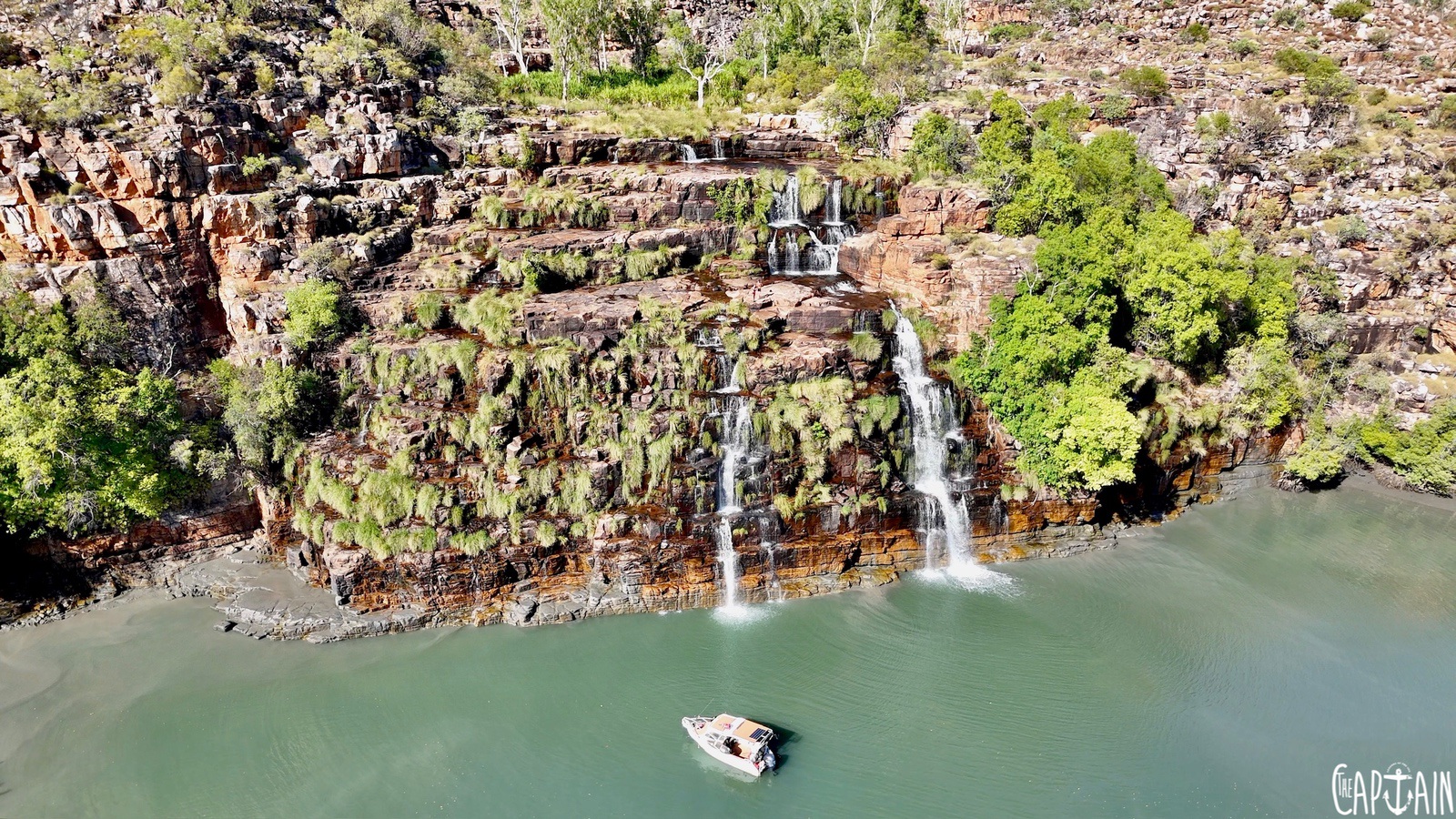
“The Kimberley is probably my favourite part of the country,” Jacko reckons. “We spent a month and a half there, taking our boat up rivers where there’s a possibility of getting stuck. Not a lot of people would do that on a trailer boat, but it was just incredible.”
The tides were even more of a pain in the arse. “You’d get an 11m tide, then 100km down the coast it’s 2m, but 40km further south, it’s back to 11m.”

Jacko finishes his “greatest hits” account of the big trip with, “Then we got to Broome, celebrated and drove home.”
IT’S ALL ABOUT THE FUEL
The total gas bill for this 16,000km journey was $33,000 for 13,000L. “Fuel was the biggest calculation — you’re always trying to figure out your next fuel stop.”
He says although the trusty rusty Trailcraft has seen better days, it did the job it was asked. “Everything was shiny when we left, but stainless steel doesn’t stay stainless after six months in saltwater.”
The boat delivered a few shit-scared moments, especially with a full fuel load in rugged conditions. “It’s an incredible boat for the cost, built like a tank, but it’s a caravan on water, not designed for full-on rough seas.”
After one particularly panicky experience, the terrified pair unloaded 200kg of gear at the Barnard Islands, north of Mission Beach. “Anything that wasn’t a necessity was gone,” Jacko recalls. “I had a True Kit
inflatable boat to put the spare engine on, a great idea, but in a bigger boat. We realised we were carrying too much weight and the Trailcraft wasn’t handling it.”
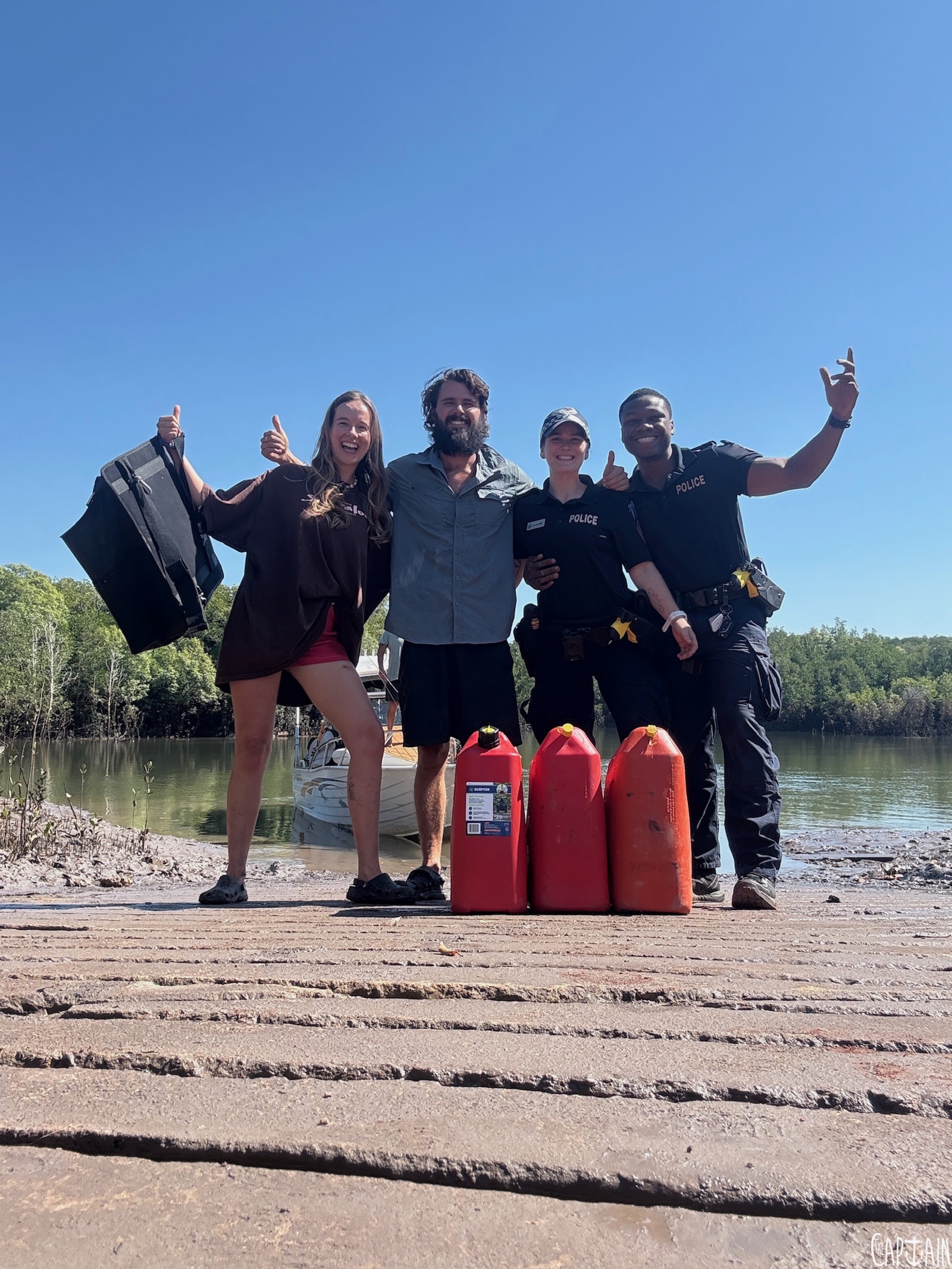
Fortunately, they didn’t jettison the little motor, which came in handy when the boys ran out of gas on the way to Lockhart River.
“That was probably our biggest fuck-up. We misjudged the fuel when we filled up at Cooktown and ran out 60km from our destination. The wind started blowing and we were stuck behind an island for four days waiting for things to calm down. We had a spare 20L jerrycan and used the little motor to travel that final stretch. Big lesson.”
BOAT LIFE
The Captain gets cabin fart fever after an overnight mission, so Jacko, what’s it like sharing a cabin with your old man for six straight months? Were you forced to increase the rum ration?
“Honestly, not as much as you’d think, because it’s too dangerous to be drinking miles out at sea, and too many beer cans just means more rubbish on board. But every time we pulled in somewhere, we’d neck a few. It’s probably the least I’ve ever drunk over a six-month period.”
How about crew hygiene, did that get a bit on the nose?
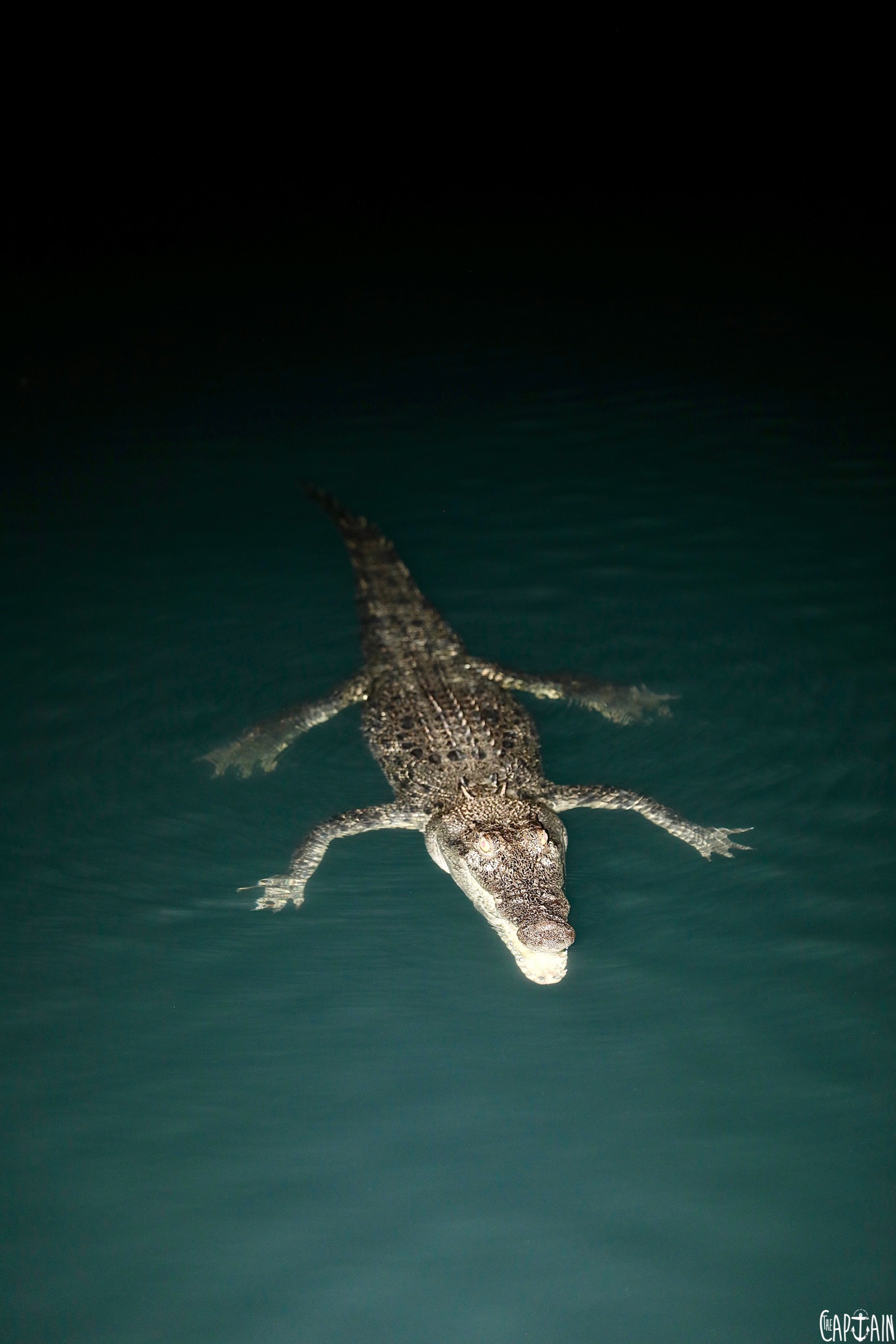
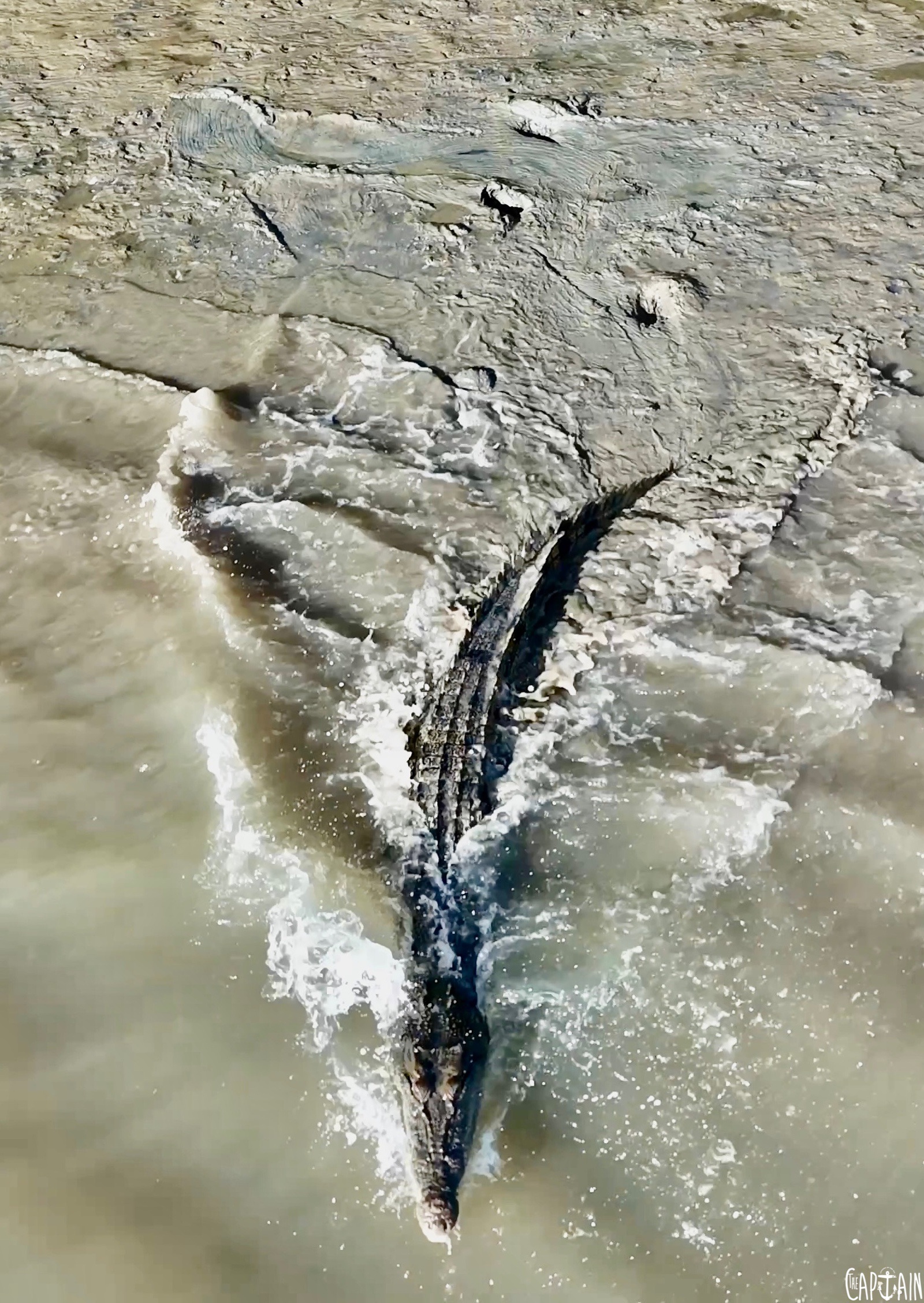
“My longest stint between showers was probably a month,” he says. “The longest I did without any water on me, not even a swim, was 10 days, but we were in croc country.”
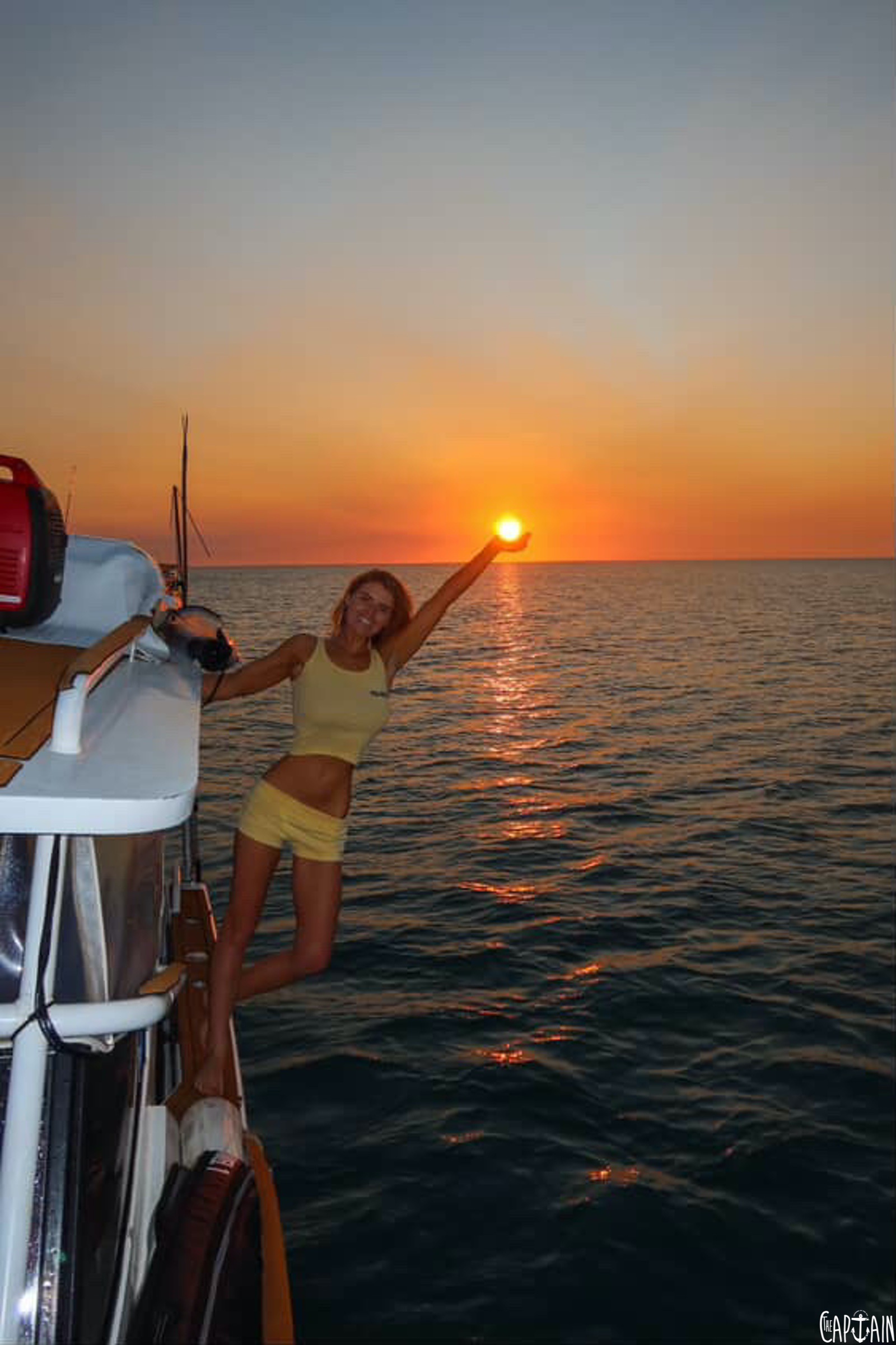
Apparently, the main problem was, er, hair. “At one point me, Dad, my partner and my sister all had long hair. In a confined space, it gets everywhere. Everything on the boat was covered in it.”
KEEPING IT REAL ON YOUTUBE
Jacko says, be authentic. “The main thing is, don’t bung it on, because being yourself helps it feel less like a job. That’s how I roll and it’s worked for me. When I film videos, they’re a diary of my life I can watch with my grandkids. Maybe it’s not the best way to make money, but it’s the best way to have fun. If it doesn’t work out, you still have amazing memories. When people get stuck chasing views and money, it gets toxic. I’m doing this because I love it, but if it fell apart tomorrow, I couldn’t care less. I’d go back to bricklaying.”

FINISHING THE JOB
Jacko’s already making noises about completing the lap from Broome back to Tweed Heads. His optimum weather window is in autumn. “I spent the past few years before this trip exploring the Ningaloo, so it’ll be cool to go down a coastline I’m familiar with. We’ll make our way from Broome to Perth, then figure out if the weather will allow us to do the bottom. I’ll definitely go surfing this time.”
He’s understandably cautious about the Southern Ocean. “The bottom of Australia is probably one of the most dangerous oceans in the world and when we get to Perth, it’ll be winter, the worst time to go. If we don’t go, I’ll put the boat on a trailer, get dropped down south, do a lap of Tassie, then come back up.”
Will you do anything different this time?
“Editing on the cabin roof isn’t ideal, so I’d love to just send the video footage to an editor — to make sure we’re not swearing and Dad keeps his pants on. And I’ll be a bit more on top of the fuel situation.”
For Jacko, adventure is the special sauce that makes life worth living. “I like going places not many people have gone. We live in a country where we can do this. Catching fish is the bonus. That’s why I love surfing. Whether it’s an elusive wave or an elusive fish, when you find it, it’s rewarding, but getting there is the best part.”

Which sums it up nicely.