All aboard for The Captain’s Moreton Bay adventure. The cunning plan is to hang out with Shockwave skipper Paul Economidis and boat builder Andrew Wright, check out this cool catamaran and maybe catch a few fish.
Paul Economidis owns a panel shop in Brisbane. He loves fishing, which is why having a house on Moreton Island is handy. Even handier is his Shockwave Breaksea X catamaran. “I do a lot of fishing and that’s why I bought the Shockwave. The shop gets busy, so it’s good to have a bit of free time to drop a line.”
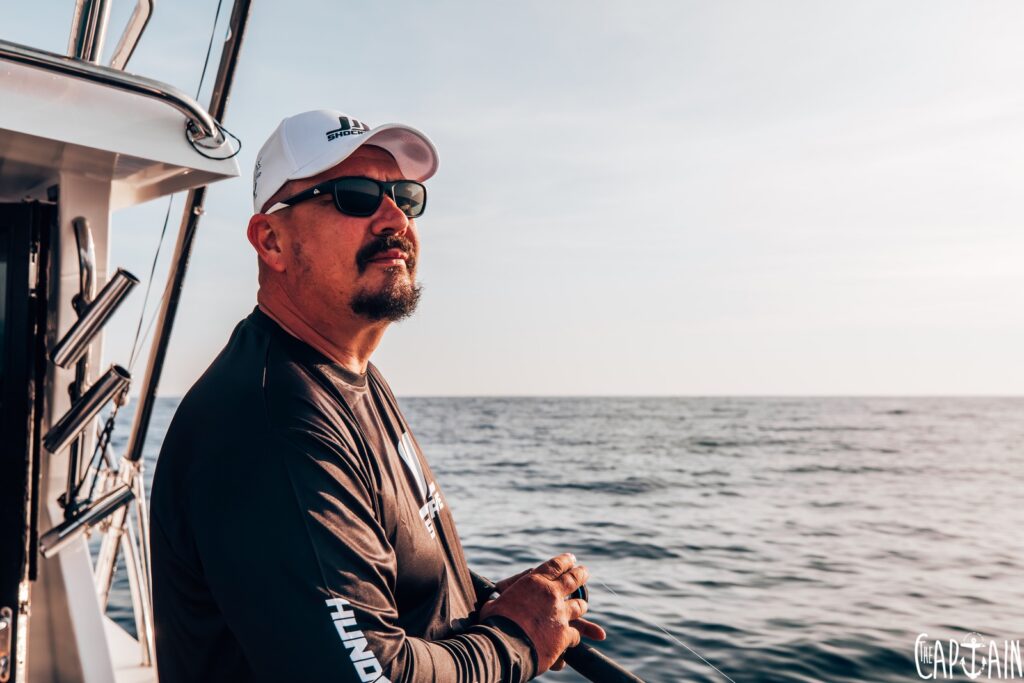
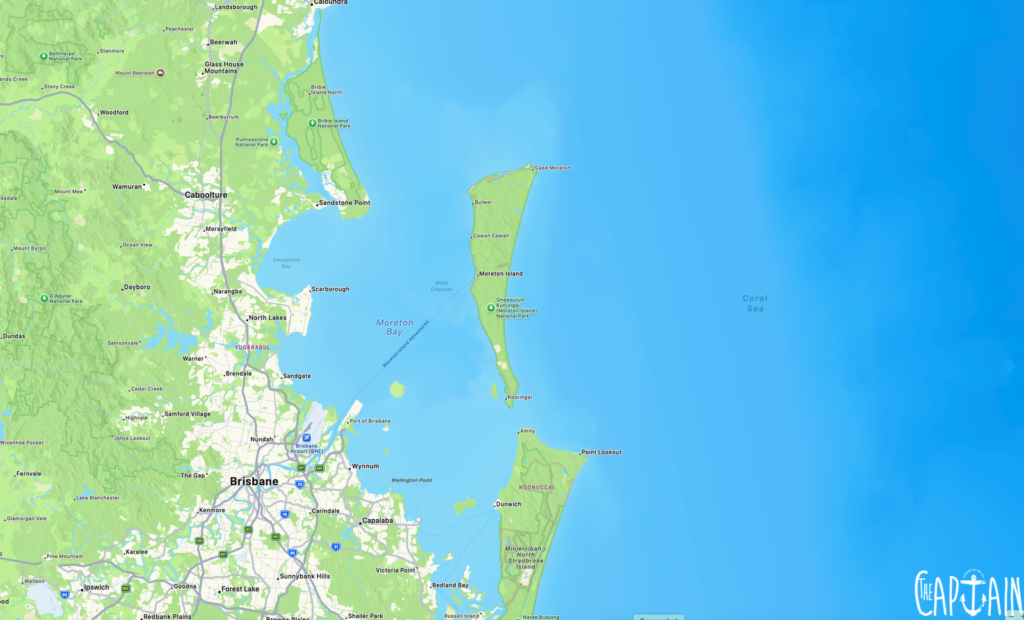
Paul has invited Shockwave builder Andrew Wright and The Captain to spend a few days on Moreton, 58km from Brisbane, putting the Breaksea through its paces and hopefully persuading a few snapper onto the BBQ. Although Paul took delivery of his cat at the end of 2023, this is the first time he and Andrew have actually met in the flesh. It’s a special moment The Captain is reluctant to gatecrash. Er, not really.
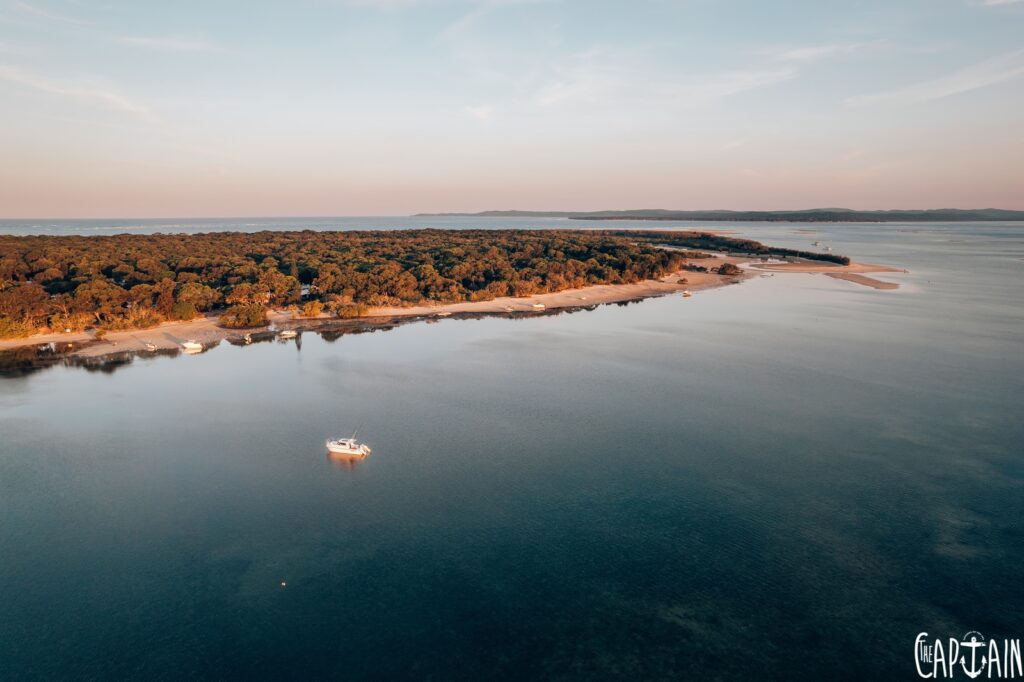
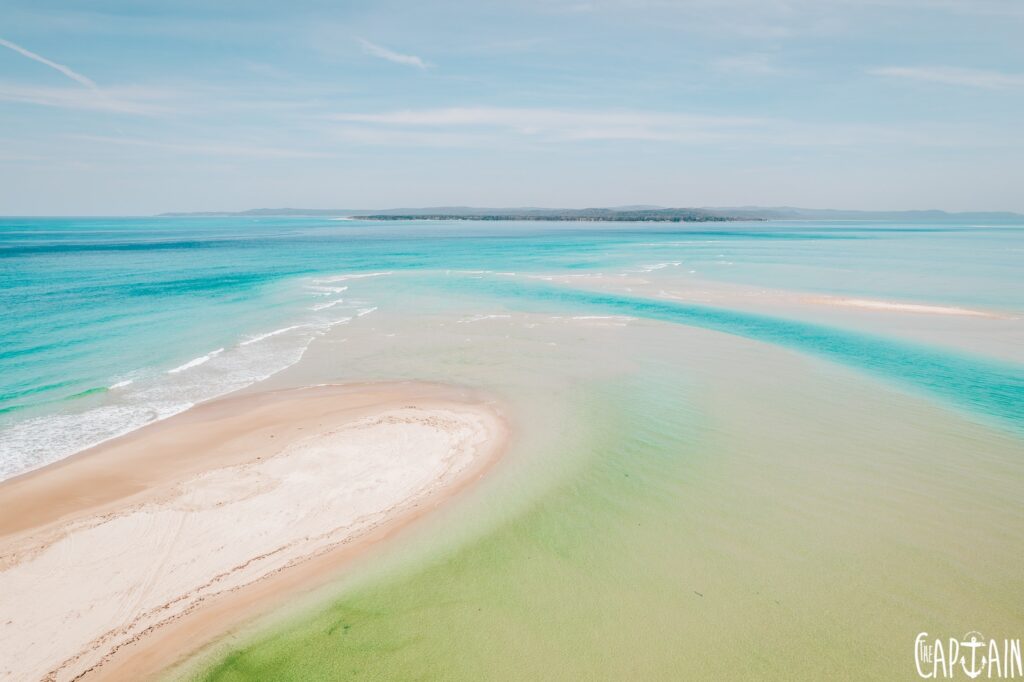
It’s obvious Paul has history with the island, he’s been coming here since he was a kid and it’s where he got the fishing bug. “Us kids grew up outside, fishing and running up and down the beach,” he recalls. “Every memory I have here is a good one, but fishing with my dad was the best.”
Trundling around the bay in a trailerable 20ft Kevlacat sportsfisher — in which his dad was understandably reluctant to head offshore — Paul cut his teeth on whiting before heading out with charter boats to learn more.
CAT MAN
Paul has a definite allergy to monohulls — cats are all he’s ever known. “I don’t like the ride of monos,” he says. “Over here, the cat sits flat on its belly at low tide, it’s going nowhere. With a mono, you don’t know what’ll tip over. I’m comfortable driving cats. Air Sea Rescue have all got cats, which tells you something.”
After the 20-footer, Paul’s dad bought a written-off 40ft power cat from Townsville. “Dad started our panel business in Brisbane,” Paul recalls. “He refurbed the cat and we loved going out on it, but with the draft, it was a hassle to get over to the island. We’d have to wait for the tide so we had enough water to come in and out.”
After buying a house on Moreton, his dad got a 3000 Kevlacat to commute to the island more efficiently and cart building equipment across. At nearly 19 years old, the Kevlacat’s best days were behind it when Paul took delivery of his new Shockwave in December 2023.

“Since I’ve had the Shockwave, I’ve been unleashed,” he says. “This boat is incredible to handle, you’re not concentrating on every little movement because you feel comfortable.”

FALLING IN LOVE
Builder and fishing mate Luke, who’s along for the ride this weekend, is responsible for Paul’s love affair. He sent him a photo, suggesting Paul check out a Shockwave in Sydney he’d spotted on Marketplace.
“I was like, that looks all right — and the price does, too,” Paul says. “It was time to get rid of my Kevlacat, but there wasn’t much out there I liked.”
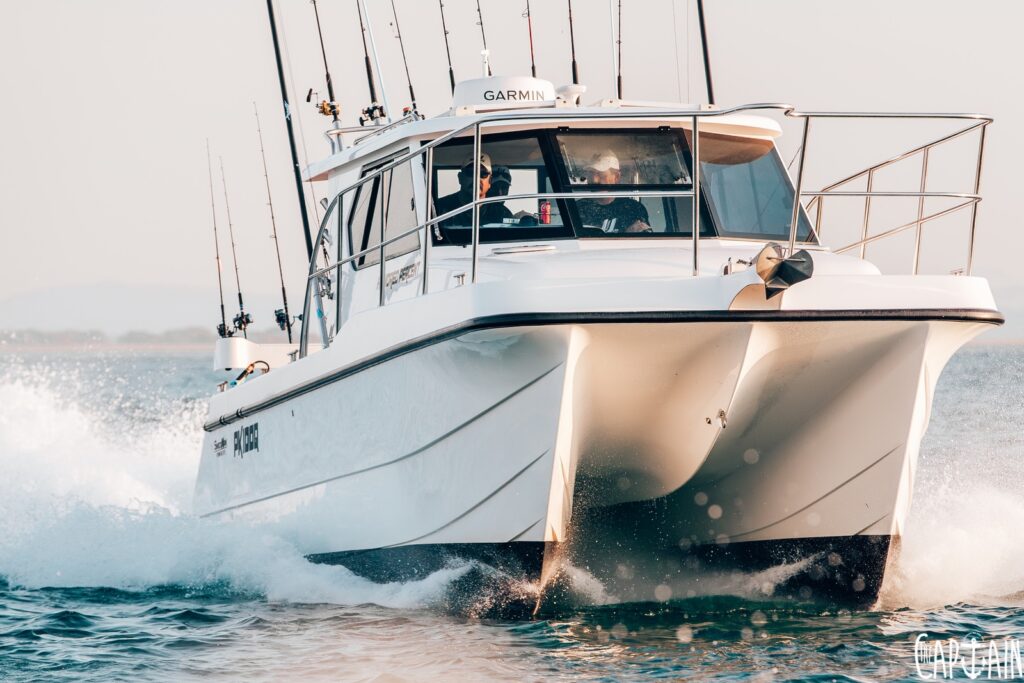
Paul went out for a sea trial and the rest is history. “As soon as I stepped on the boat, I fell in love with it. But I wanted a new one.”
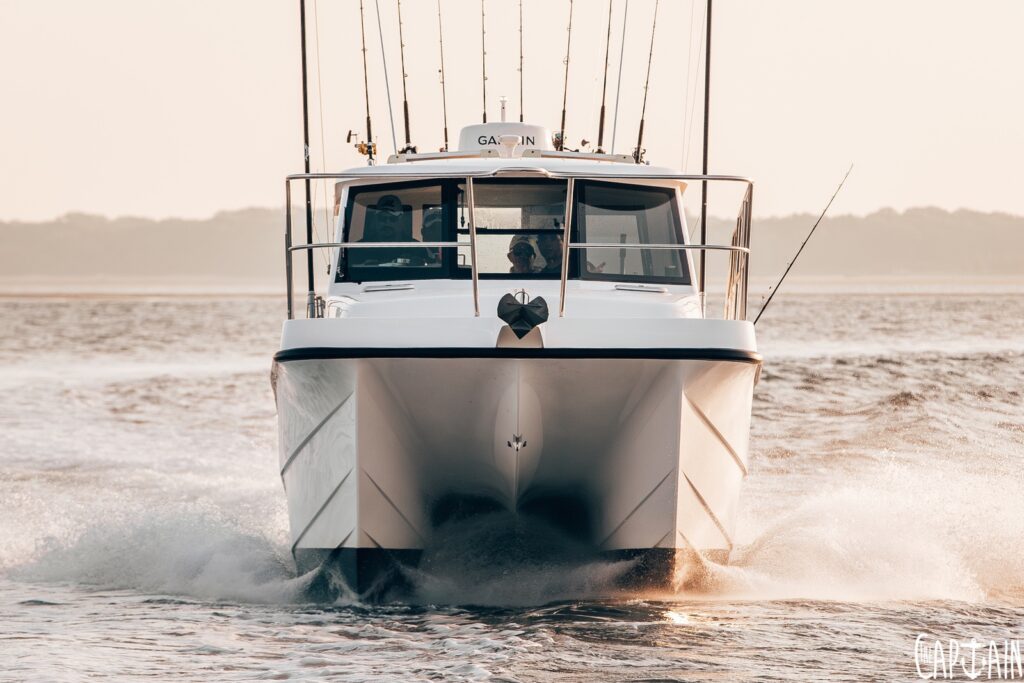
The Shockwave’s amazing ride had a lot to do with Paul’s sudden purchase impulse.
“In my old cat, I was always questioning if there was something I didn’t know about driving the boat — how should I pitch it or trim it? So I asked Duncan, the owner, to put me into the side-on stuff to see how it felt. It was completely different — no breaching, no coming over the corners feeling you’re tipping into it or over it.”
A phone call to boat builder Andrew set things in motion. He placed the order over the phone and the build took about nine months. Paul watched the boat come to life on weekly webcam updates from the Perth factory. “It was all pretty exciting. When it was time to input the satellite or the GPS screen, it would come down to, ‘Are you happy with this?’ Or ‘We should probably put this here’.”
The boat was delivered on the back of a semi-trailer tied up in a red-and-white ribbon. “I can still remember it. It was pretty special watching it craned off, how buoyant it was, the smell, how perfectly detailed it was.”
ON A MISSION
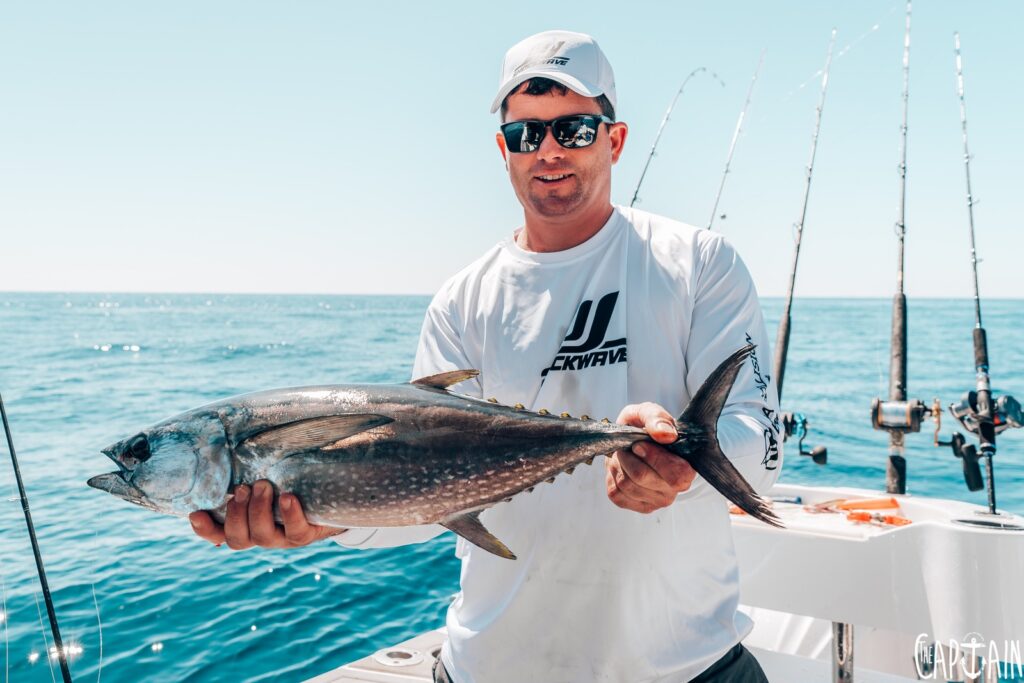
We pick Andrew up from Manly at 5am. Aboard are skipper Paul, deckies Luke and Paul, and The Captain’s crew. We’re heading to the Barwon Banks, about 75km north-east of Brisbane. The plan is to troll for yellowfin tuna, but with a dodgy weather forecast we stick to reef fishing.
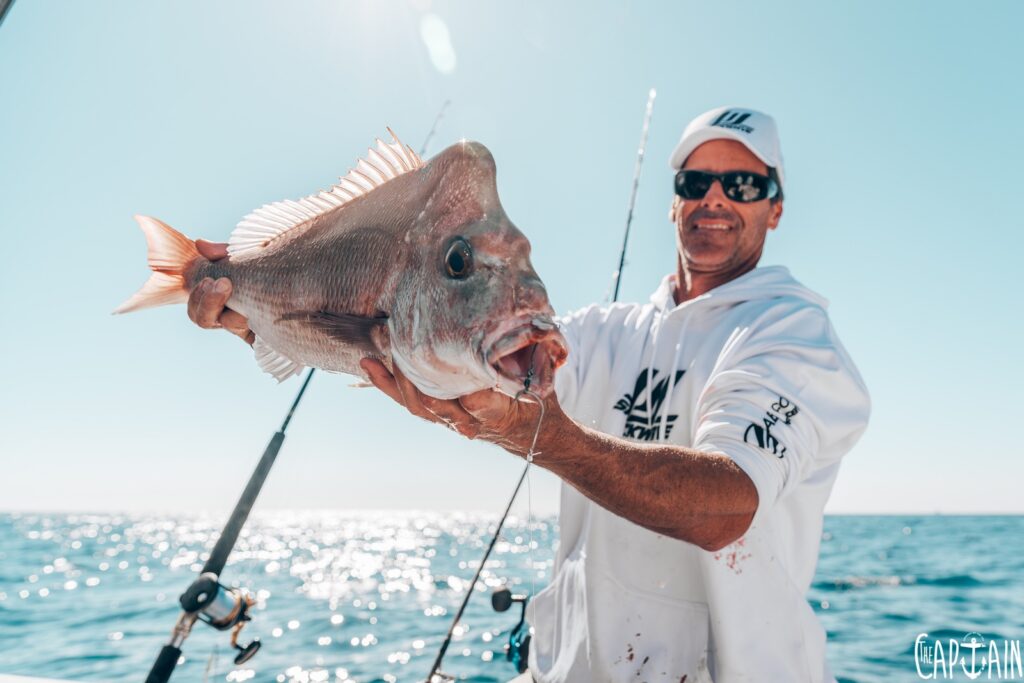
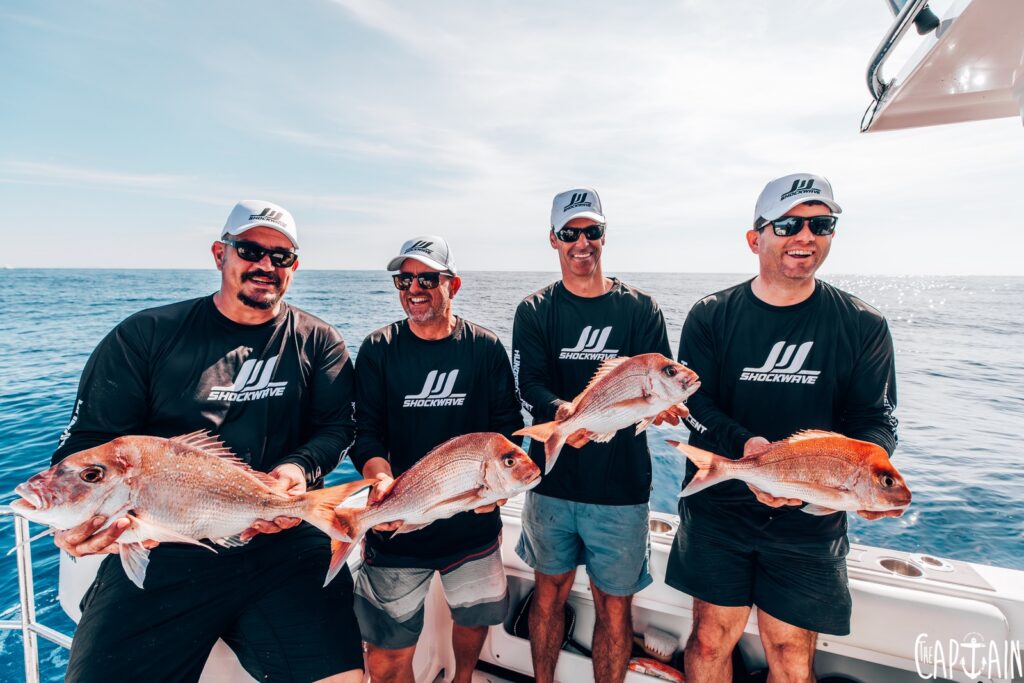
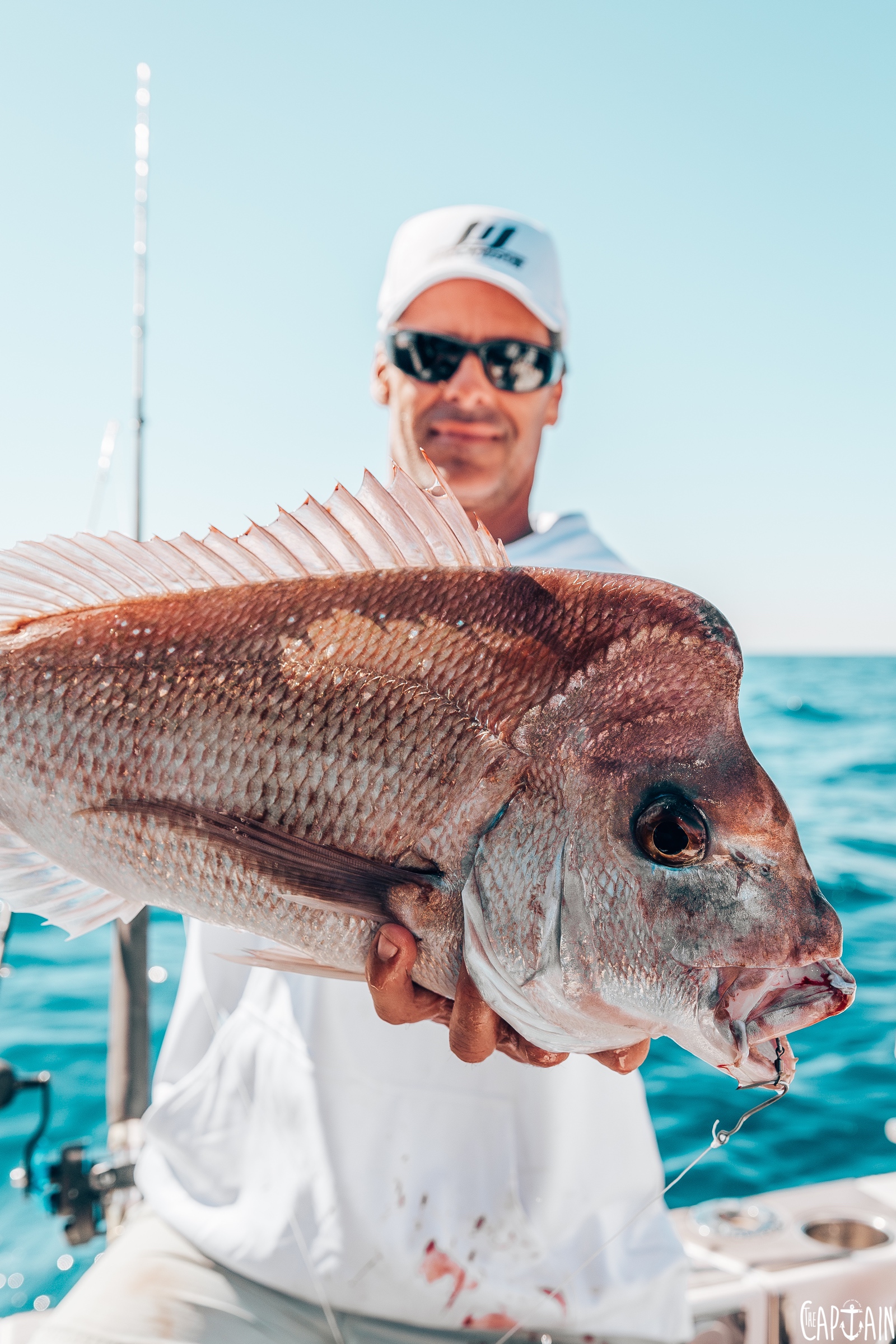
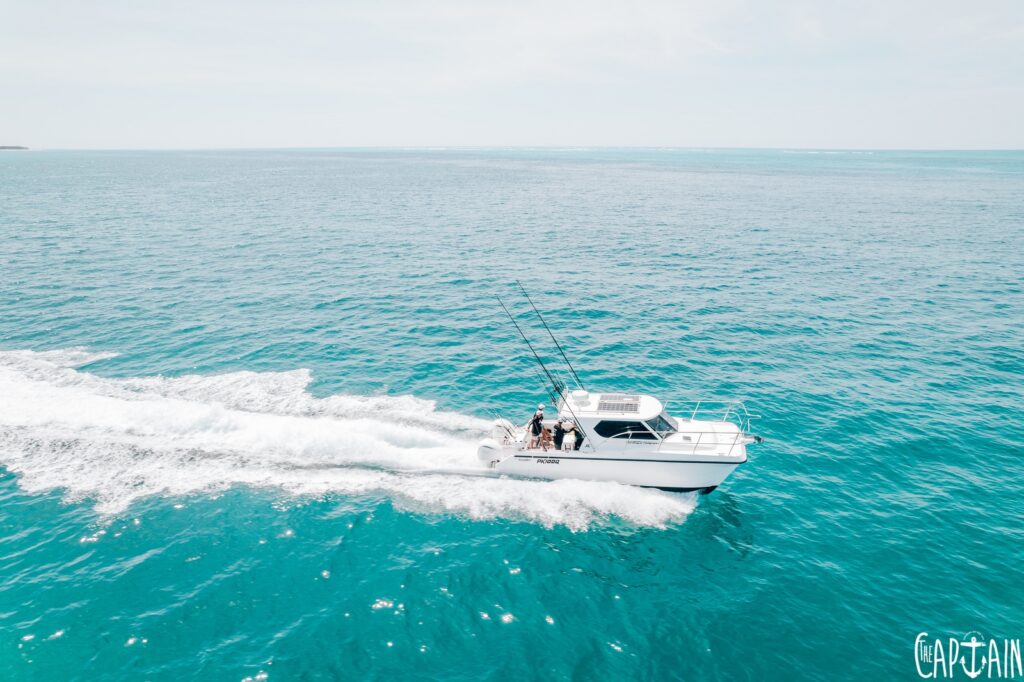
The scenery is nature movie spectacular — blue skies, whales jumping and breaching. At the northern end of the banks, we find some longtails, and get stuck into a solid snapper session — bagged out. We then return down the eastern side of Moreton and back through the South Passage Bar while relaxing on the custom rear-facing fold-out bench, The Captain, for one is happy.
“One of the best things about our boats is just looking back,” Andrew says. “It’s mesmerising watching the wake peeling off those two engines and rolling in together at the back.”
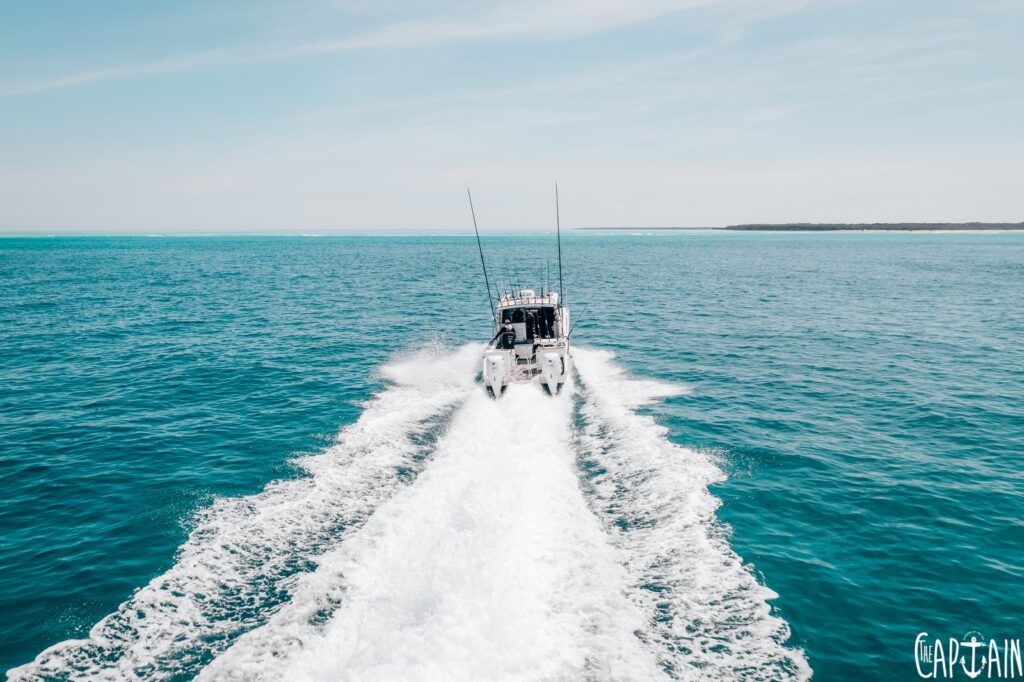
Paul likes it for a different reason. “When I’m bringing Mum home, she likes to sit out there and look back at Moreton. It’s very comfortable and quiet.”

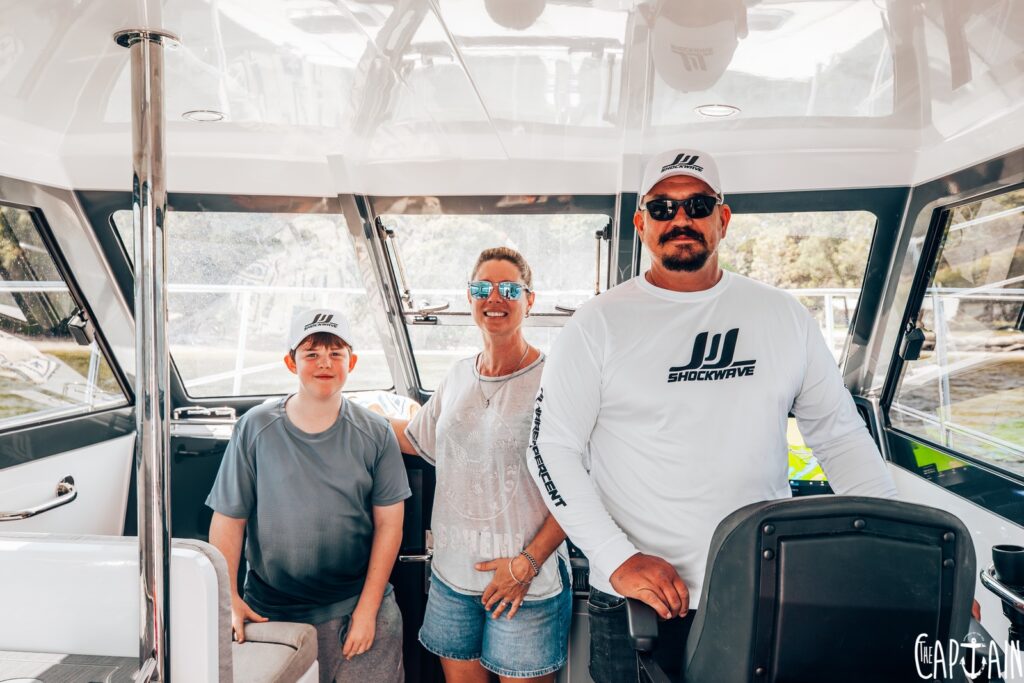
After the 300km round trip, we’re back at Paul’s place in Kooringal around 5pm, only to be ambushed with an oven-prepared ribeye on the bone meat feast courtesy of the Butcher Shoppe. Paul’s wife, Kelly, has been in the kitchen all afternoon getting things sorted, while their kids, Lochie and Nate, help us to haul our gear from the boat.
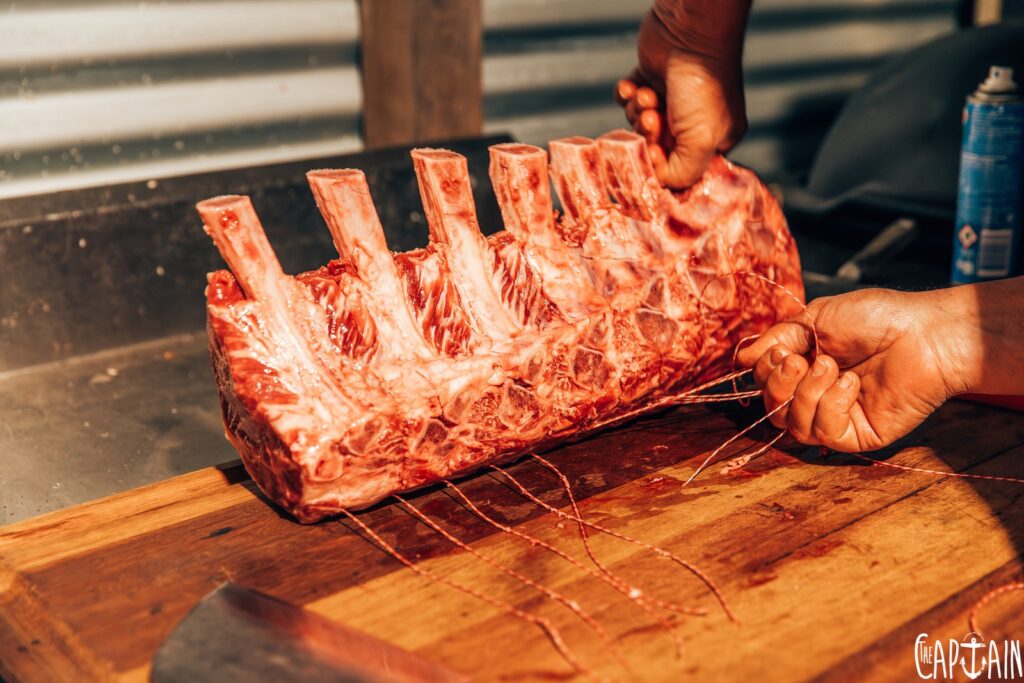
“They outdid themselves, I didn’t think you could get a piece of meat that tender,” Andrew says. Rubbing his stuffed belly, The Captain can only grunt in agreement.

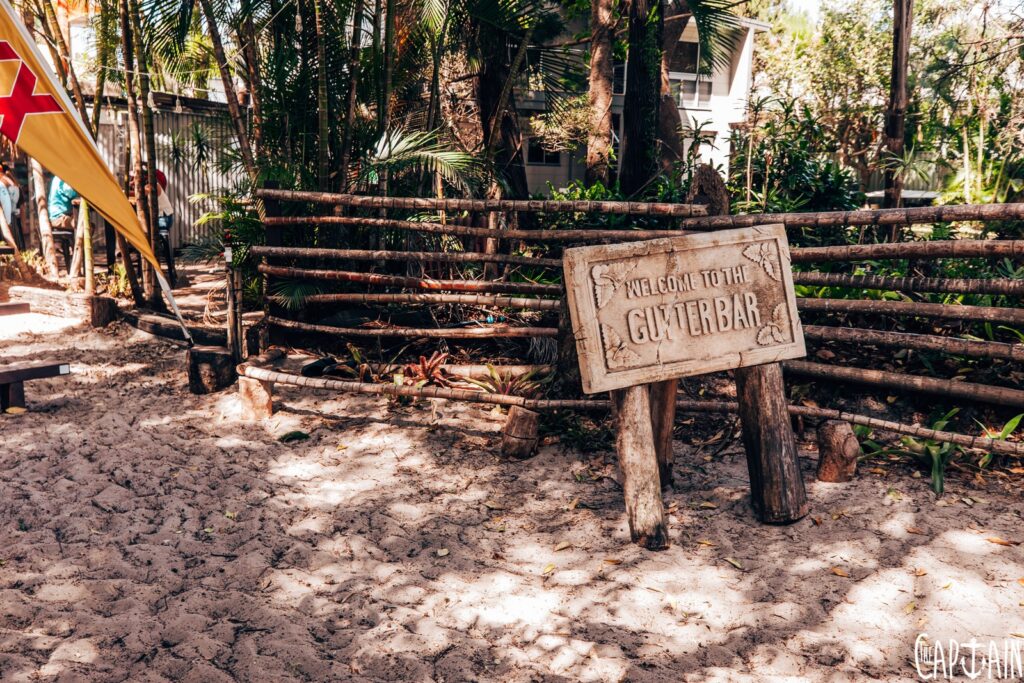
The next day, still buggered from the long voyage the day before — and the wine and beer that evening — we make a later start. The forecast isn’t the best and once we get across the bar, we stick in close and have a quick fish for four hours before catching our bag and heading in. We’re just in time for a burger lunch at The Gutter Bar.
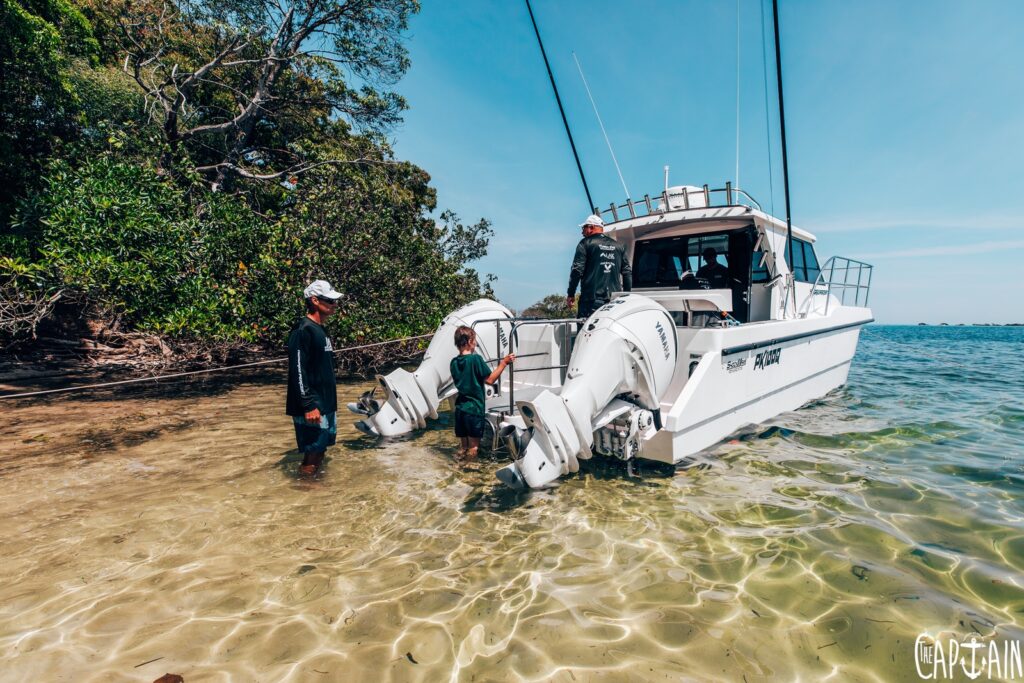
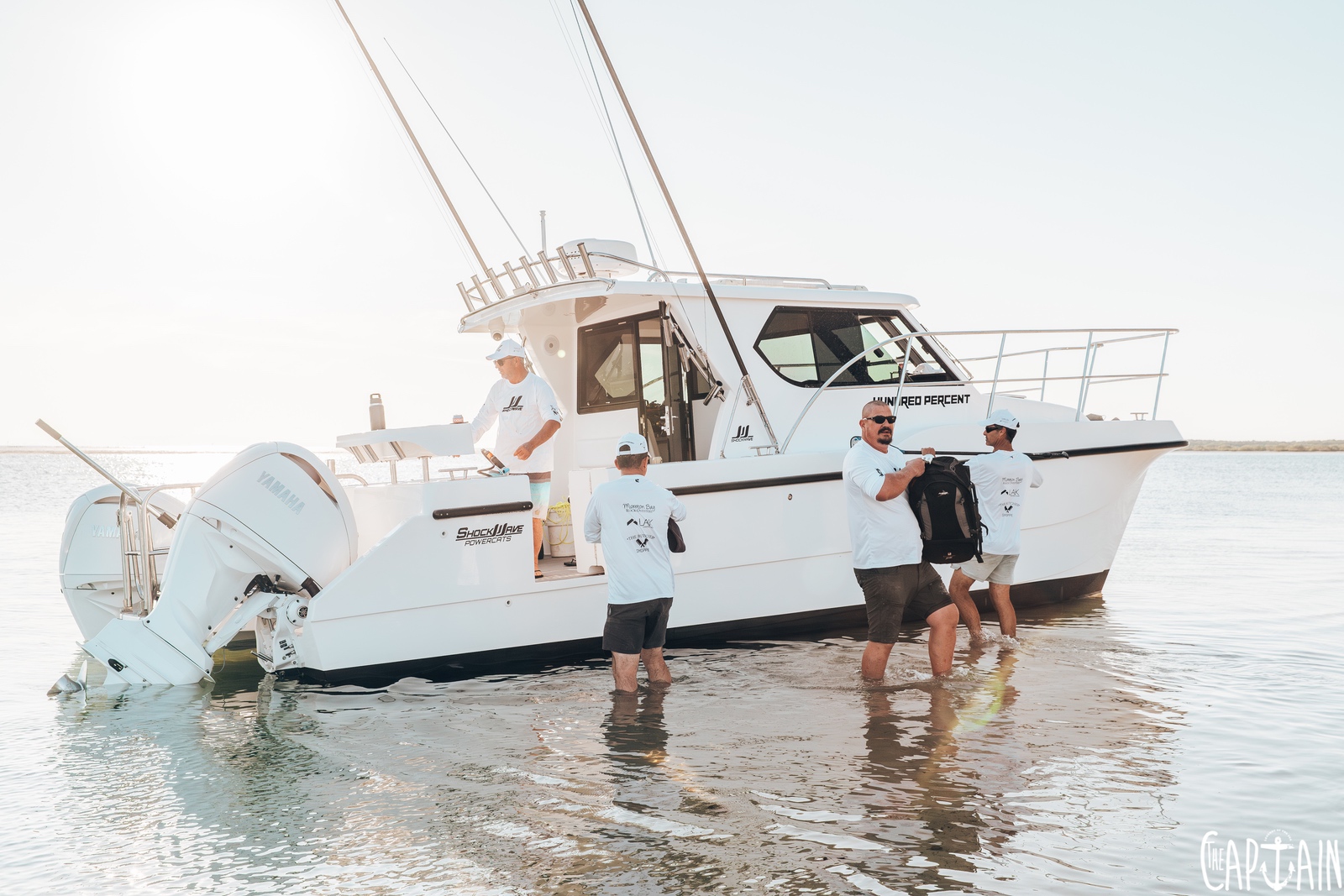
The Shockwave has definitely proved its worth. The side and rear doors are especially handy. We have the boat backed up to the beach and the doors make loading off and on super-easy. Ditto getting on and off the boat on the beach, boarding from other boats, diving or pulling in giant tuna, er, if we’d been lucky.
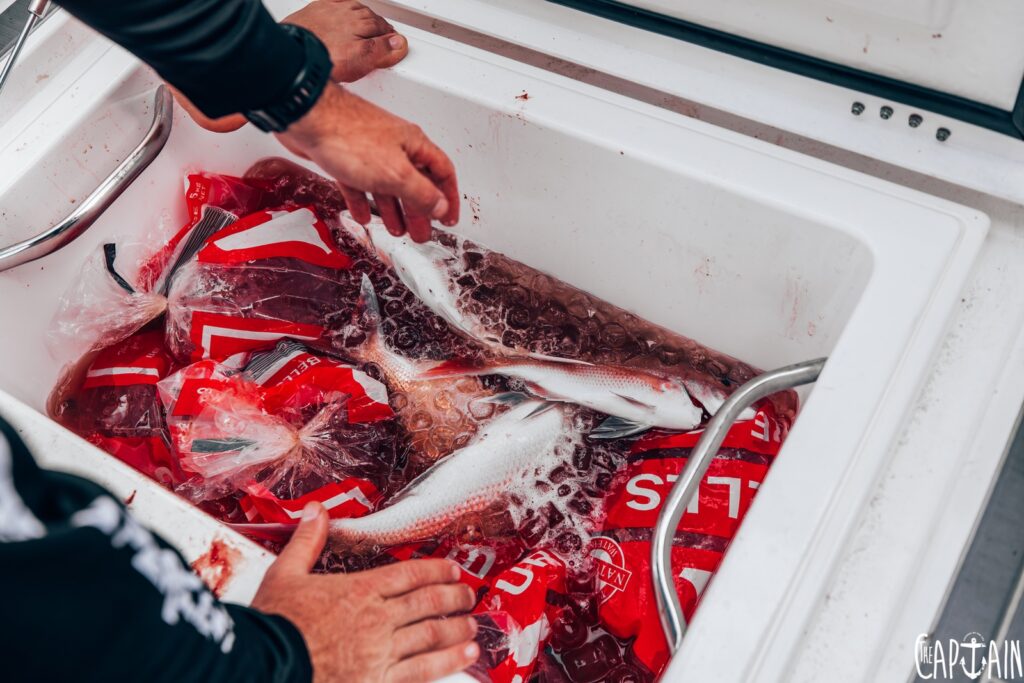
Paul also rates the kill tank. “We’ve had ice and about 25 fish in this over two days, and there’s still a good slurry.”
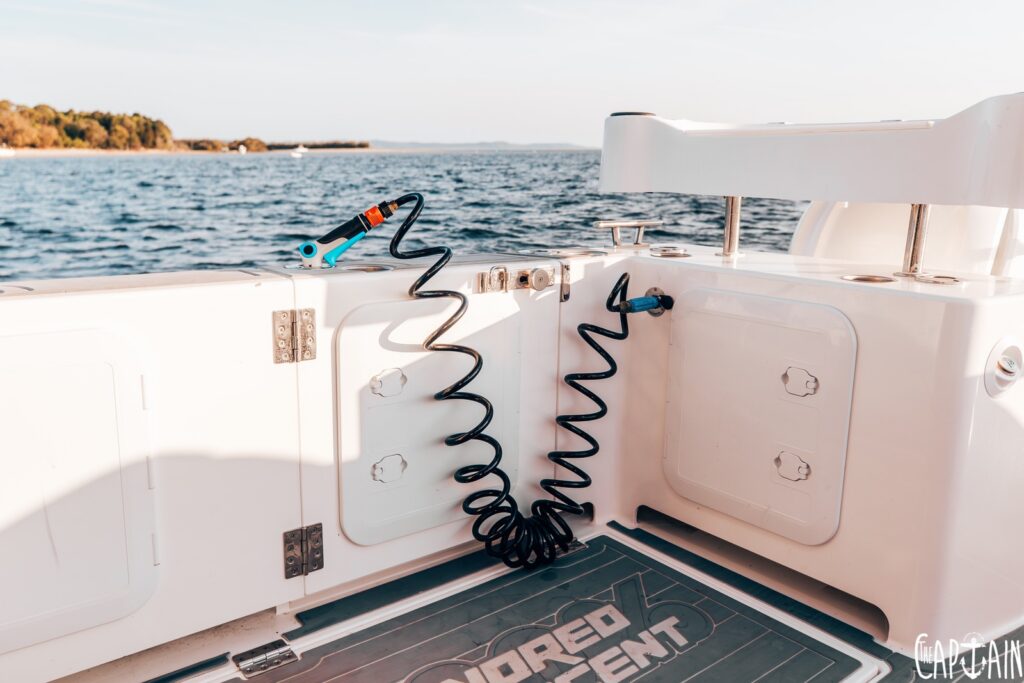
The Jabsco deck wash has also copped an absolute hammering and The Captain is impressed that each rod holder has a cup holder.
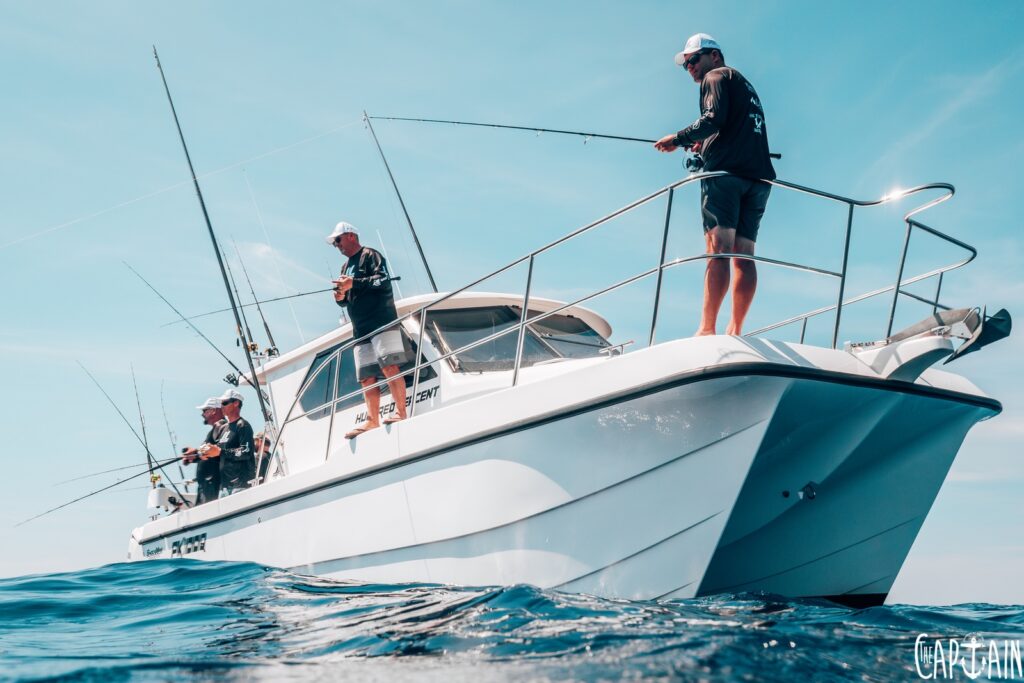
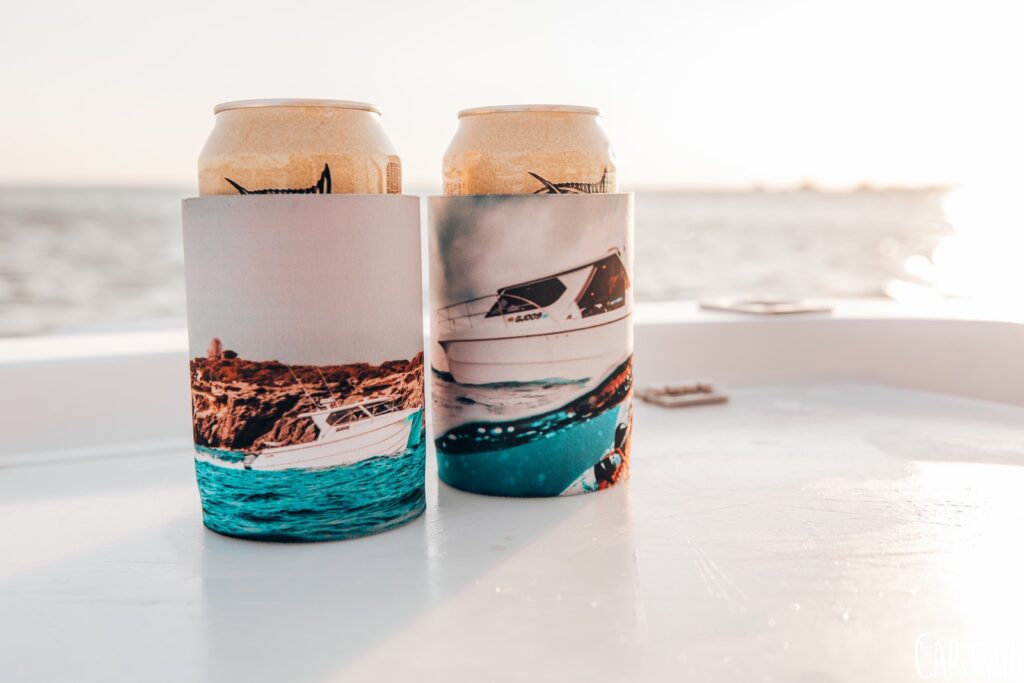
“You have to stay hydrated,” Paul laughs. “This boat’s set up for bottom fishing, so all the rod holders face outwards, which has been really handy this weekend, because that’s all we’ve been doing.”
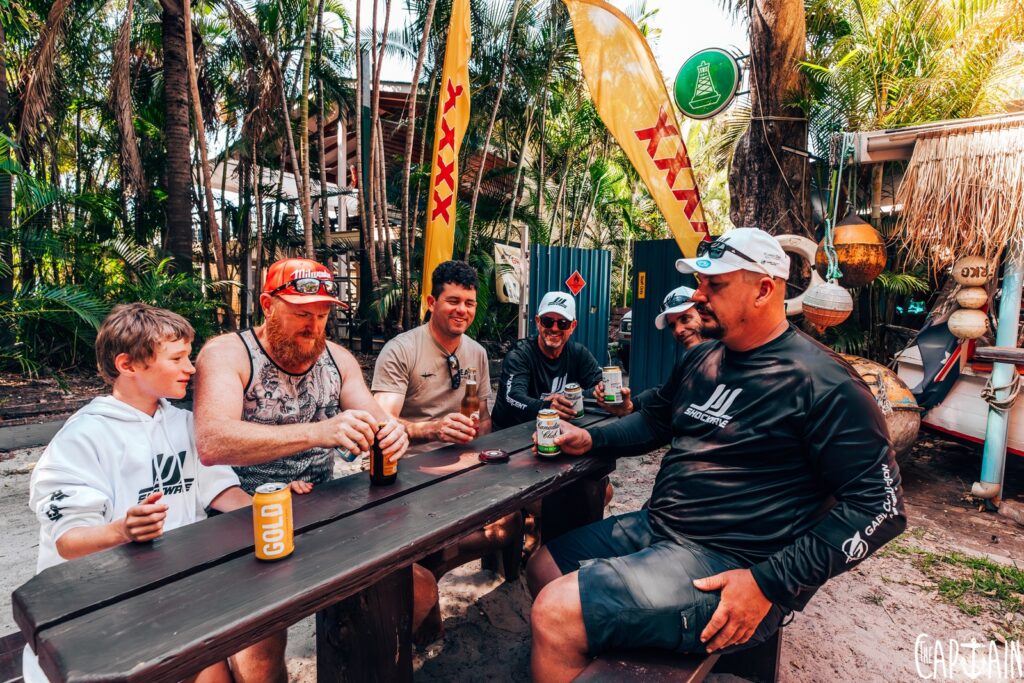
THE GUTTER BAR
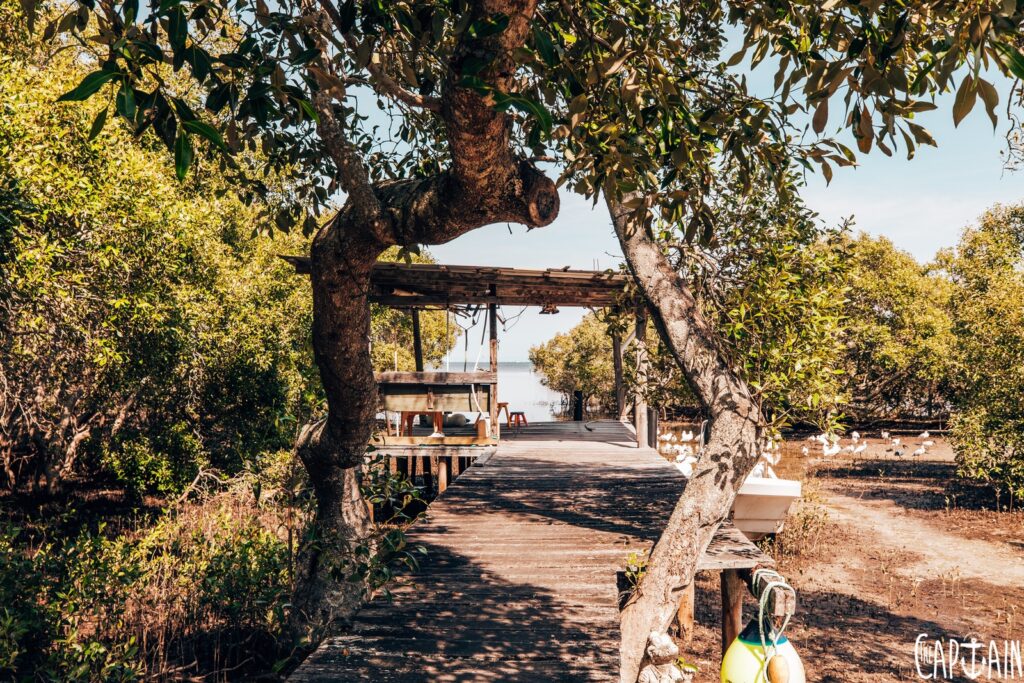
Hidden just behind the scrub, a short walk up the beach at Kooringal, is The Gutter Bar — the ultimate spot for a beer and a burger. Stepping in feels like you’re about to take part in season 14 of Survivor.
MODS & OPTIONS
Over lunch, Andrew and Paul tag team on a rundown of the Breaksea’s high points. At 10.1m long with a 3m beam, the boat draws just 0.6m. “But I’ve had it in 0.3m and it keeps going,” Paul says. “It gets pretty shallow over here, but it’s a very light boat.”

The boat has fishing efficiency to burn, with deck space up front, in the cockpit and on the swim platform. “You can fish up to eight comfortably,” Paul says. “When you’re fishing inside the bay on a calm day and you’ve got the family on board, maybe someone’s eating lunch, people aren’t sitting on top of each other. If you want to have a sleep, you can go inside the cabin. There’s also a toilet there.”
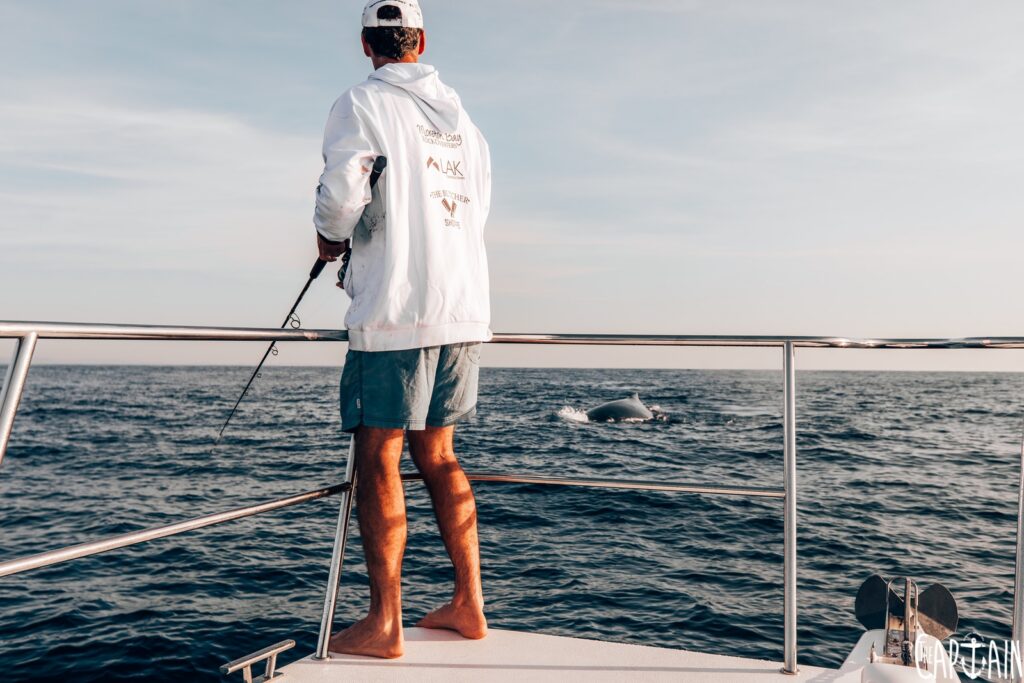
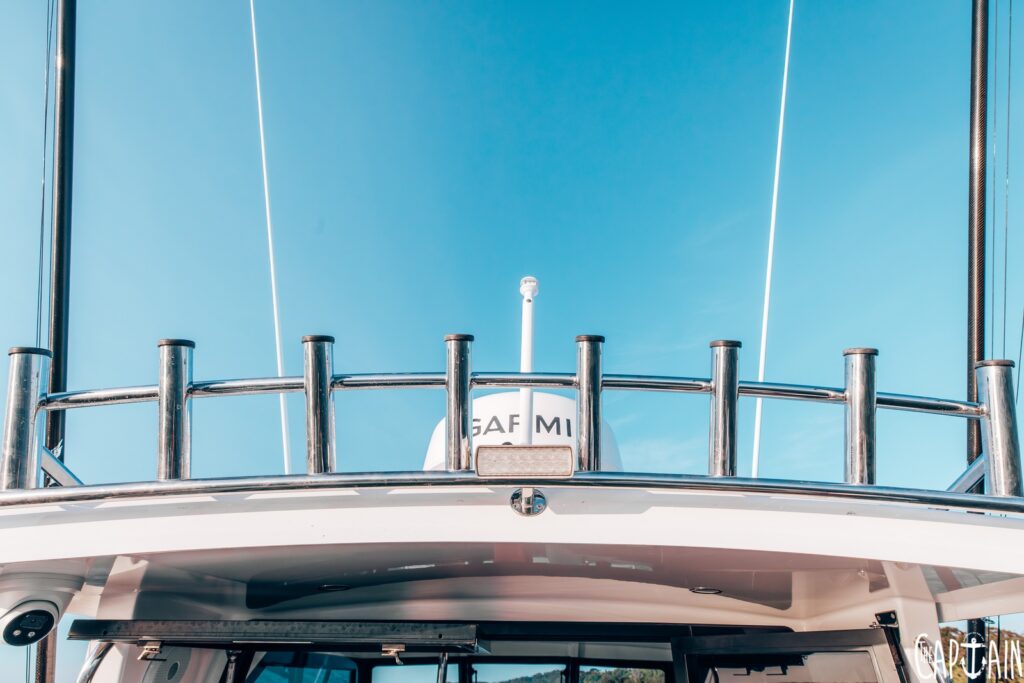
The boat has an infused fibreglass 40L live bait tank, an insulated kill tank, six rod holders at the back of the roof and outriggers, which Paul added after delivery. Toe space on the sides comes standard and adds to fishing comfort.
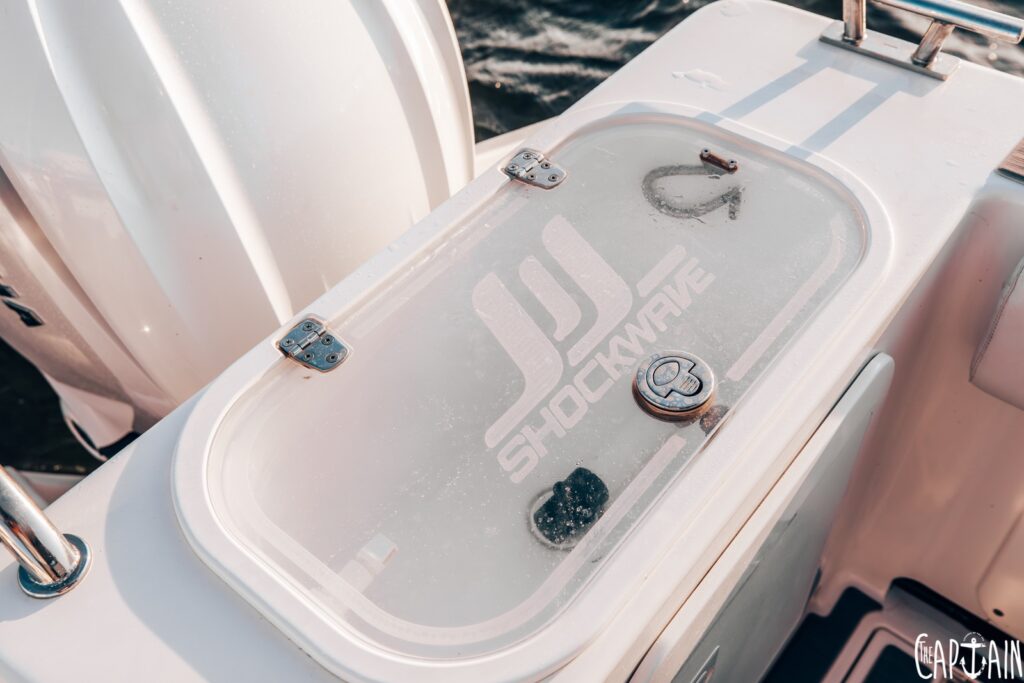
There’s storage everywhere, including multiple cupboards down the sides and an 800L underfloor space in the port hull. In fact, Paul’s tackle is the most well-organised The Captain has ever seen. “I took as much storage as I could,” he says. “The plastic drawers are a massive benefit — easy access, you can slide them in and out and your kit’s all there in front of you.”
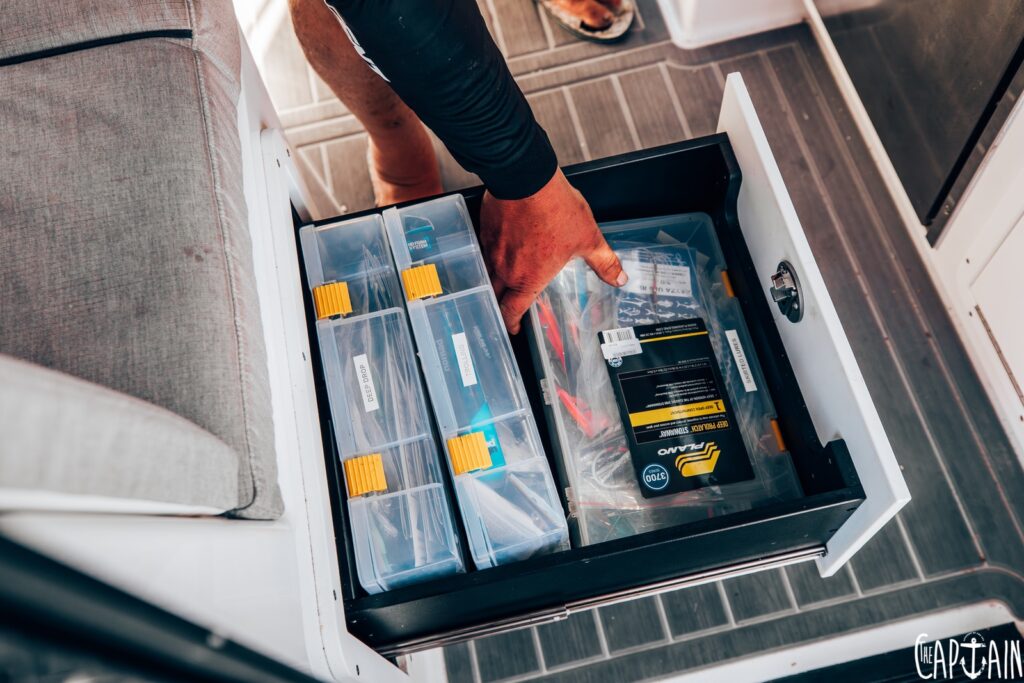
Of course, it’s all about the fishing. “We’ve got so many fishing options. You can go out for snapper, pearl perch or kingfish, or get live bait and chase mahi mahi. You can go out wide for flame snapper or gamefish. There’s whiting, squid, mackerel, the list goes on. Having all these options and a couple of young kids who want to change rigs quickly, it’s good to have it all itemised and named. Everything is accessible and handy.”
ARGO-NAUT
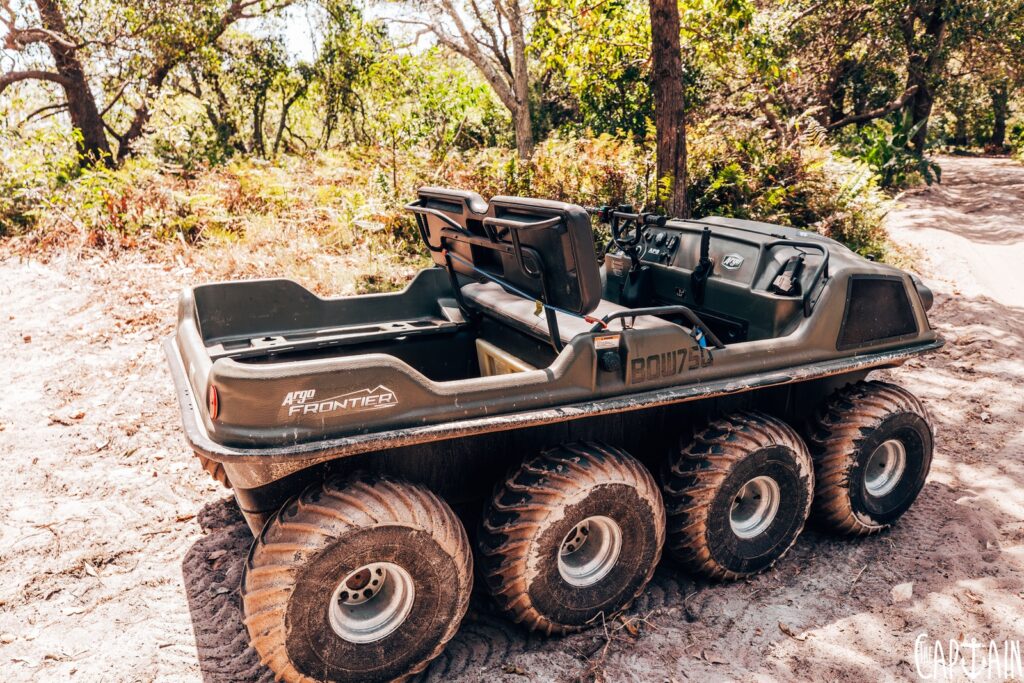
“This fantastic little machine saves me getting wet and goes anywhere. It’s an eight-wheeler designed in Canada to get around the wetlands. You can also put tracks on them. It’s chain driven, with chains on either side and a lawn mower motor. It’s loud as, but pretty fun. It uses the paddles on the tyres to get speed up and does about seven knots in the water at full strain. It’s OK for one person and does the job for me.”
CABIN CLASS
The fully enclosed cabin is made from resin-infused fibreglass, the central access trifold door a custom modification. “The back bulkhead with an open window and a closing door blocks out the elements and takes the sound level inside the cabin to where you can have a normal conversation,” Paul says.
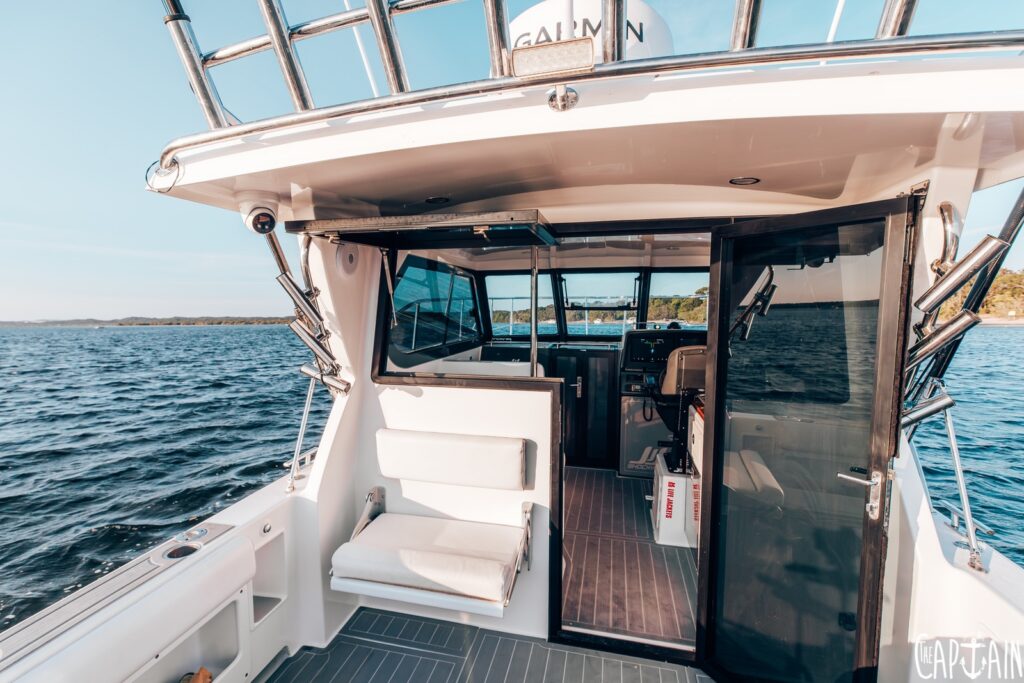
There are plenty of things to hang onto and the opening Gebo window at the front allows enough air through to keep things cool. “It gets pretty hot up here, so Paul’s given the windows a light tint with a special ceramic coating that takes 10–12 degrees off the outside temperature,” Andrew adds.
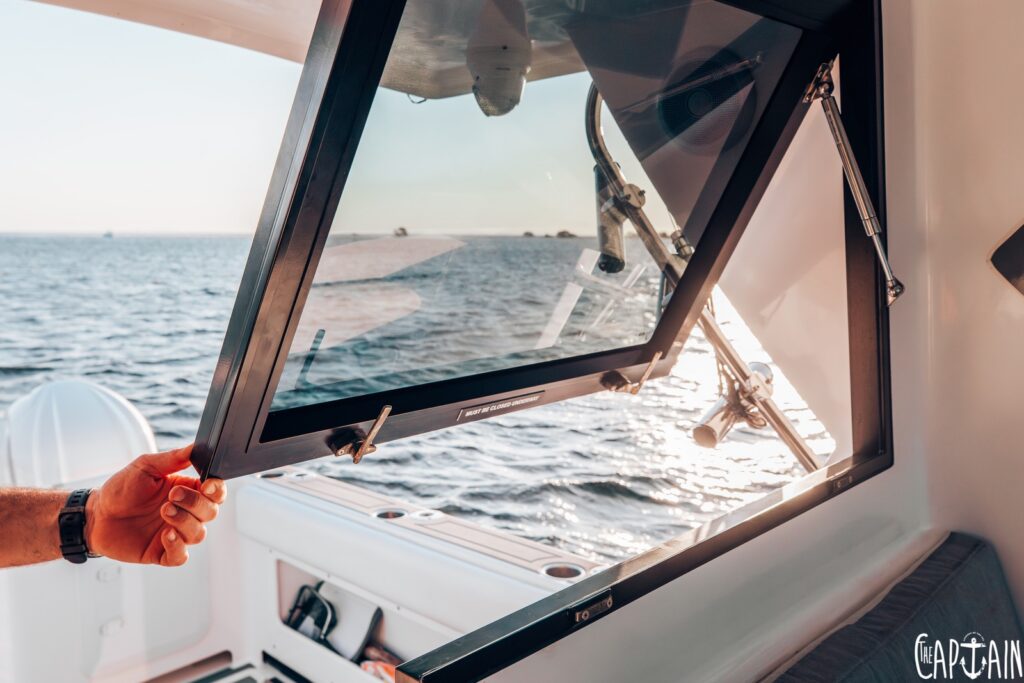
“If it’s a bit cold to open all the windows, you can open the front hatch,” Paul says.
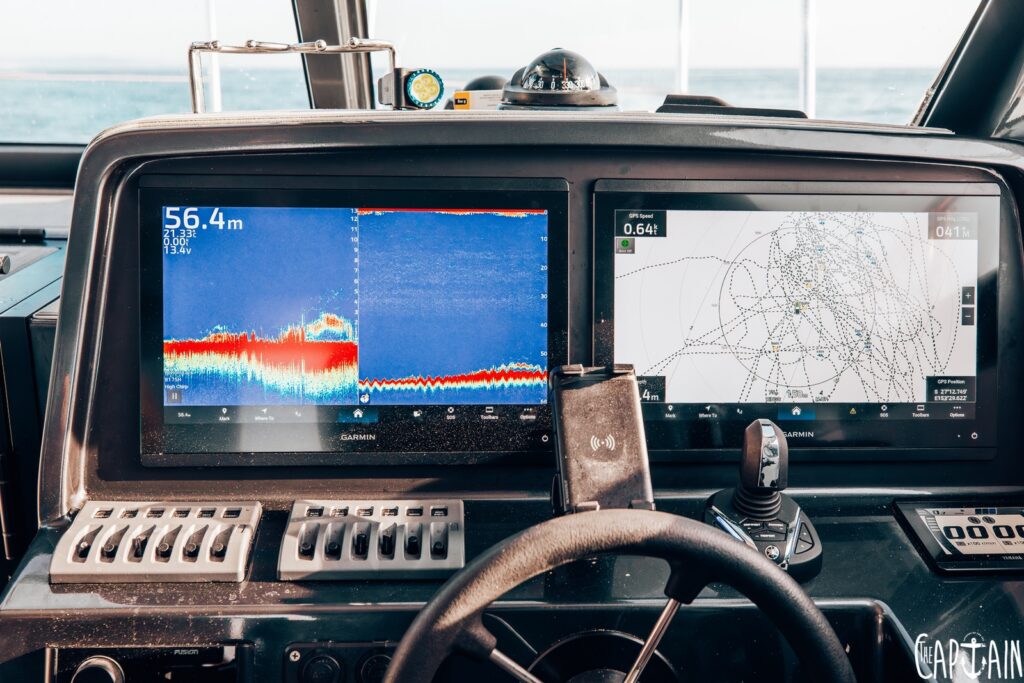
The custom dash is a marvel, showcasing two 16in Garmin screens, Blue Sea switch panels and integrated winch control and windscreen wipers. Paul’s added SeaDek to stop stuff sliding off, plus a few cup holders. The Yamaha HelmMaster system is integrated with the Garmin, as is the Fusion sound system.
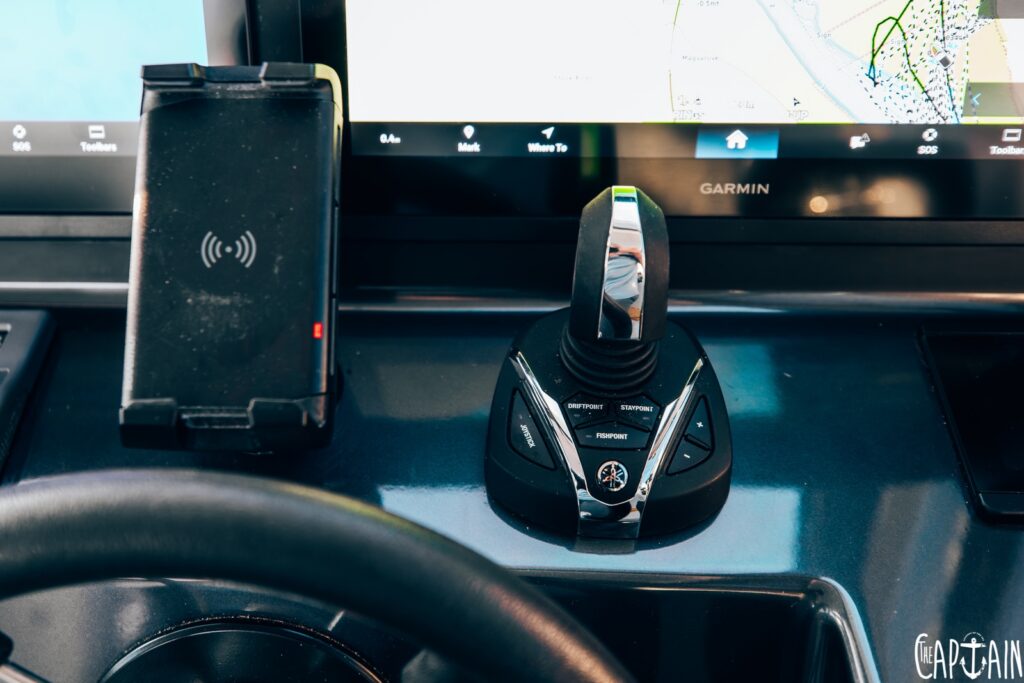
“We’ve been playing around with the autopilot and joystick features a lot, but haven’t had time to use the Fusion — too busy talking and catching fish,” Paul laughs.
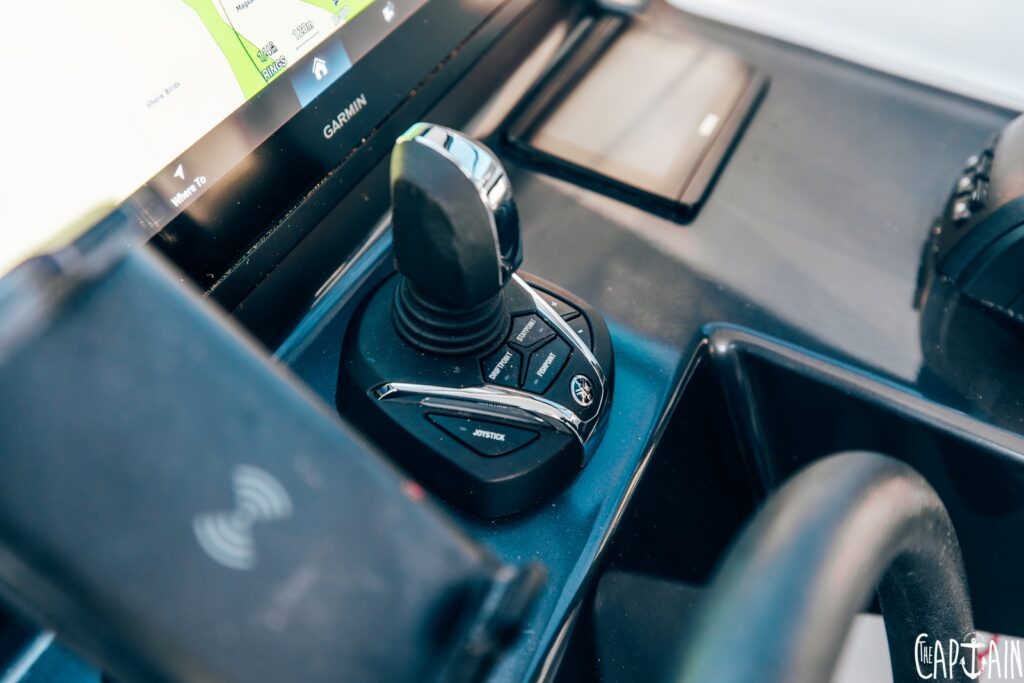
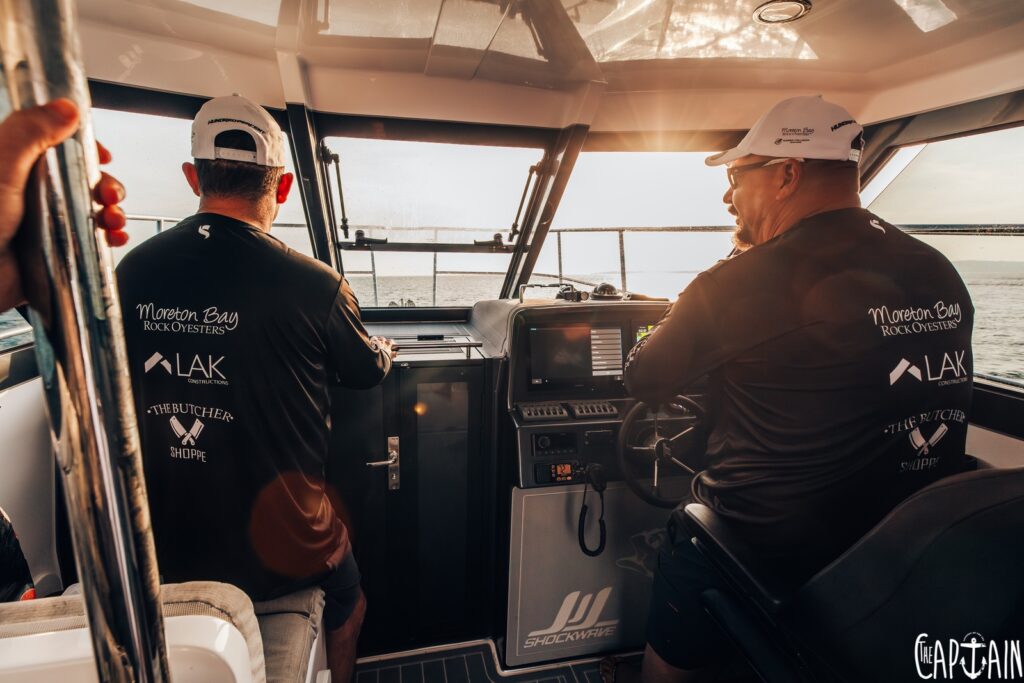
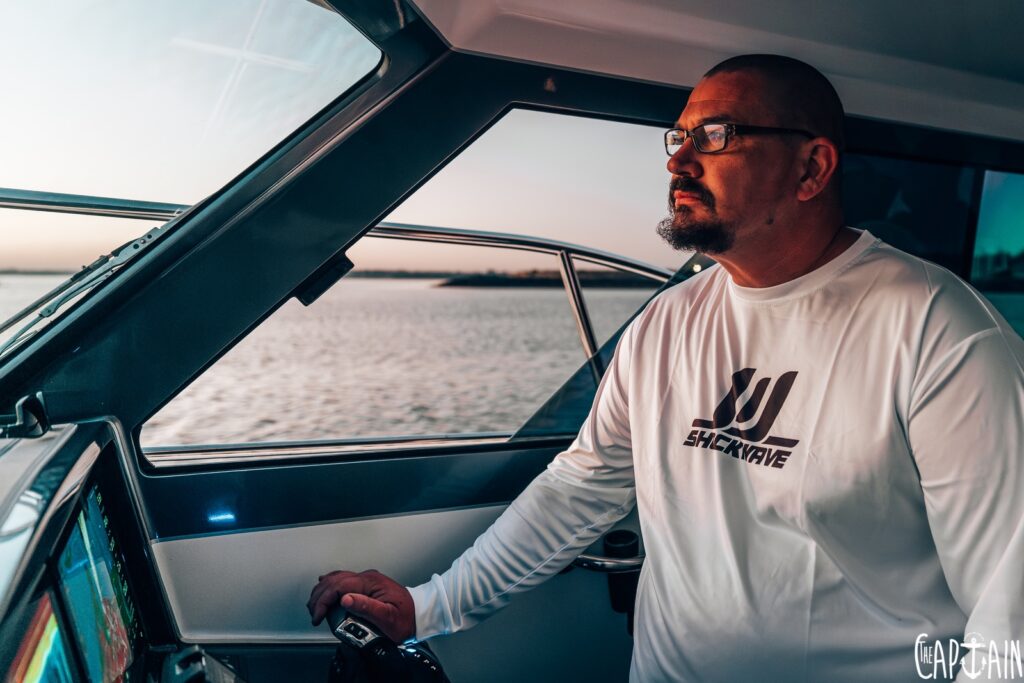
Andrew’s experience with Marine Rescue influences some of the design features. “The visibility is great, you can stand at the helm and see all four corners of the boat, which means you can pull alongside a jetty or another boat without any damage,” he says. “You can see what the deck crew are doing. Having the clear windows at the front makes night navigation easier.”
Then there’s the Shockwave seats. Despite the name, they’re made by a Canadian company, but Andrew imports them. “We’ve sold hundreds throughout Australia, mostly to law enforcement and marine rescue,” he says. “We’ve optioned it with armrests and Paul’s chosen a flip-up bolster, so it’s sit/stand and you can lean back on it.”
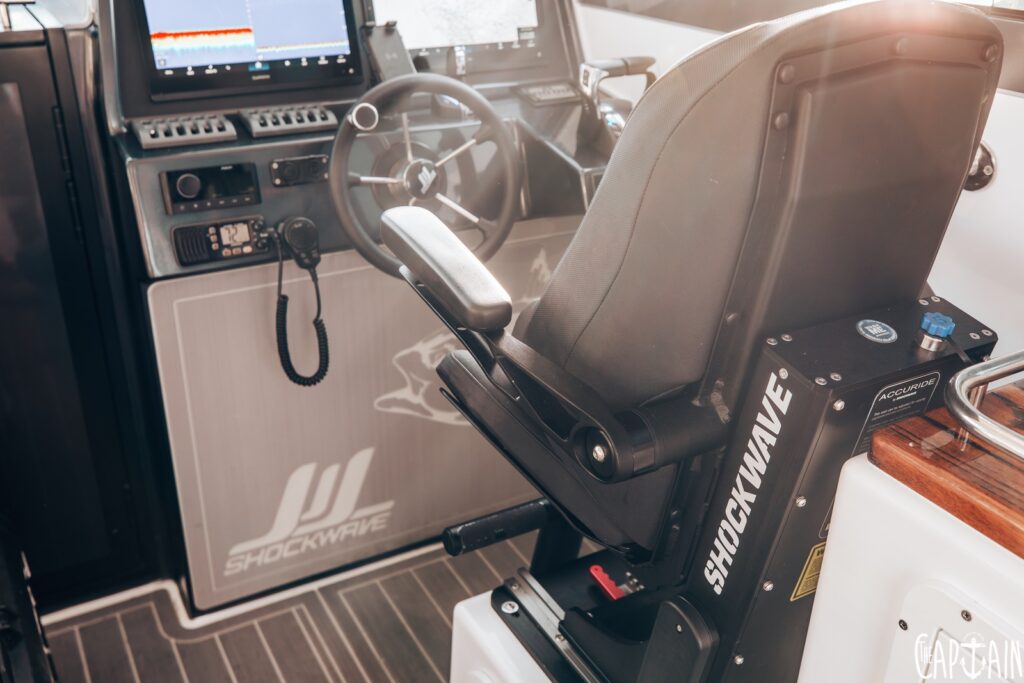
The robust unit is a spine saver. “I used to come home with a sore lower back from a day smacking it hard — this seat takes a lot of the bash out,” Paul says.
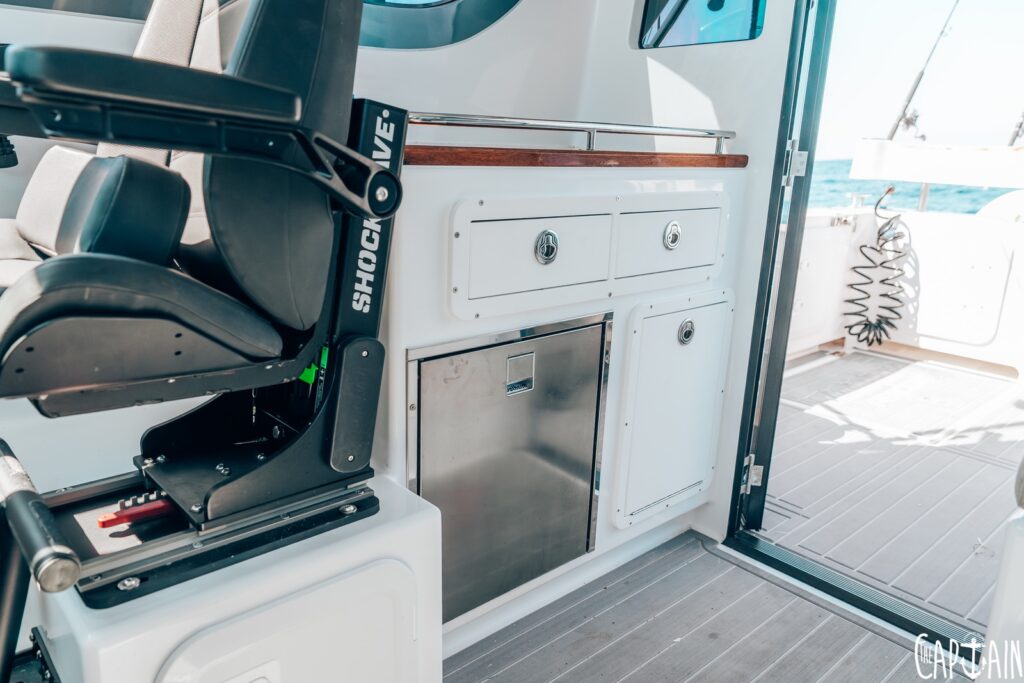
Andrew reckons the helm design is all about safety. “The steering wheel is set at a comfortable standing height. Your autopilot controls and start/stop are there. The lanyard’s out of the way, so it’s not scratching the dash. You’ve also got the winch circuit breaker below, so if you’re tripping, you don’t have to leave the helm.”

Paul’s happy. “It’s simple to use, everything’s in front of you and it all works.”
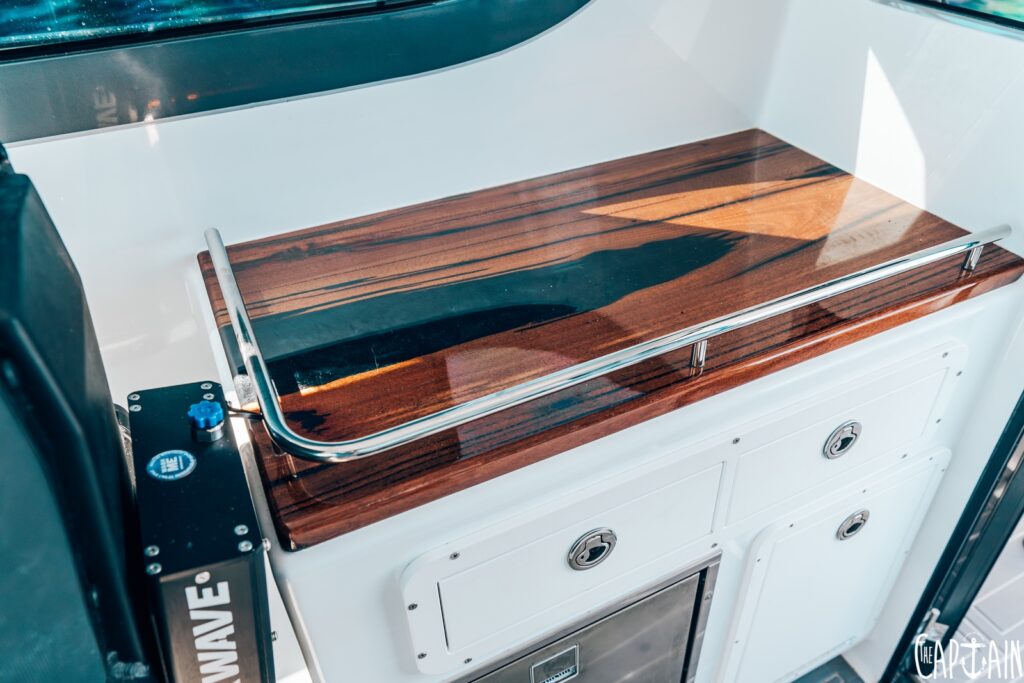
Other features include a saltwater deck wash, freshwater shower on the back deck and bolsters on the port side. The starboard side has the dive door. A nice touch is the jarrah bench top. “The jarrah comes from Perth, it’s a nice memory of where the boat was built,” Paul says.
ELECTRICAL DEPARTMENT
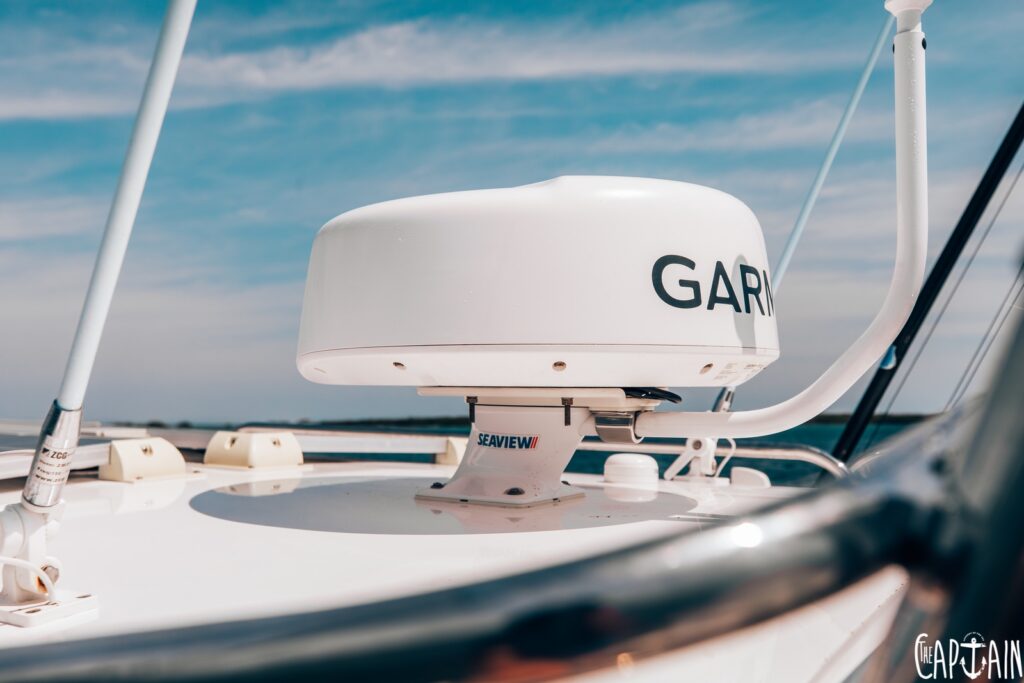
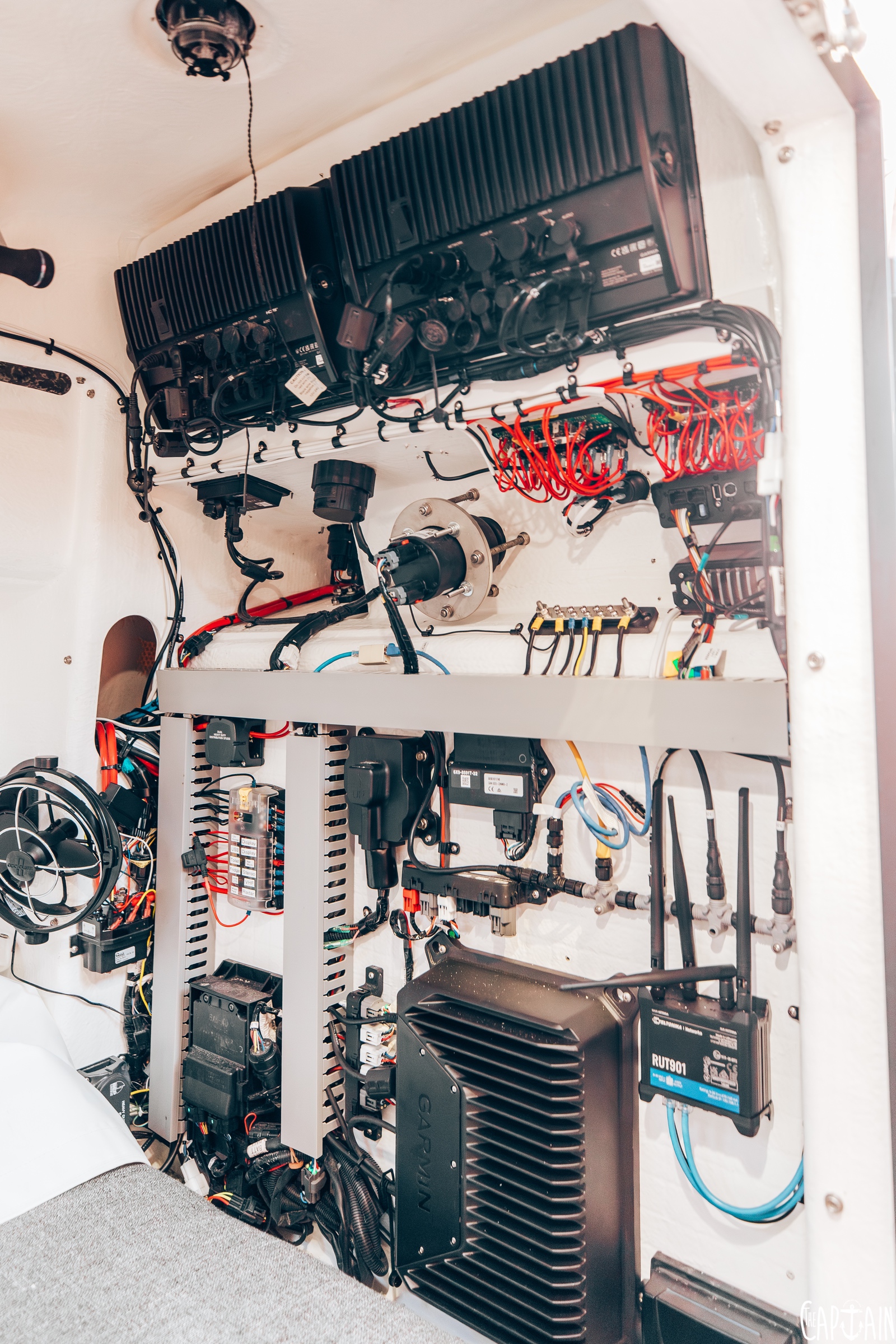
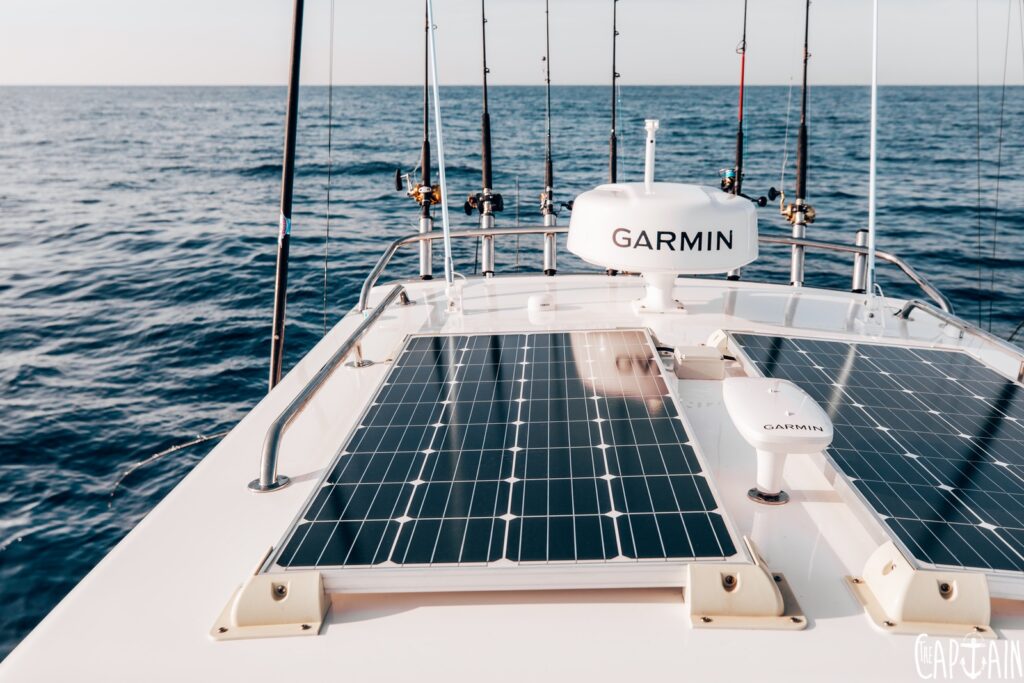
Paul’s gone overboard with the Shockwave’s electrical fit-out after a chat with Stones Corner Marine. It’s all Garmin and includes the 16in screens and an MSC 10 marine satellite compass in the console, B175H high and low 1kW transducers in each hull, and a GSD 28 sonar module that can read the bottom at 3000m. On the roof sits a Fantom dome radar. “It’s handy when we’re crossing the bay to spot whales, dugongs, other boats and moorings sitting out of the water,” he says. “I haven’t got a night vision camera, but the radar means I still see what’s around.”
All these gizmos talk to Paul’s Garmin watch via the ActiveCaptain app (not to be confused with The Captain’s upcoming sportswear range). “I can actually pick my maps, control the boat’s autopilot settings and drive it through the watch,” he says.
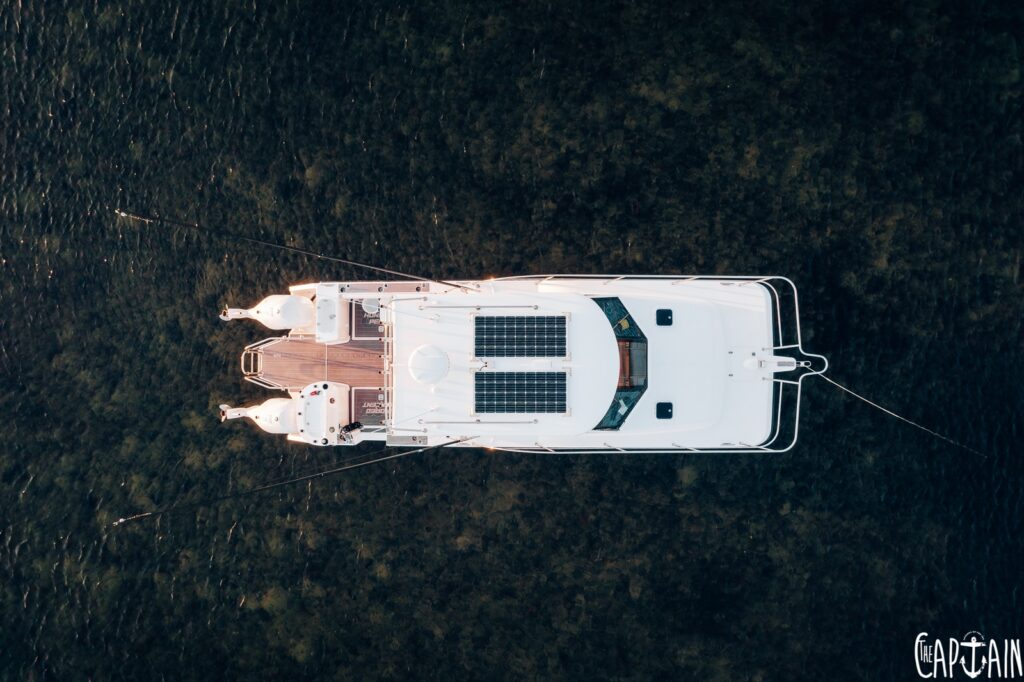
He’s installed a Victron battery management system that feeds info to his Garmin watch to warn if the battery juice is running low. Not that it should. This is a sustainably solar boat.
“We’ve got two solar systems upstairs, which saves on the ship-to-shore charging,” Paul says. “I never turn the fridge off. Everything charges off-grid so I’m pretty self-sufficient now. If I do have charging problems, it’s a two-minute process to reset the lithium battery memory and get it back online.”
He’s just fitted a Hella lighting system at the stern. “That should draw up the squid at night,” he says. “The deck light is fantastic for when I’m crossing the bay and want to set up my crab pots.”

40 KNOTS
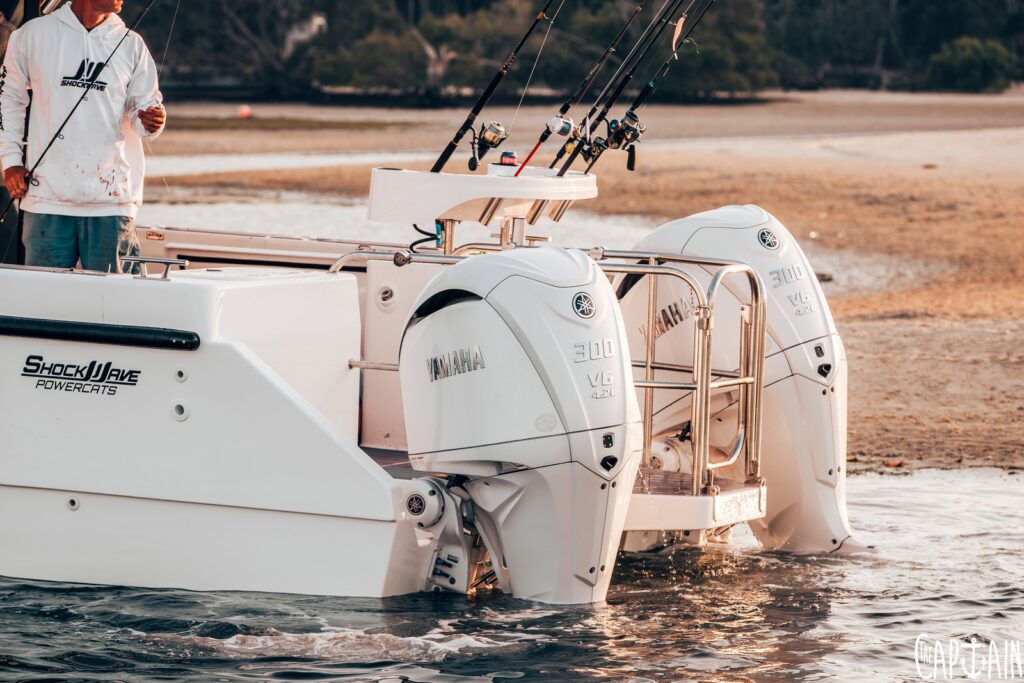
After all the electro-chat, thoughts turn to monster donks hanging off the stern. It’s a no-brainer, given Yamaha uses Garmin displays and integrates with the rest of the tech. These beasts are 300HP V6s and are responsible for Paul’s Moreton Island nickname — “40 Knots”. He’s actually had the Shockwave nudging 50 knots. “The faster you go, the better it rides. If you slow down to 20–25 knots, it still loves it, but it just goes better at 40,” he laughs. “I had Suzukis on my last cat and would’ve gone through four sets in 900–1000 hours. But the speed, torque and sheer grunt of the Yammies is unbelievable. The instant acceleration from a stop is comfortable, smooth and fast — next-level.”
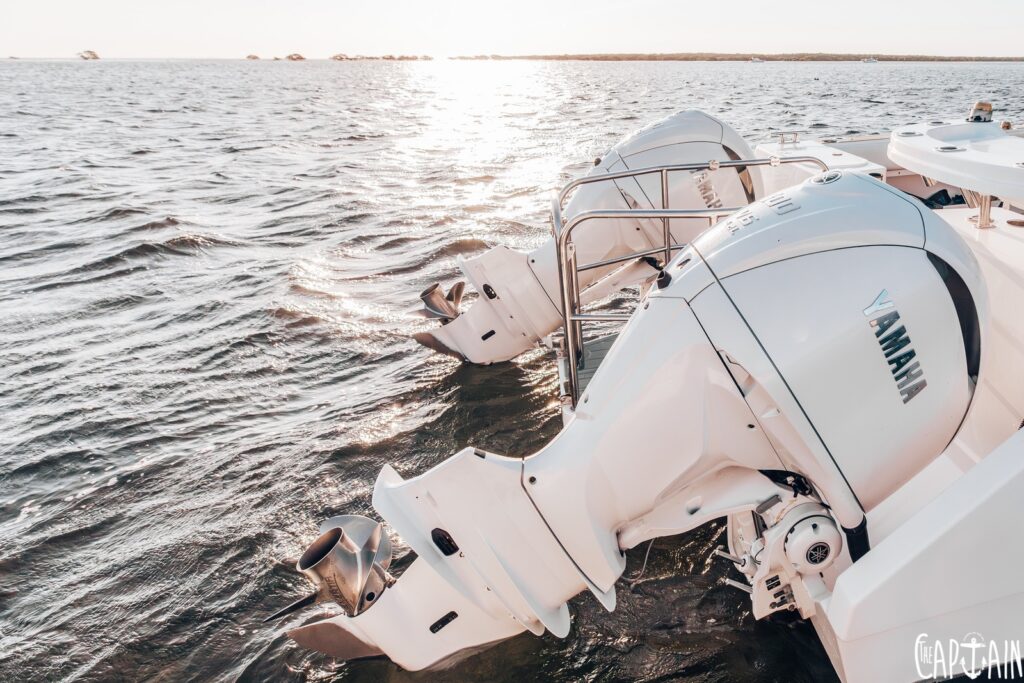
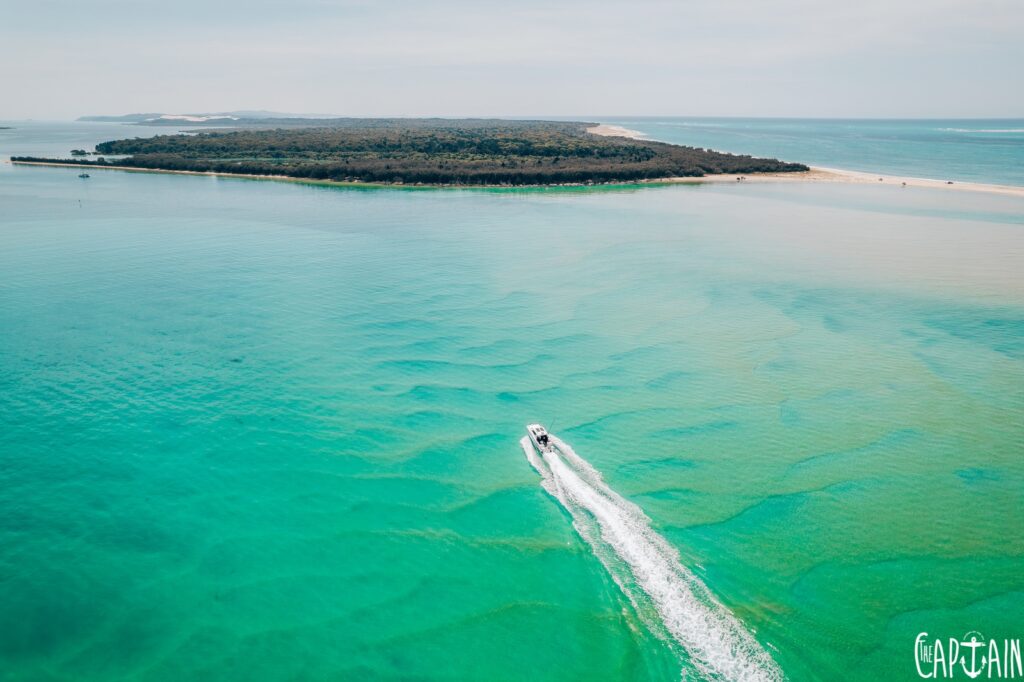
The fuel capacity is 800L, in twin 400L tanks, one in each hull. According to Paul, our Barwon Banks mission used about 600L in a round trip of 300km from Kooringal. He says an average Brisbane-Moreton-Brisbane “water taxi” run uses about 85L doing 35 knots.
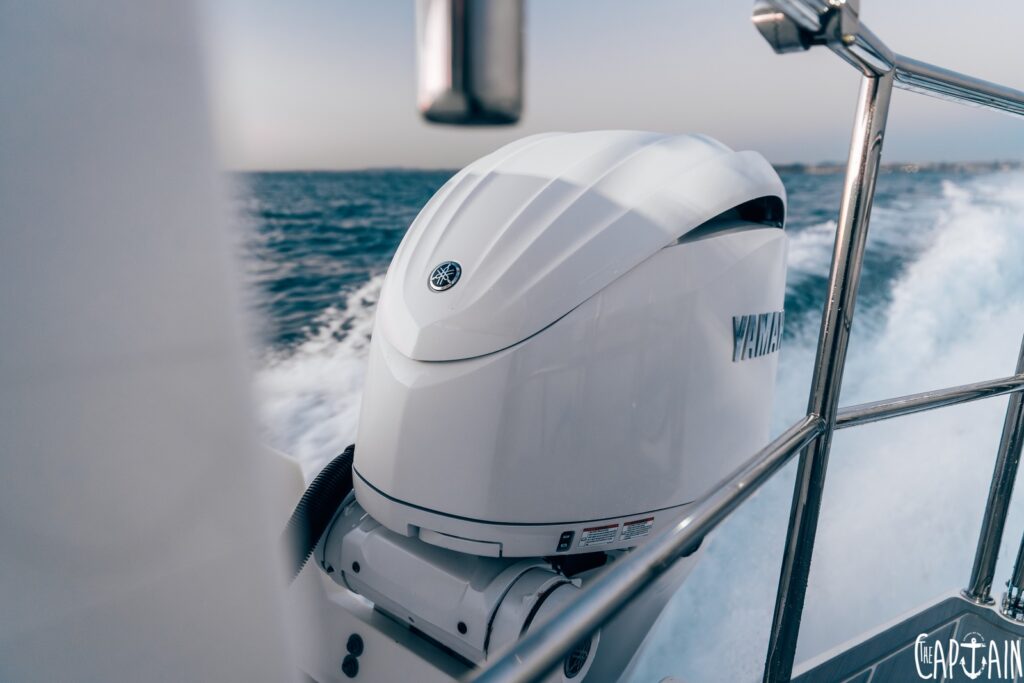
NOT YOUR AVERAGE CAT
In a part of the world where the weather can be a drama, Paul rates the Shockwave. “It’s an incredible performer for its length and width. The hull is high, you don’t breach, there’s none of the normal cat behaviour. It’s a different beast. Conditions in the bay are pretty shit at times. You’ve got a southerly swell that comes through, a northerly picks up, a strong westerly at 30–40 knots. It comes from all directions. Easterlies aren’t that bad, but when they turn into the south, you get a lot of side-on stuff. The Shockwave handles all these weather conditions better than anything I’ve driven.”

Uplift is the secret. “It keeps the front up all the time. Instead of going down and following a wave, it sits up on itself. As long as you’re doing the right speed and you’ve trimmed it right, you can turn the corner at 40 knots, which is incredible for a cat. It just eats the swell.”

MISSION ACCOMPLISHED
After the boat debrief, it’s back to Casa Paul for — what else — another feast. Big thanks to Wade from Moreton Bay Rock Oysters, who rocks up with fresh oysters, oysters Kilpatrick, scallops on skewers, prawns and Moreton Bay bugs.
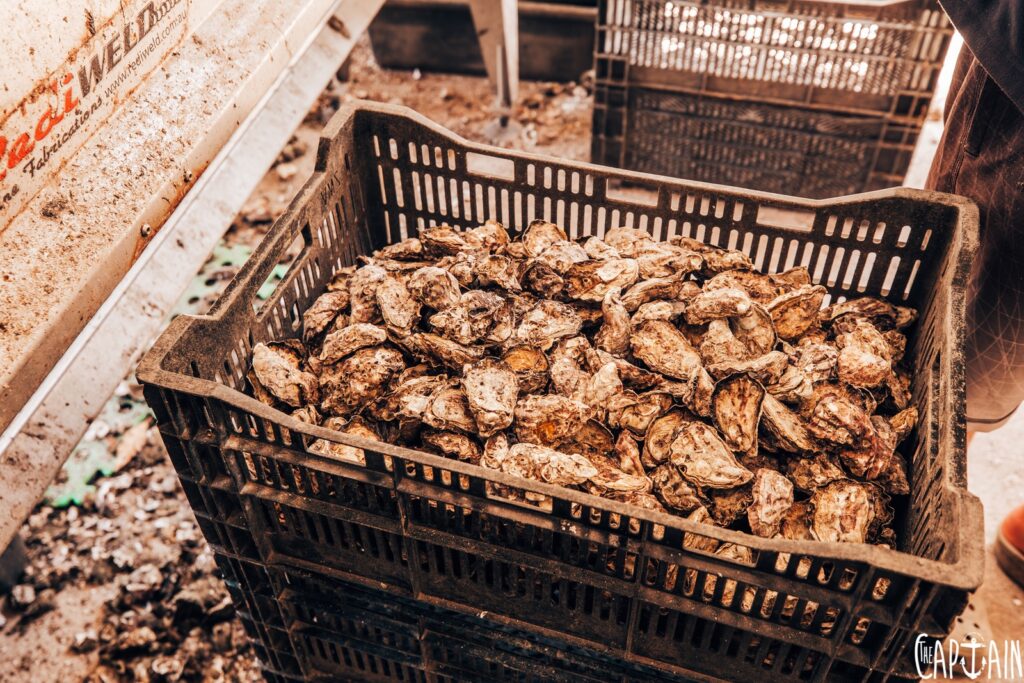
Zipping across Moreton Bay on the way back to the mainland, we ask Andrew why he builds these boats.

“We get a kick seeing people impressed with how well they run, because they’re such a fantastic hull,” he says. “The streamlined shape turns heads. They look like they’re going 40 knots when they’re standing still.”
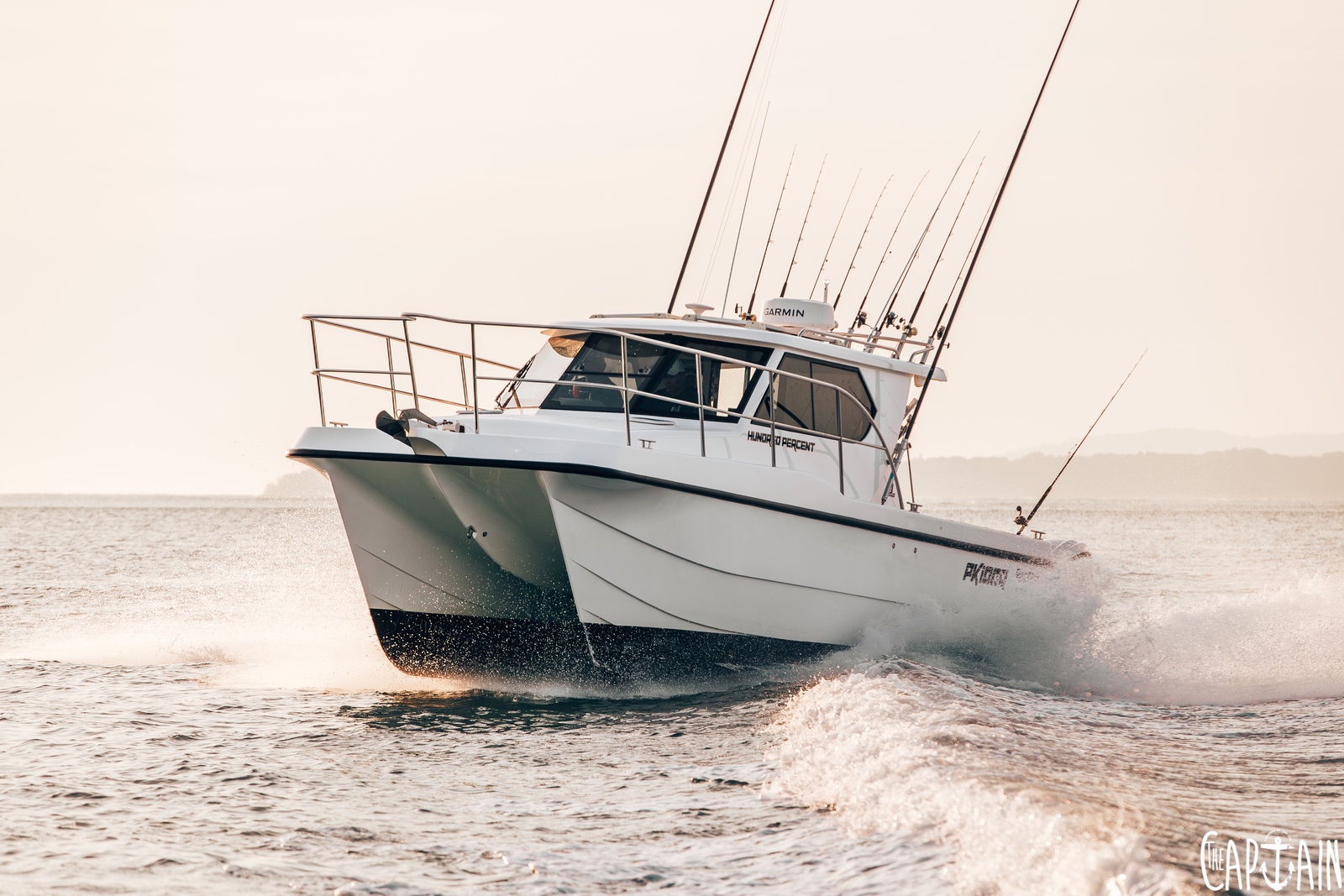
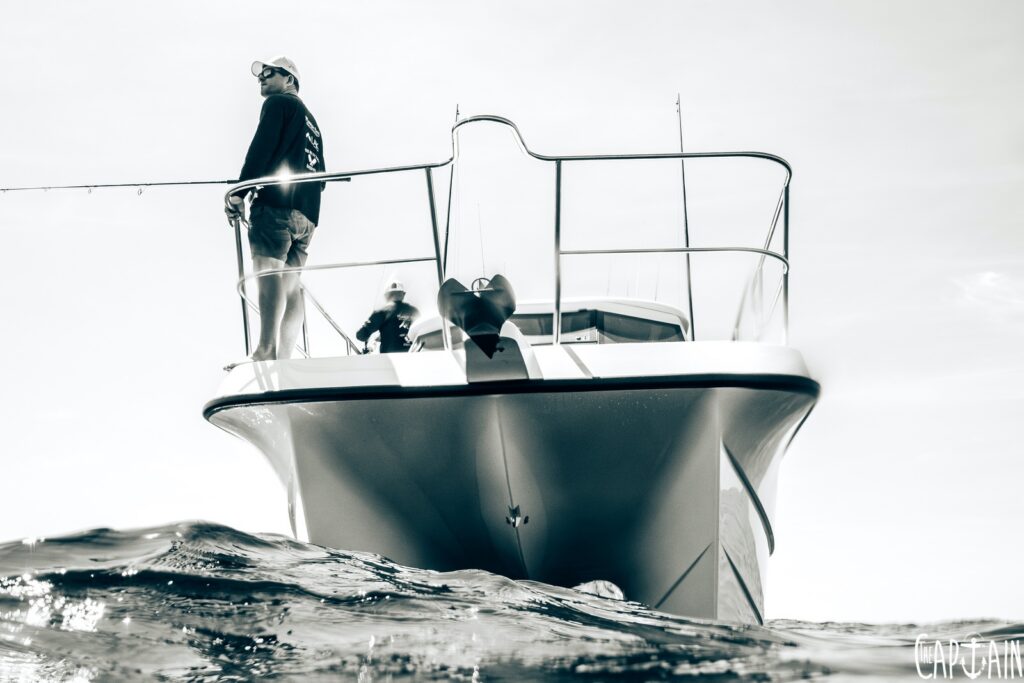
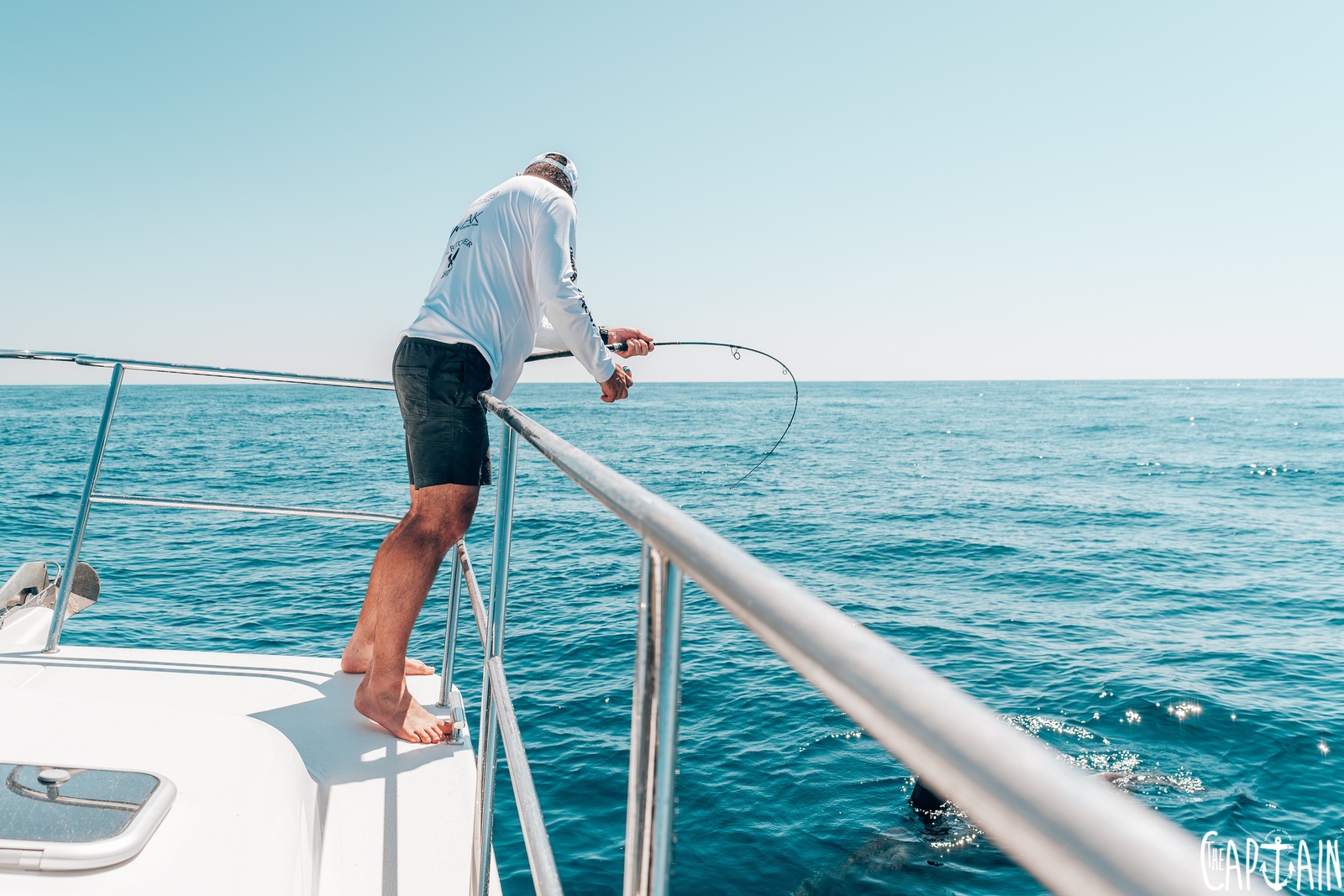
At the helm, “40 Knots” nods his head. “And if you’re going 40 knots and you slow down to 30, it feels like you’re standing still. It doesn’t matter where you are on the boat — you can perch yourself upfront and you’re fine doing 40 knots in 12m swell or a 1.5m swell. You lean on that rail and the height is fantastic, because you never feel like you’ll go over.”
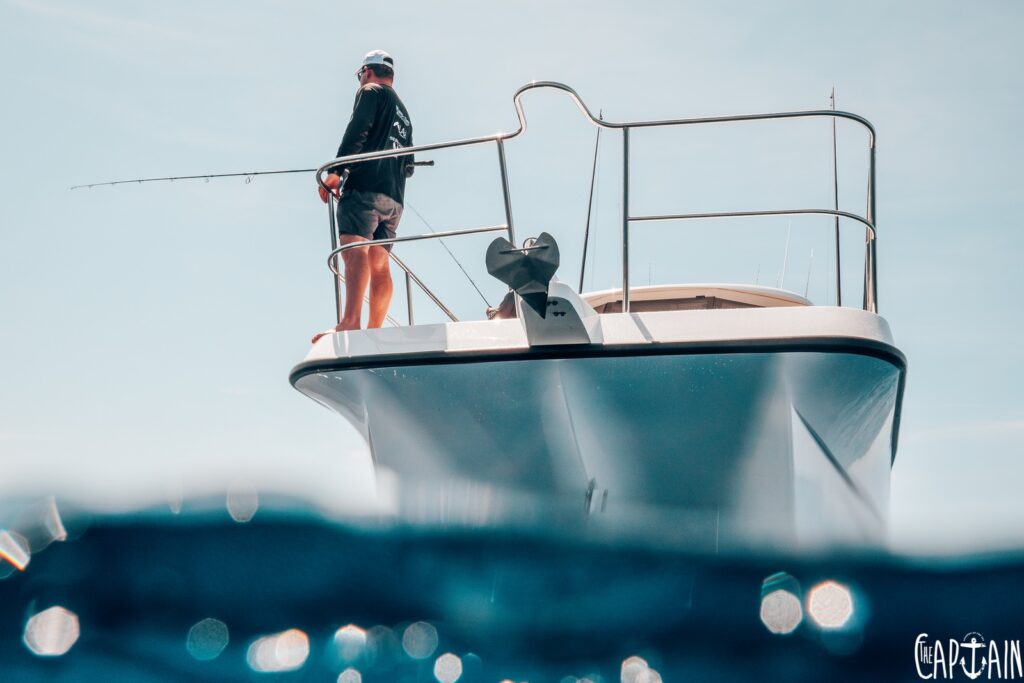
Aye, aye, skipper. Full speed ahead!
TRADITIONAL OWNERS
The island was known as Moorgumpin — place of sandhills — by its original inhabitants, the Ngugi, who lived here for over 2000 years. Their diet was mostly fish, shellfish, dugong and turtle supplemented by ferns, midyim berries, pandanus and honey. There are many cultural sites on the island, including a stone quarry.
As an island people, the Ngugi had a strong connection with the sea and kept an eye out for early warning signs of the arrival of migratory fish in the bay. The arrival of mullet was predicted by lorikeets visiting the island, caterpillars at the base of coastal wattles and paperbark trees in flower.
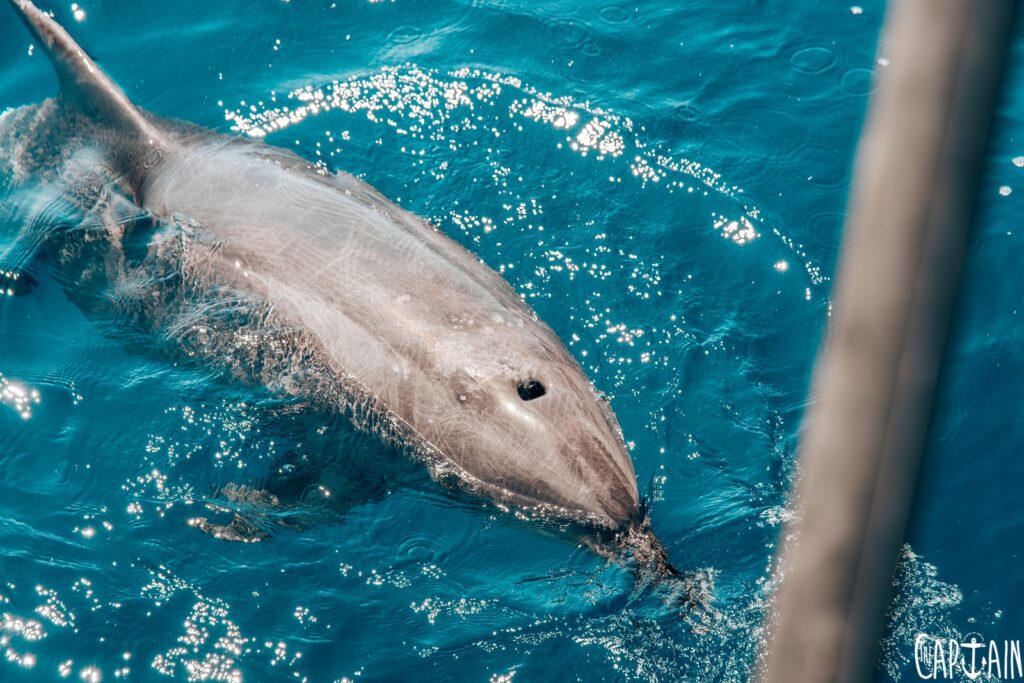
The Ngugi also hunted fish cooperatively with dolphins. The men would wade into the water, slapping their spears onto the surface. This sound brought in the dolphins, herding schools of fish into the shallows. The locals would then catch the fish using nets made from bark fibres, throwing part of the catch back in for the dolphins’ dinner.
Of course, things changed when James Cook rocked up in 1770. He named the area “Morton Bay” after the Scottish Earl of Morton. “Moreton” is a spelling mistake that stuck. The first white people arrived on the island in 1823 and by 1850, the last of the Ngugi were forced to relocate to Stradbroke Island.

THUMBS UP
- Serious pace with manners — 40 knots doesn’t even feel that fast behind the wheel of the Breaksea
- A ride best described as floating on a cloud
- Shallow-water utility is unmatched. It’s perfect for Paul’s purposes: shallow sandbar entrances and beach landings
- 800L of fuel as standard — need we say more?
- Massive bow section with high bow rail was the best fishing spot in the house
- Fully lockable cab is very handy
THUMBS DOWN
- Would love a little more ventilation in the berth
- Big hardtop cats like this take some practice to drive them properly — this isn’t your mate’s V19
- Lack of an east-coast dealer network could be a headache for some. Luckily, Andrew is extremely reliable — quick on the phone, ships parts promptly and won’t leave you hanging
BOAT SPECS — SHOCKWAVE BREAKSEA
Length (moulded): 9m
LOA: 10.1m
Beam: 3m
BMT weight: 4500kg
Water: 100L
Fuel: 800L
Min HP: 2 x 250HP
Max HP: 2 x 300HP
Warranty: 3-year non-transferable; 1-year commercial
PRICED FROM $507,000
PRICE AS TESTED $600,000
ENGINE SPECS
Make: Yamaha
Model: F300
Type: 24-Valve DOHC V6
Displacement: 4.2L
Weight: 263kg (lightest available)
MORE INFORMATION
Shockwave Marine
53 Bushland Ridge, Bibra Lake, WA.
(08) 6223 0640
MORETON BAY ROCK OYSTERS
50 Toulkerrie Track, Moreton Island, Queensland
0408 743 156
THE BUTCHER SHOPPE
Shop 31/1145 Wynnum Road, Cannon Hill, Queensland
(07) 3890 3751
GALLERY