
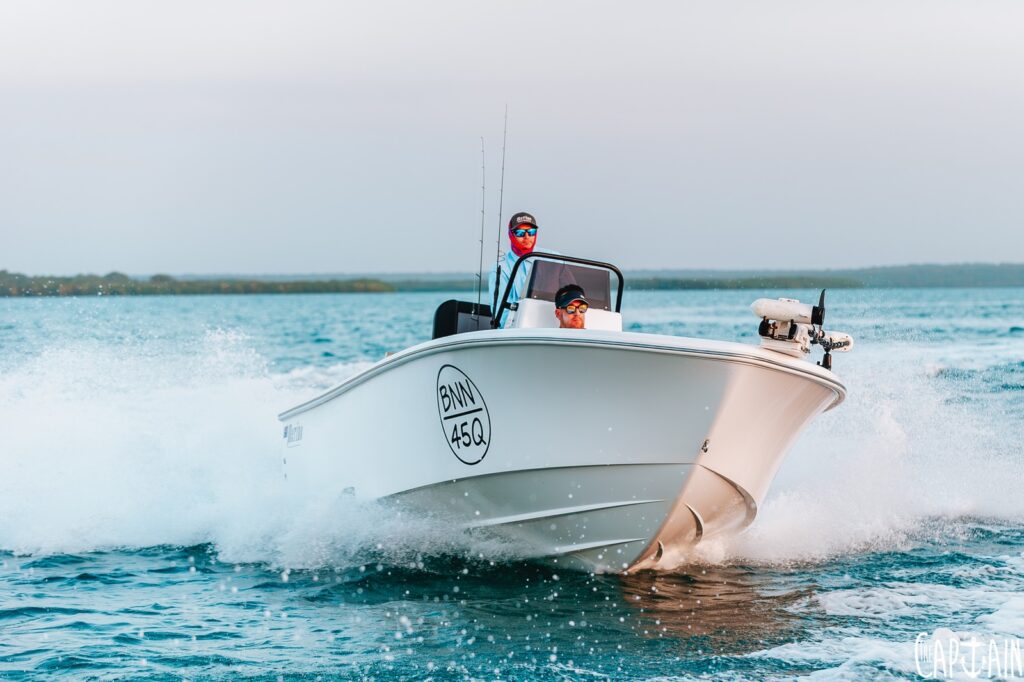
The captain heads north to check out the first merino 6.8m hybrid off the production line. purpose-built to fish barramundi comps, chase billfish offshore or take your mates camping for a week, it’s the ultimate top end tourer.
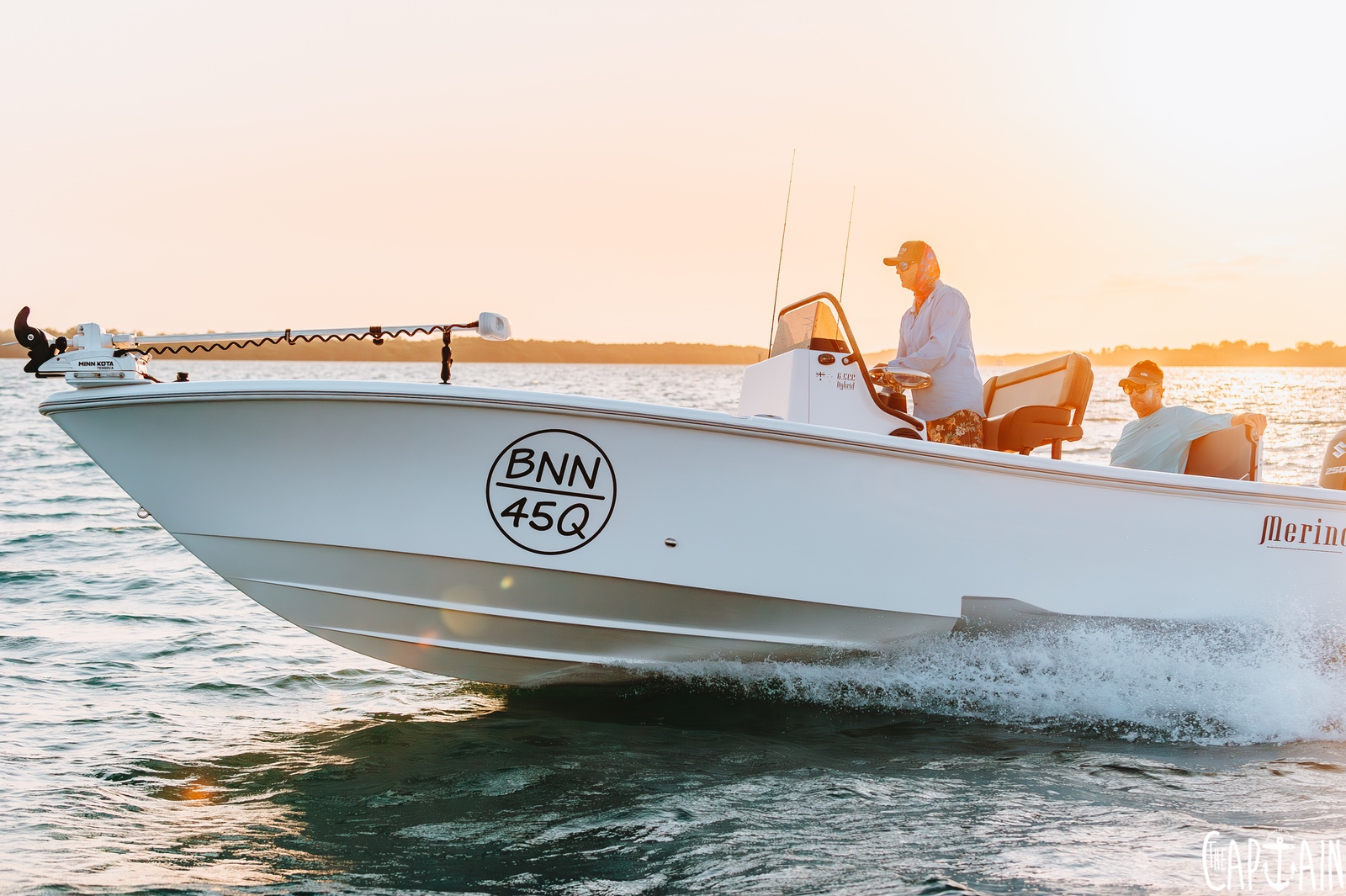
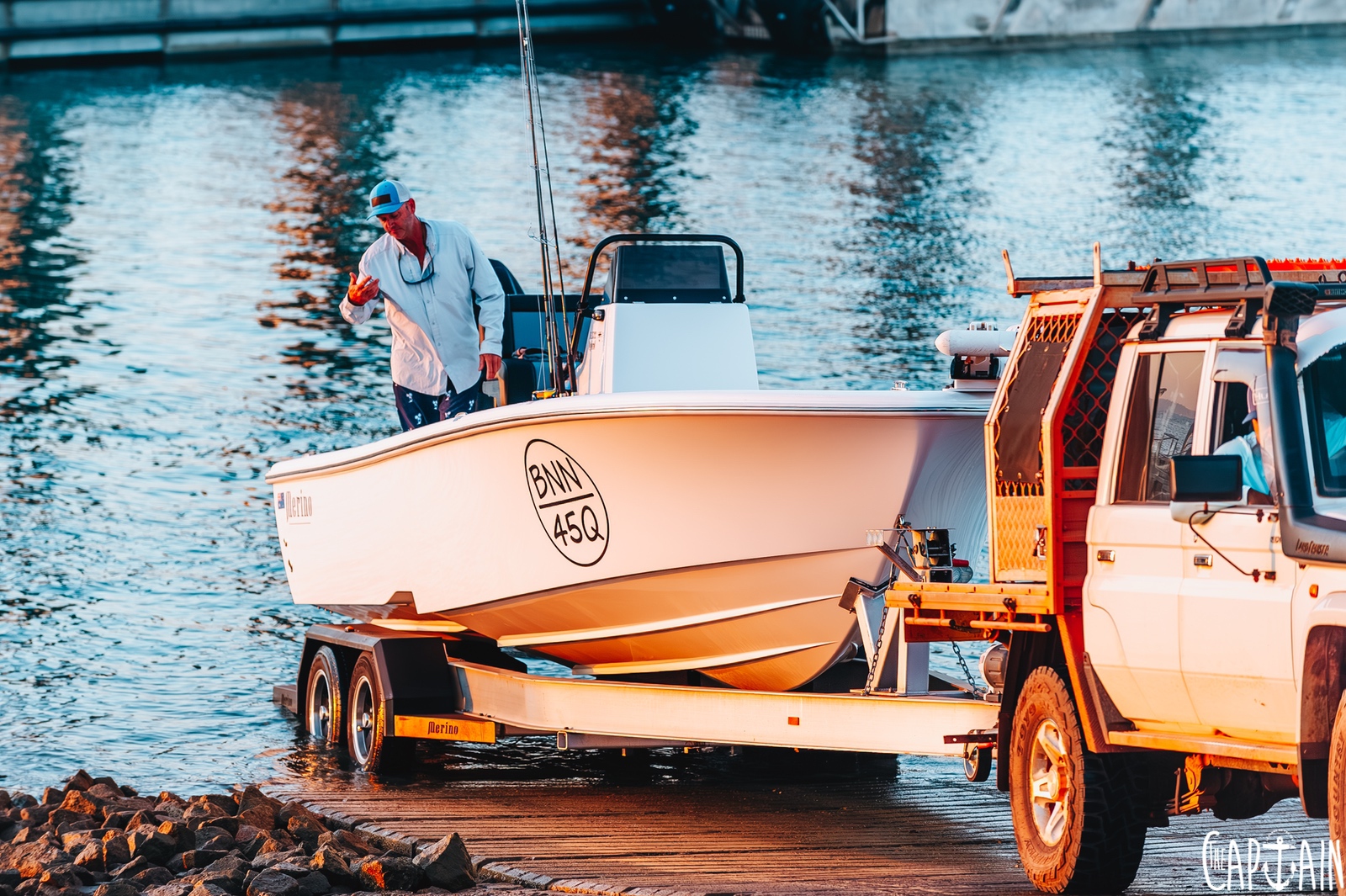
Near the pointy end of Cape York lies the coastal mining town of Weipa. For the past five years, it’s been home to former Gold Coast plumber Dave Freiberg, his wife and three kids. Life is good for Davo, especially now he has a new boat. It’s a 6.8m centre console from Merino Boatworks, built by Tommy Trembath in Cairns, and Davo reckons it’s the ideal all-rounder.
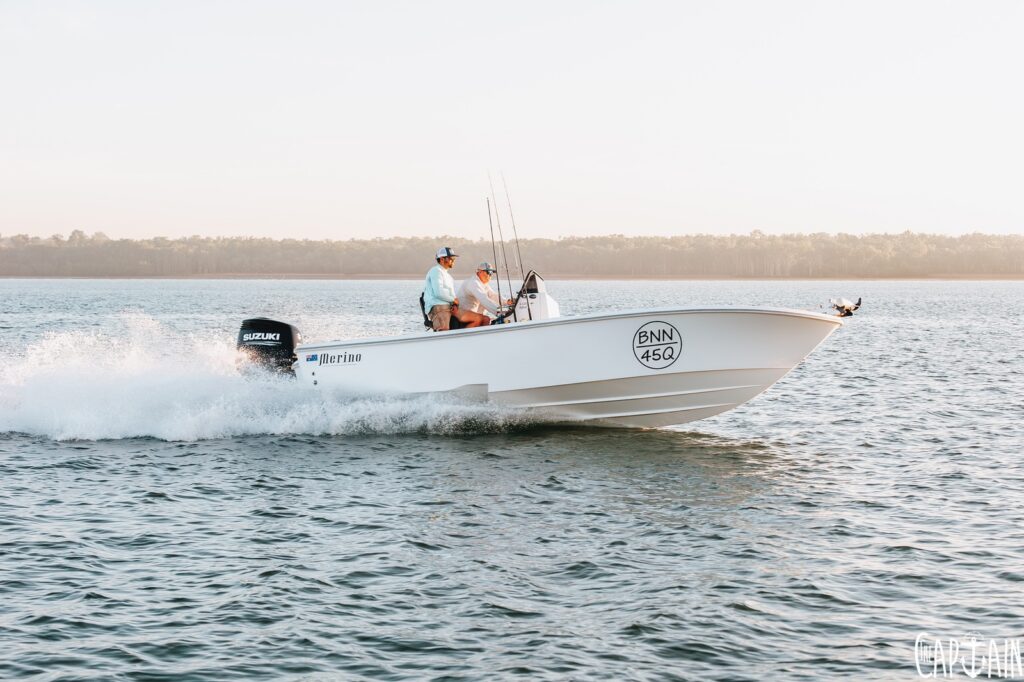
“We can be doing anything from catching barramundi to out wide chasing sailfish or threadfin salmon, or just down the beach swimming,” he says. “Everything’s so close, it’s five minutes to each boat ramp and you’re fishing within five to 10 minutes. This boat’s the ideal platform for everything we want to do.” So why buy the first boat out of the factory?
“I was having a few beers with Tommy one night and didn’t even know he was building it,” Davo recalls. “He showed me a few pictures of his designs and it rolled from there — I was pretty much sold on the first picture. I told him I was keen on buying the first one out of the mould, and a few beers later, we shook on it.”
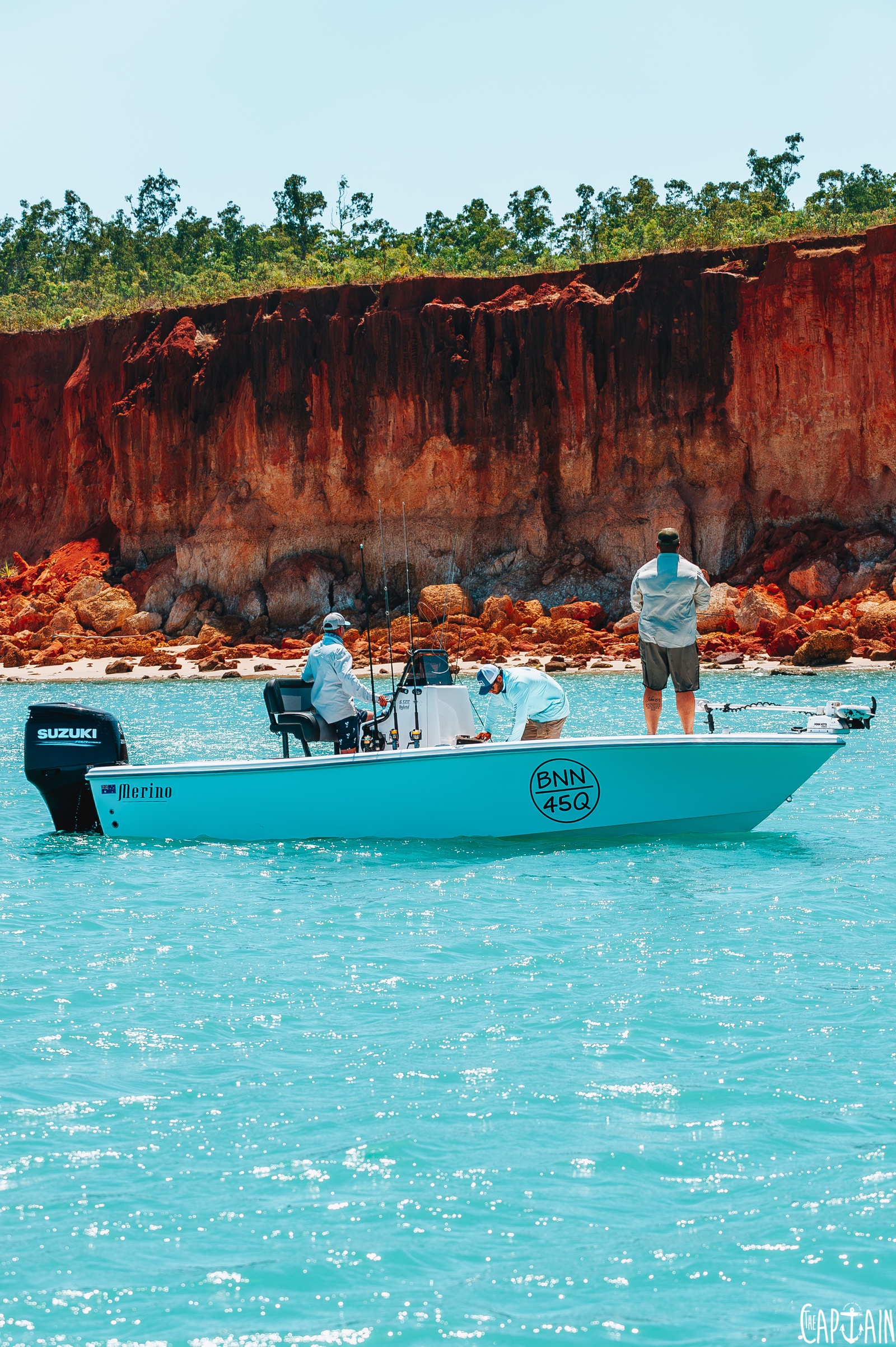
Merino Boatworks head honcho Tommy has organised this weekend on the water to show The Captain what his new flagship can do — and what Weipa and Cape York have to offer. The plan is to do a bit of everything. First up is a coastal run — about 100km north to some remote rivers, chasing barra and taking in the scenery. The planning of a trip like that usually generates a bit of stress, but this is a dead-set cruise.
RIVER RATS
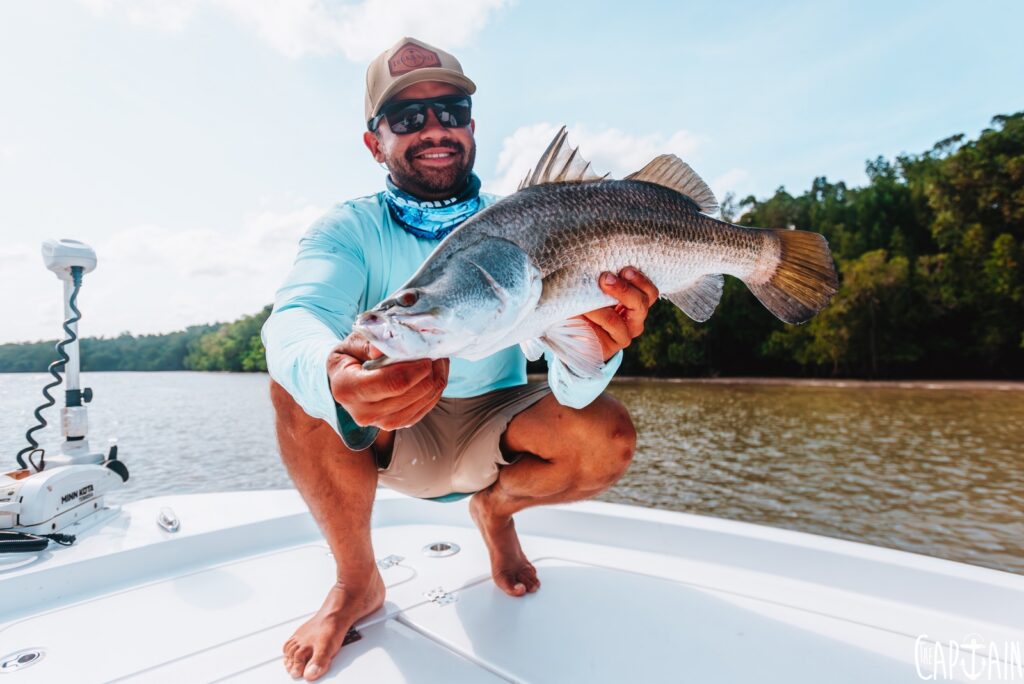
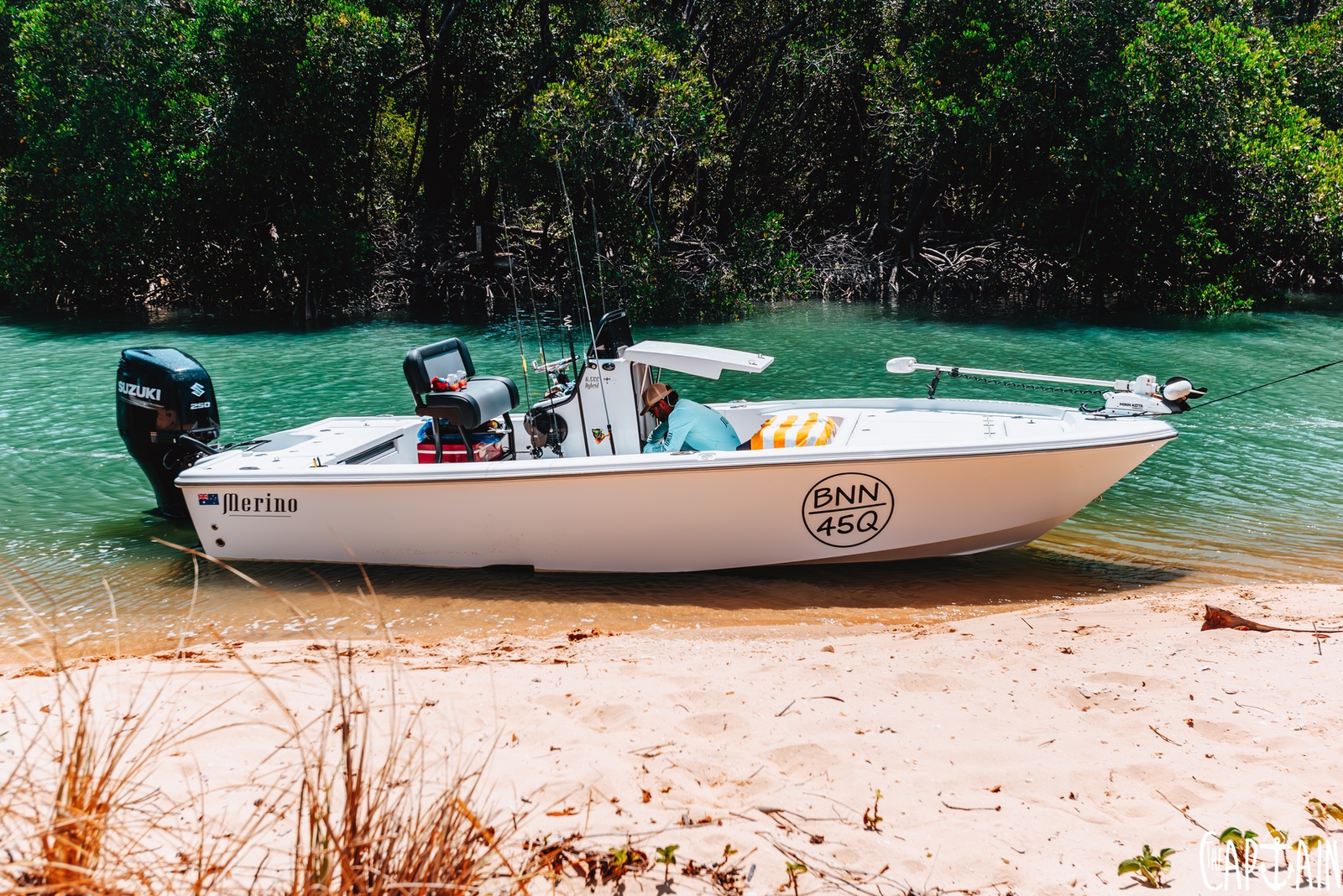
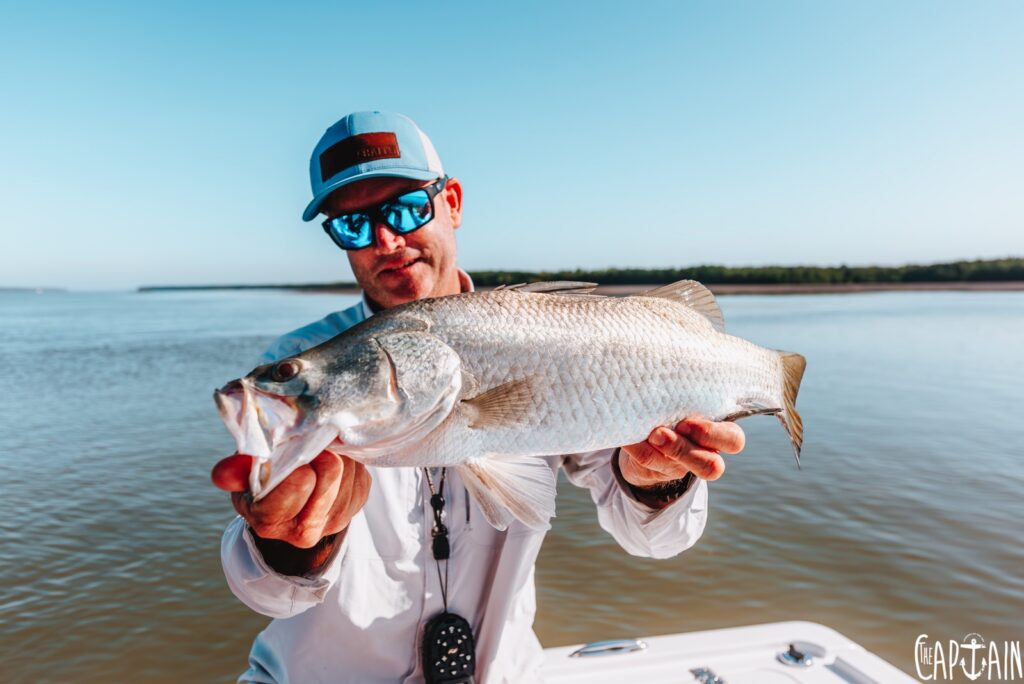
In the middle of nowhere, we find a great estuary to fish. It gets a bit hot, but there’s a shack where we can chill with a cold beer if it all gets too much. We head up a little creek next to the hut and catch a reasonable barramundi. Not many boats this size would even be able to get into this stream. It’s about as wide as the Hybrid is long and we’re flicking lures in a metre of water, no problems at all.
Turns out one of Tommy’s mates now owns the shack. Tommy gets a bit sentimental (Captain’s note: maybe it’s the gin we found) because his dad used to go camping there in the ‘80s. “When he’d camp out here, it was usually in a tinny full of swags,” he recalls. “Seeing this boat parked out the front of somewhere Dad’s been so many times is surreal.”
We get home late that night, tired as a buggery, then do it all again the next day. This time it’s offshore to the FADs off Weipa. Everywhere you look, there are dolphins and marlin jumping — and sailfish that apparently don’t want a bar of us. First we have to catch some live bait. Tommy is using a Sabiki jig rod. “It’s like being in a boat with a porcupine,” he laughs.
We see a couple of big triple tails hanging off the pylons, but miss them. We put the drone up and within 30 seconds the rod goes off. It turns out to be a barracuda. Five or six sharks are hovering around the back of the boat in clear water.
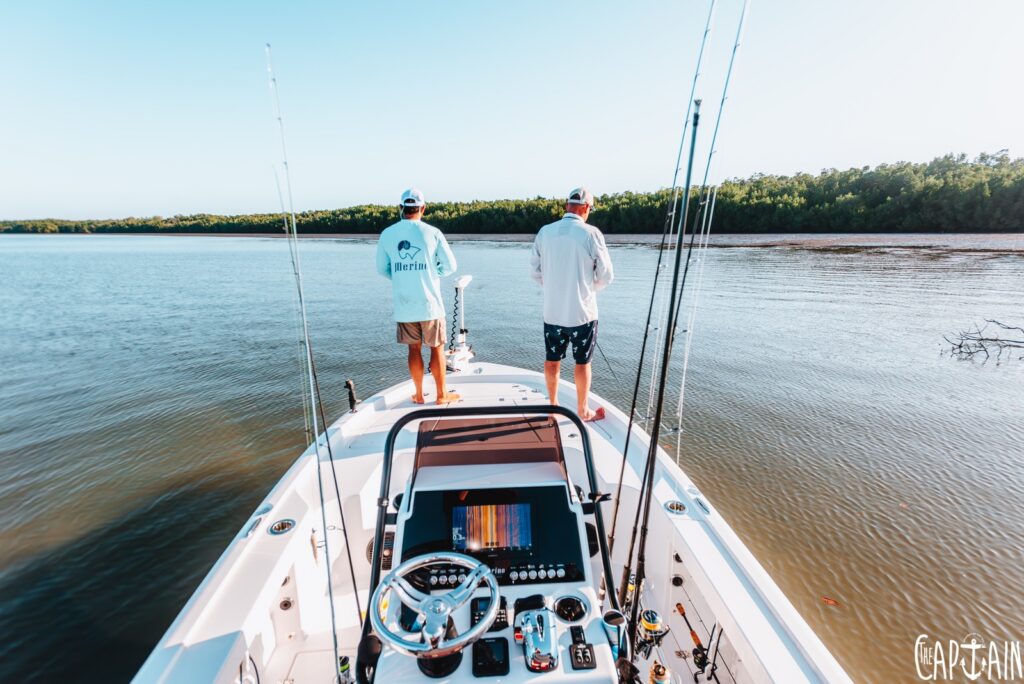
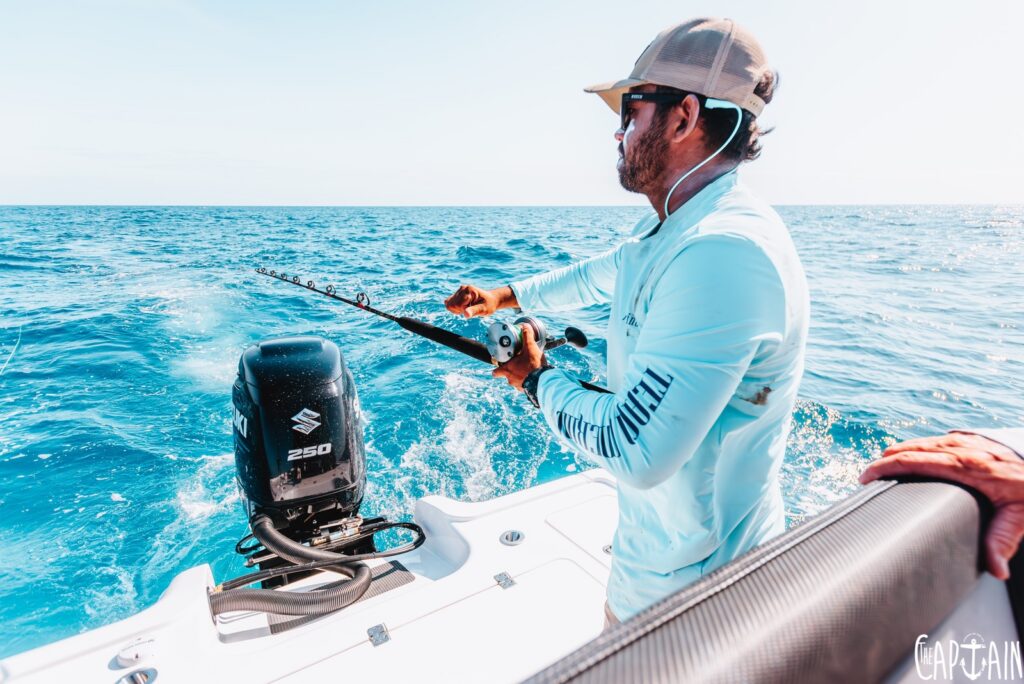
Thwarted, we head to the marlin grounds. We’ve got two teasers hanging off the back, a shotgun rig and two live baits in the live well. Despite all the action and three blokes stumbling around the boat, there are no tangled lines and everything is easy to rig and operate. We use the other live well as a bin.
Tommy is stoked to witness his boat doing exactly what he designed it to. “We’re a bunch of random dudes who have never fished together, in a place we’ve never fished before, with random tackle, but there’s nothing in the way on the deck. We’re ripping in teasers, throwing baits in the live well, changing gear, cutting lures off and tying knots, but there’s no mess. It’s easy to clutter up your boat when you’re catching nothing. It doesn’t feel like that in this boat. It all just works.”
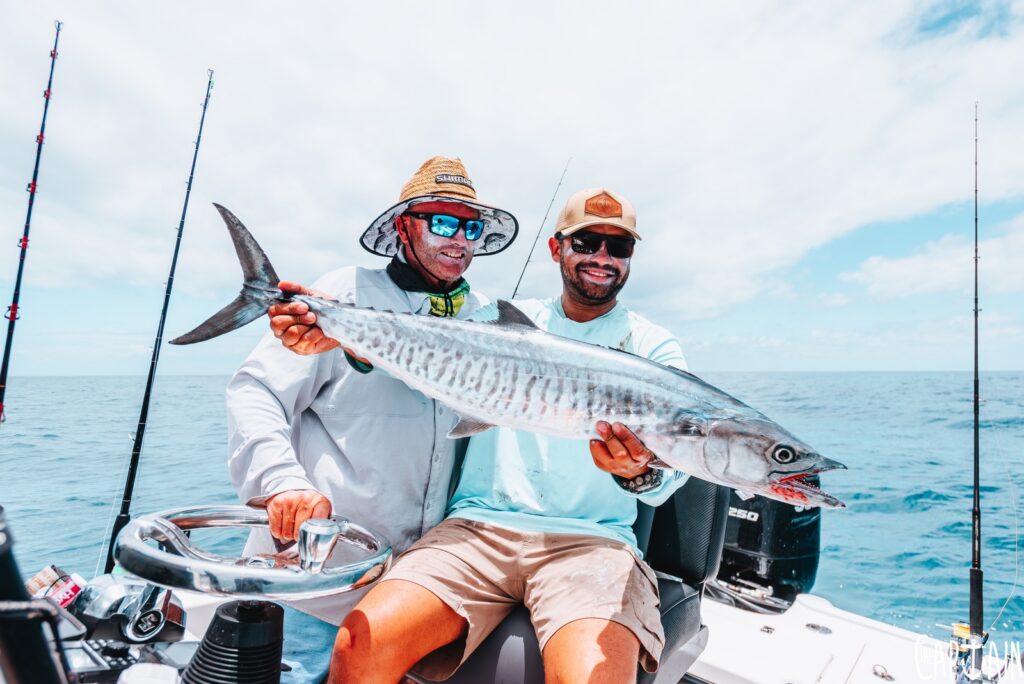
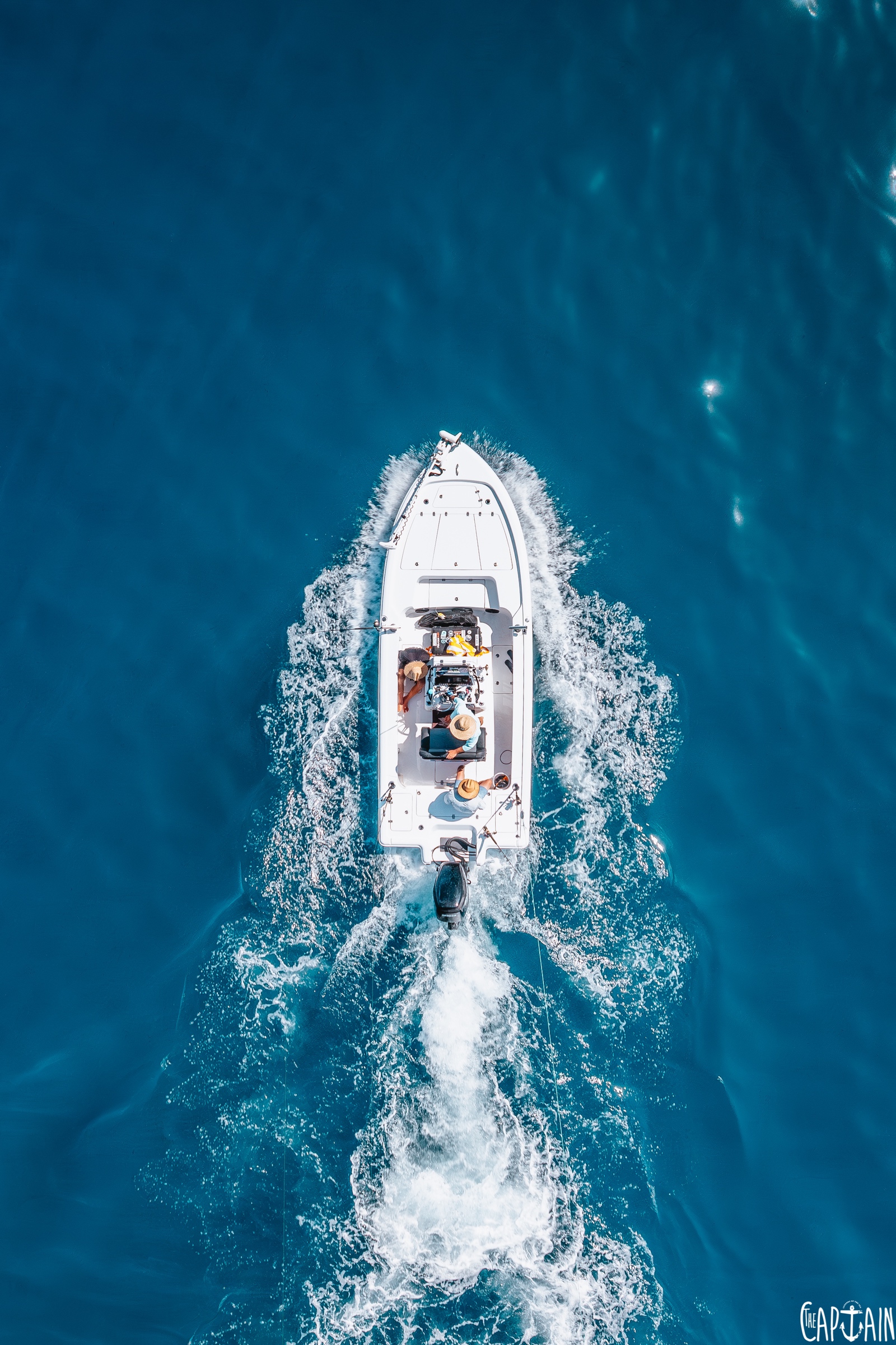
We end up looking for coral trout around a bommie then chase sailfish again. By this time, we’re 20nm offshore. All the other boats have pulled in their gear and are 15 minutes gone by the time we make the call, enough is enough. We head off at 25 knots and with the following sea get a good run until we’re about five miles out when the wind swings.
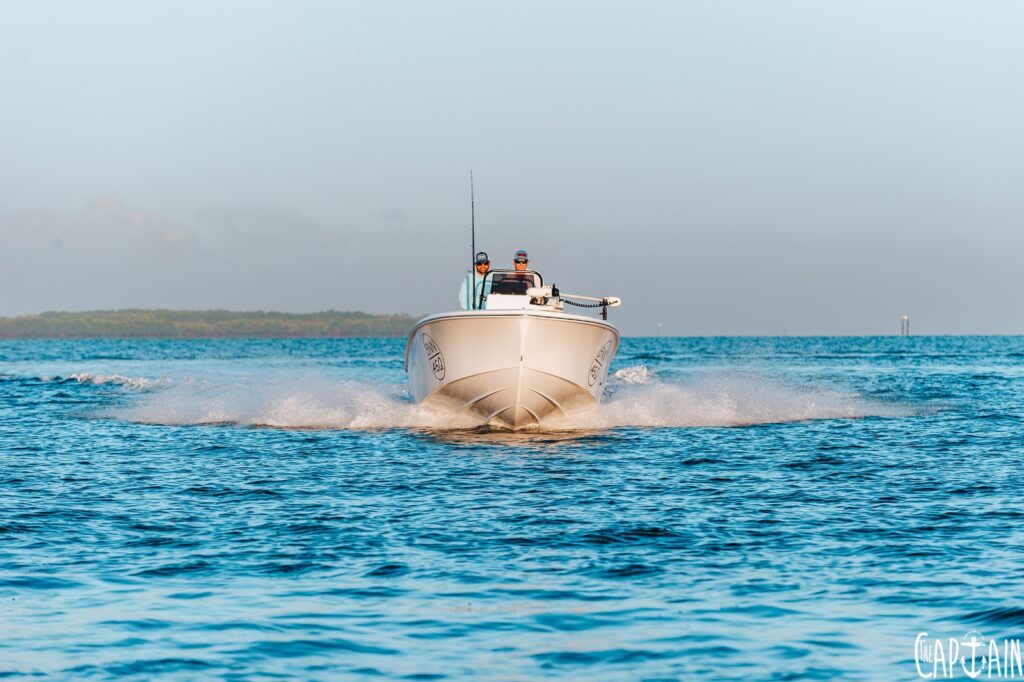
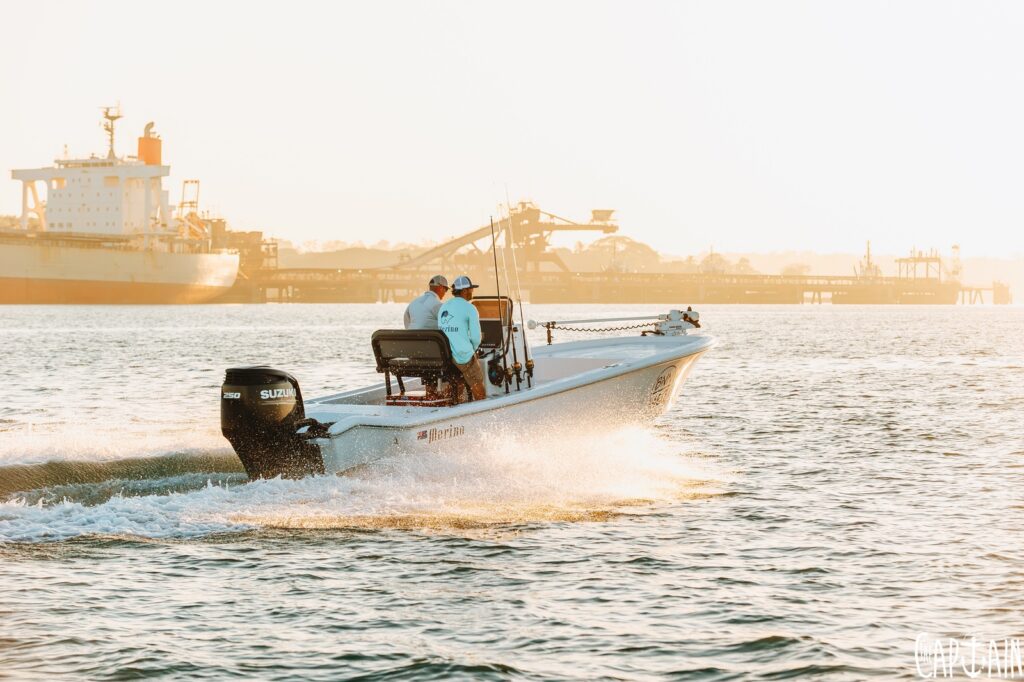
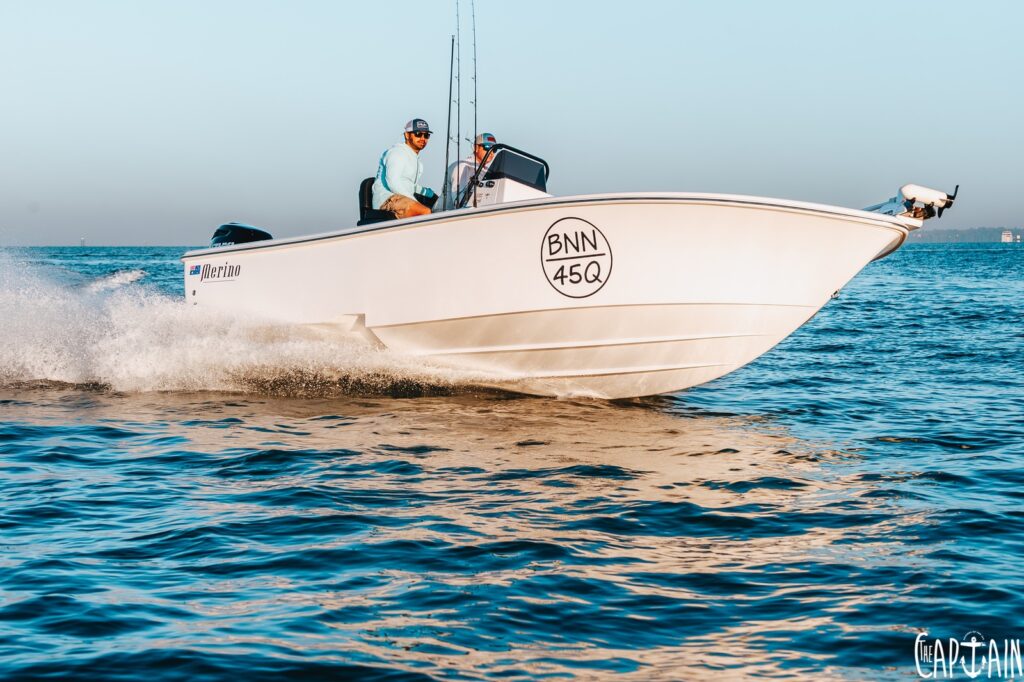
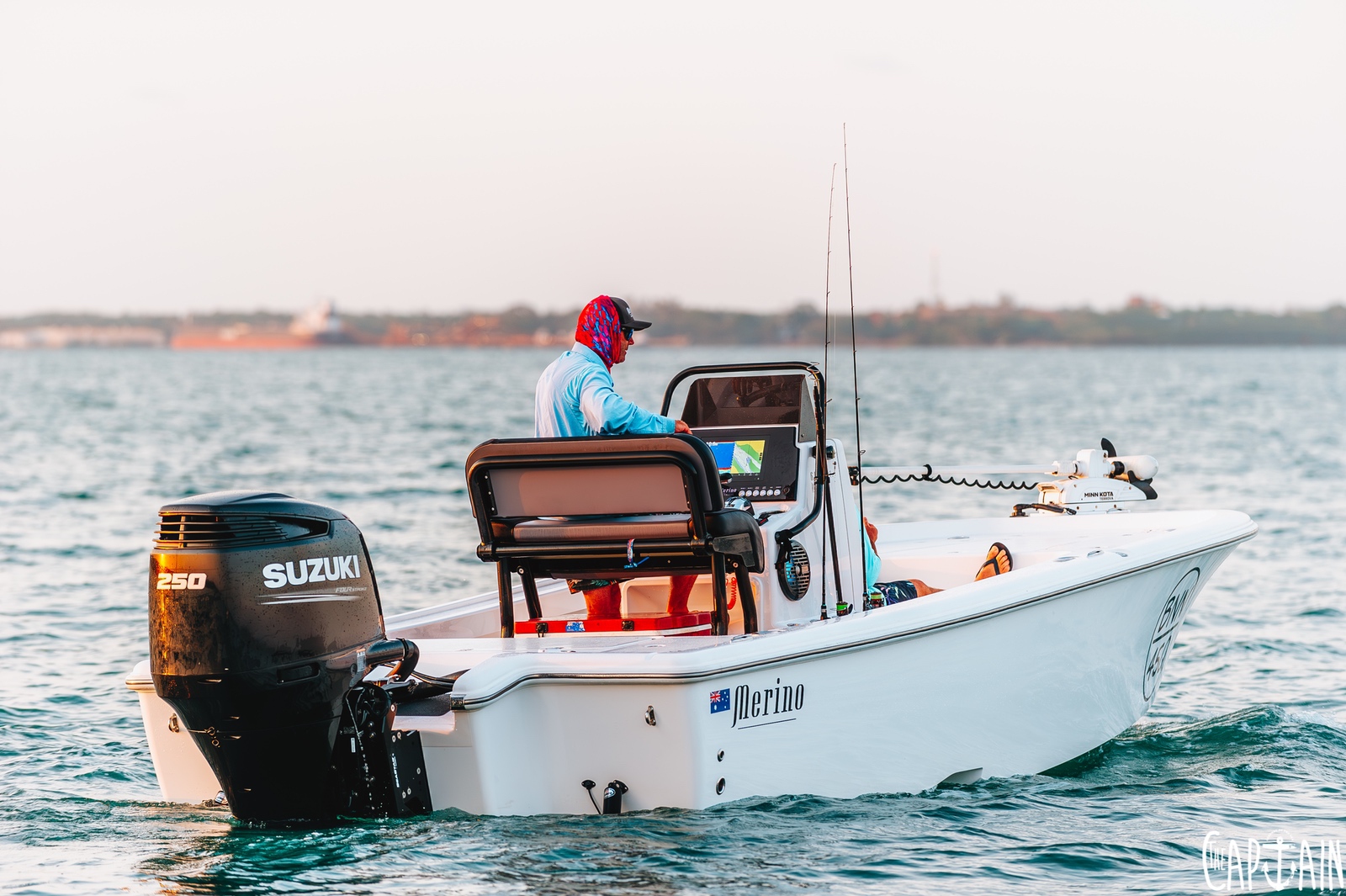
Davo puts the jack plate up, accelerates to 35 knots and the Hybrid transforms into a totally different boat. We sit on top of the chop, prop holding us steady and just punch it for the last mile. We overtake everyone as we come into the ramp. “This is insane, this boat is an animal,” he yells over the wind. The following day, Davo gives us a walk-through of his pride and joy.
TAKE THE TOUR
At the stern there’s a massive kill box. “Tommy calls them coffin boxes,” Davo says. “It’s about 1.3m long and can fit Spanish mackerel, tuna, 10 bags of ice, dive gear, spear gear. They’re full of life jackets at the moment. The big seat at the back is probably the best seat in the house on long runs. Lift that cushion up for more access to another big tub and we can get into the bilge to check the bilge pump, bait pump, and fuel filters.”
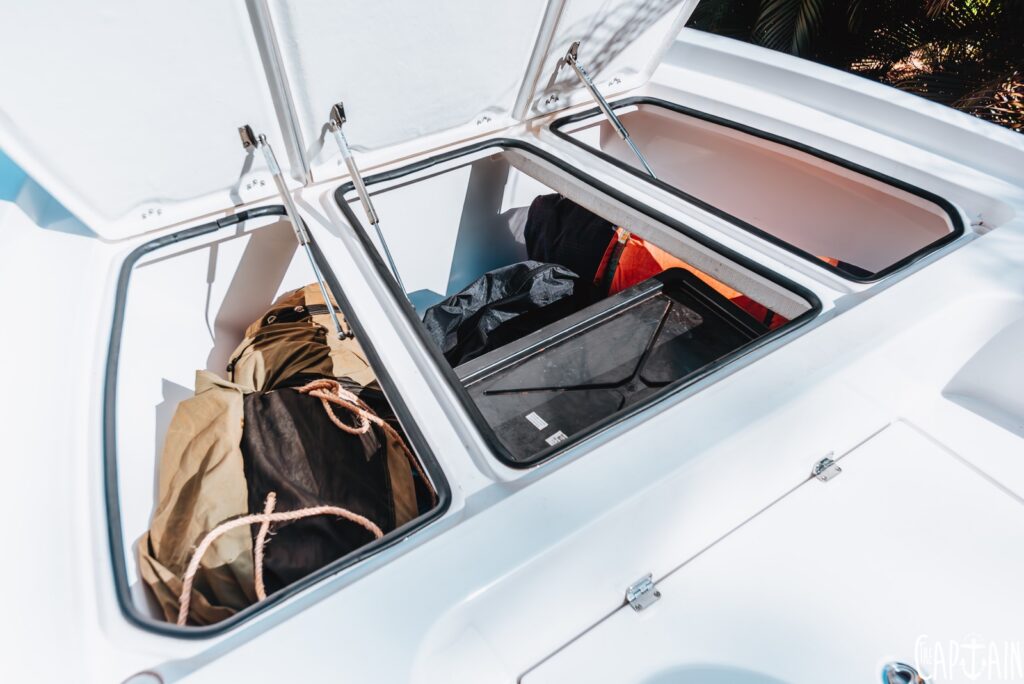
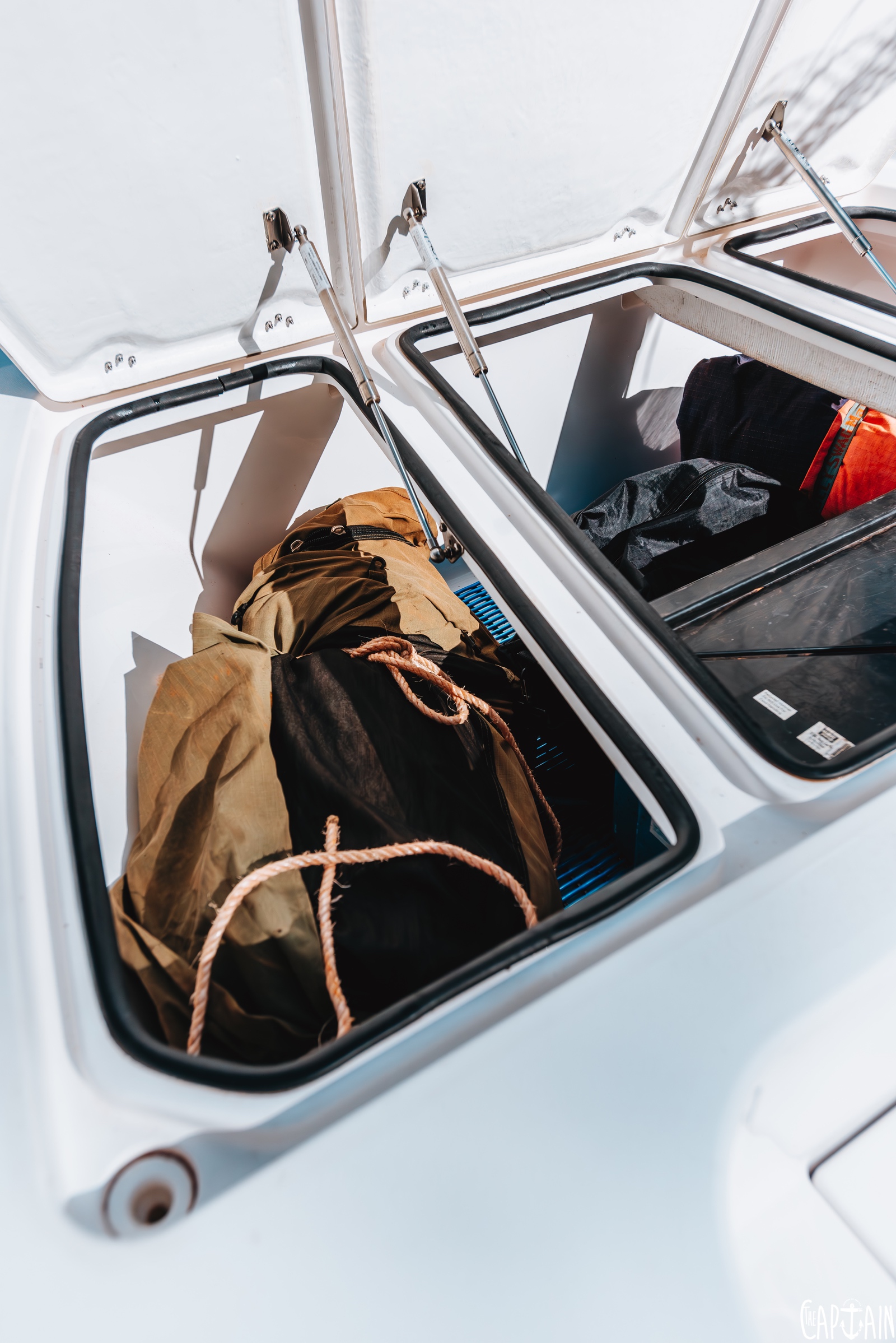
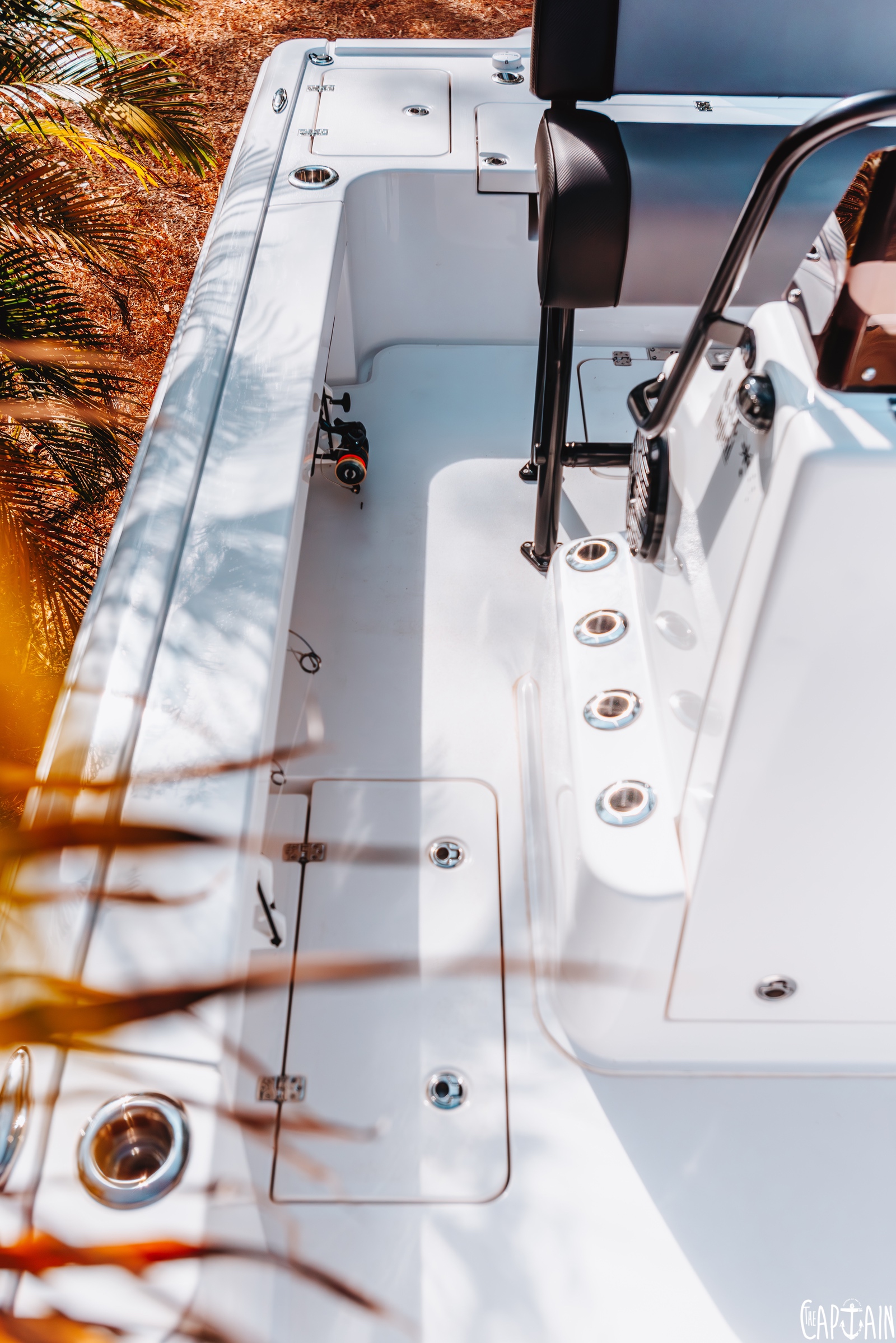
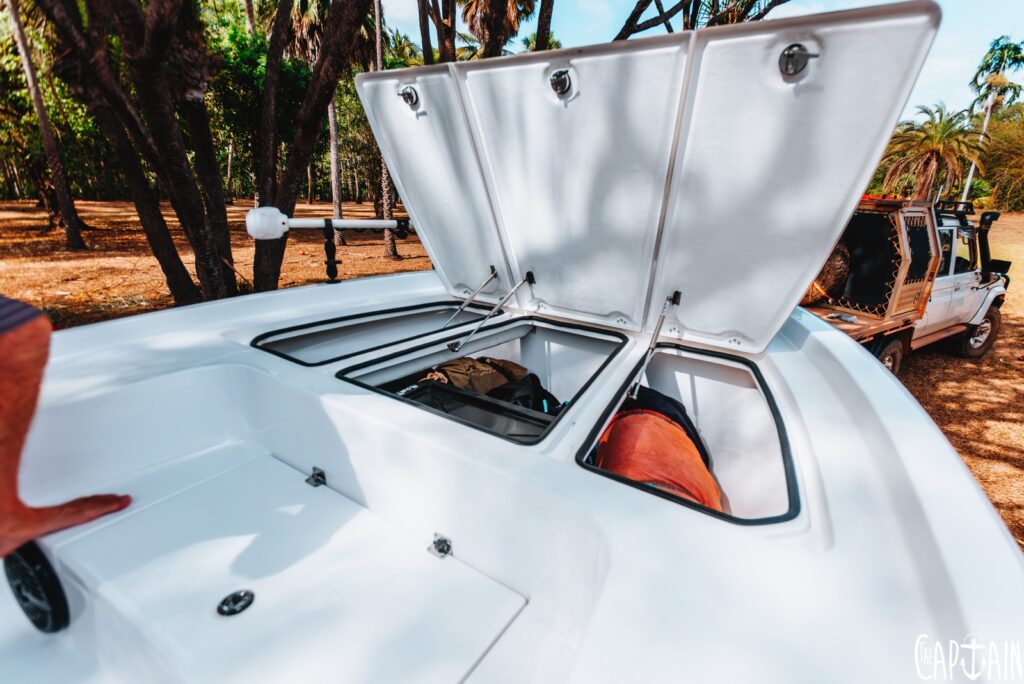
All the hatches are recessed with the friction hinges flush, so no trip hazards. They have gas struts and there’s a full gutter around every hatch with a drain either side, so no chance of anything valuable getting wet. “Good drainage means you don’t get a slippery deck and it’s a stable platform to fish off,” Davo continues. “From the casting platform at the back there’s easy access to the front. You can walk along the gunwales and all around the boat.”
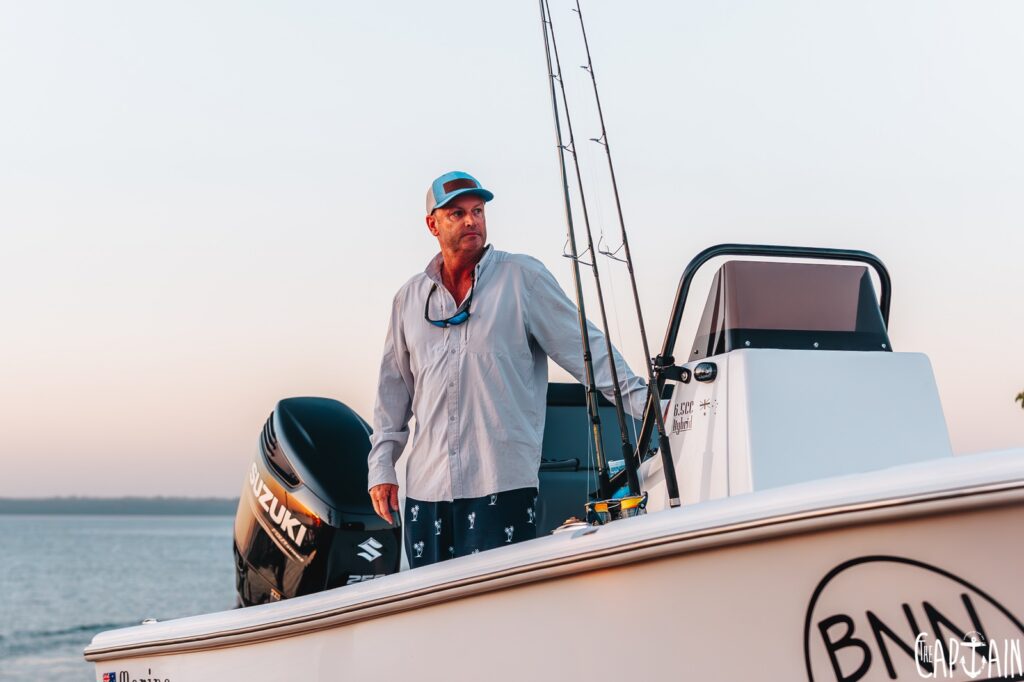
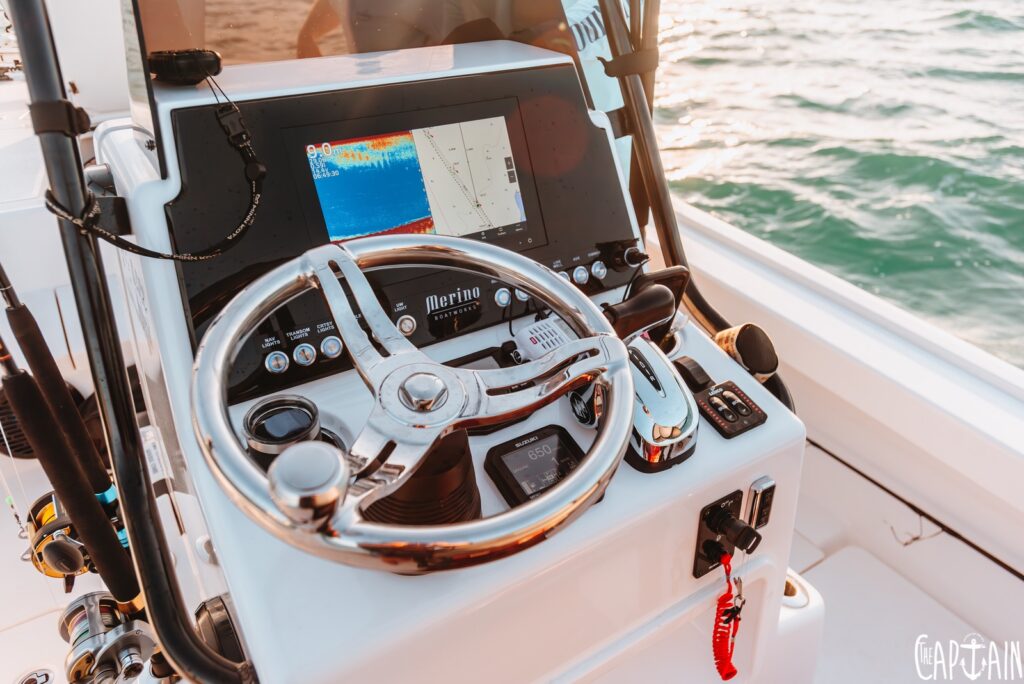
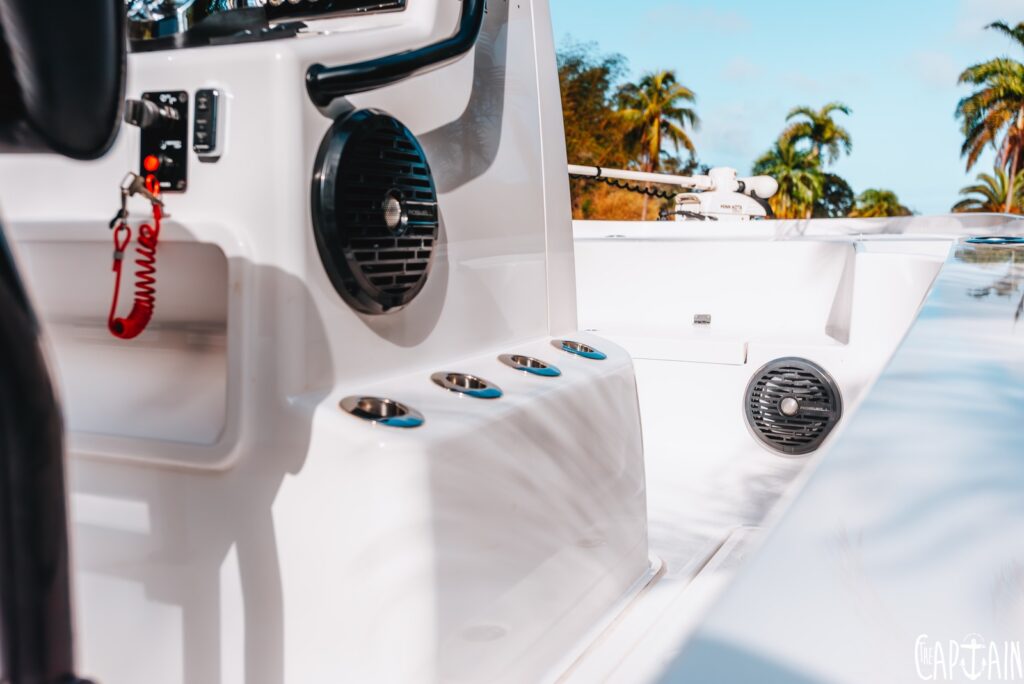
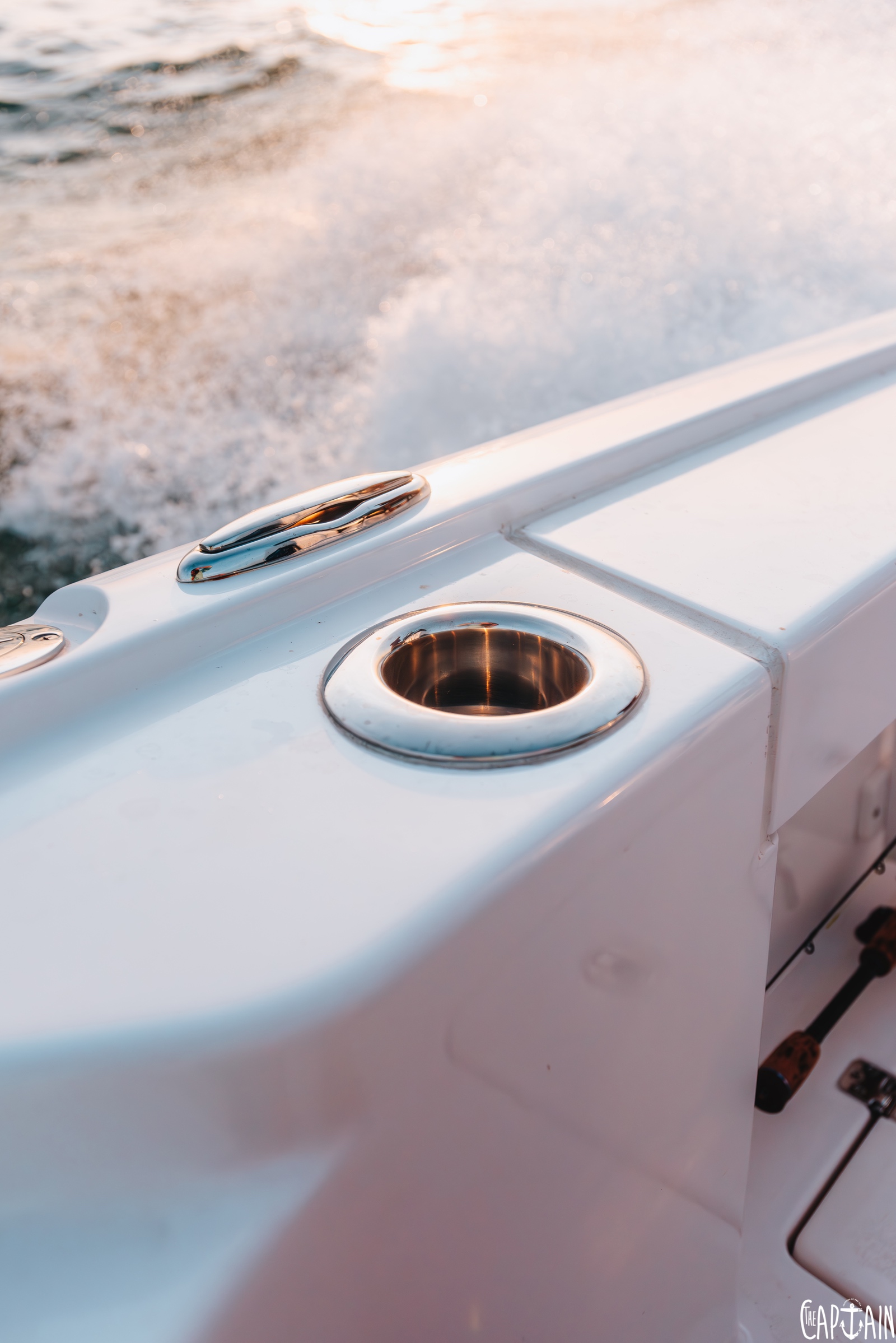
He reckons the centre console is the perfect layout. “We’ve got a Roswell sound system, the Garmin 12in fits perfectly and the switches are flush. Everything’s neat and tidy, easy to clean and maintain. We’ve got eight rod holders either side of the console, if you don’t want to put your rods underneath in the side. All the hinges, fittings, cup and rod holders are Gemlux.”
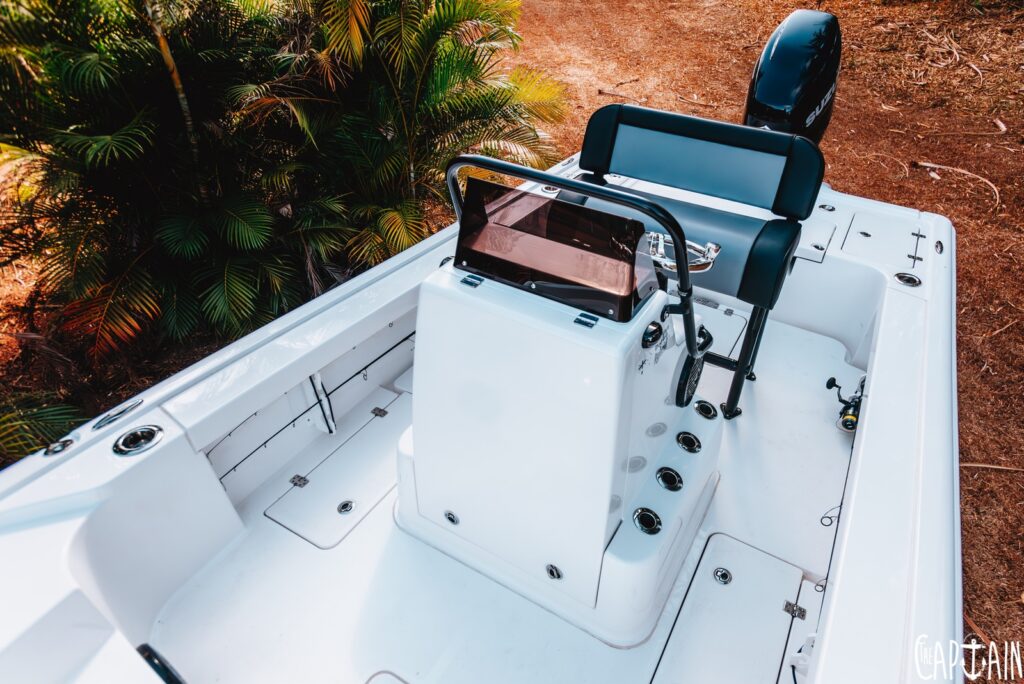
The console has a low profile with a little windscreen. “The console height was custom-made for the boat,” he says. “I didn’t want it so high I couldn’t see over it, but high enough to be a wind buffer. The steering is an adjustable helm, perfect for when you want to get in tight spots. Tommy fitted this little bar, so if people want to stand here and talk shit while I’m driving, there’s something to hang onto in the rough stuff. There’s access into the back of the console and another hatch goes into the bilge to the front of the boat and the through-hull transducer. You can get at the start-up and house batteries, amplifiers — and that tidy wiring Tommy’s boys installed.”
Getting to the front casting deck is easy with the steps. Underneath the first step is another hatch full of equipment, with more storage beneath the front casting deck. “You can fill this up with all the gear you want to run for the day or overnight, so there’s nothing on deck to trip over,” Davo says. “All the storage was one of the reasons I got the boat. If I’m planning a trip around the tip or over to TI, I can keep all the camping gear and tackle dry and out of the weather.”
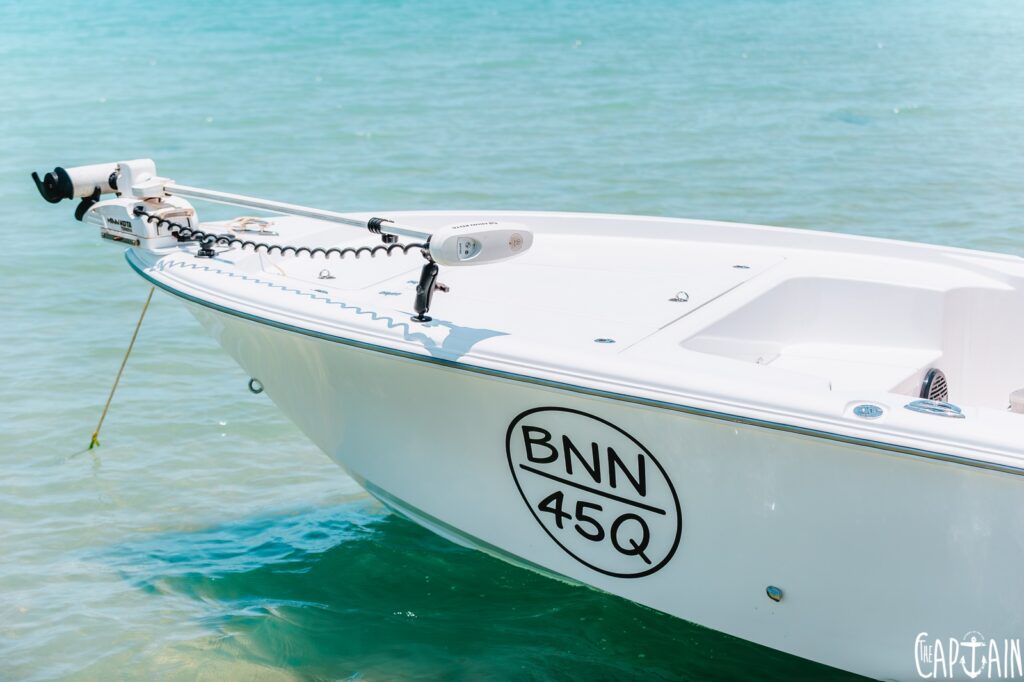
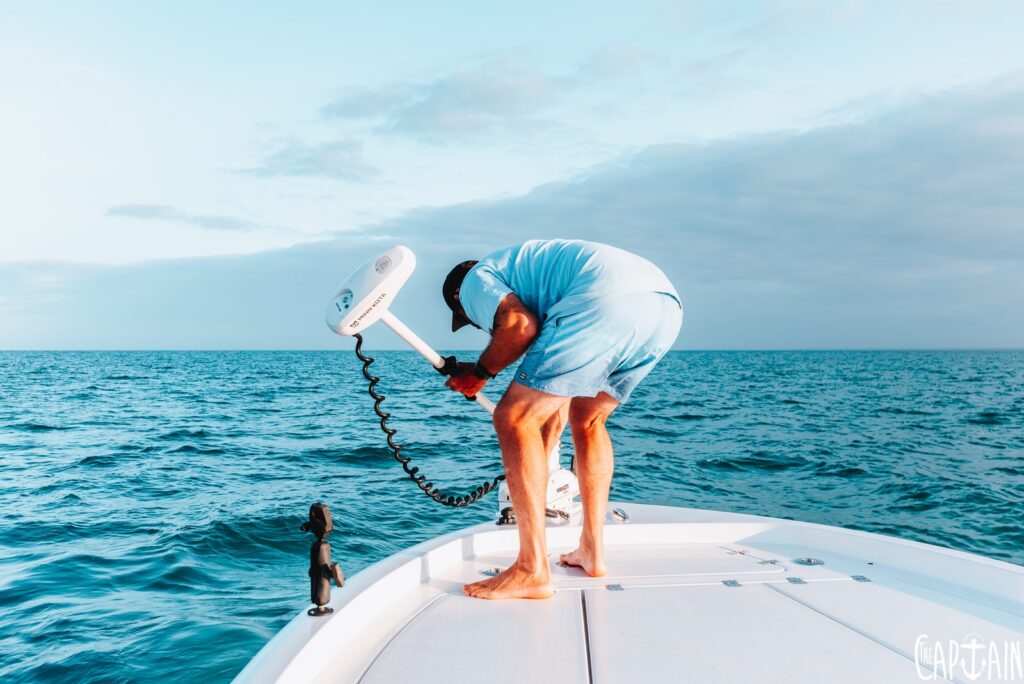
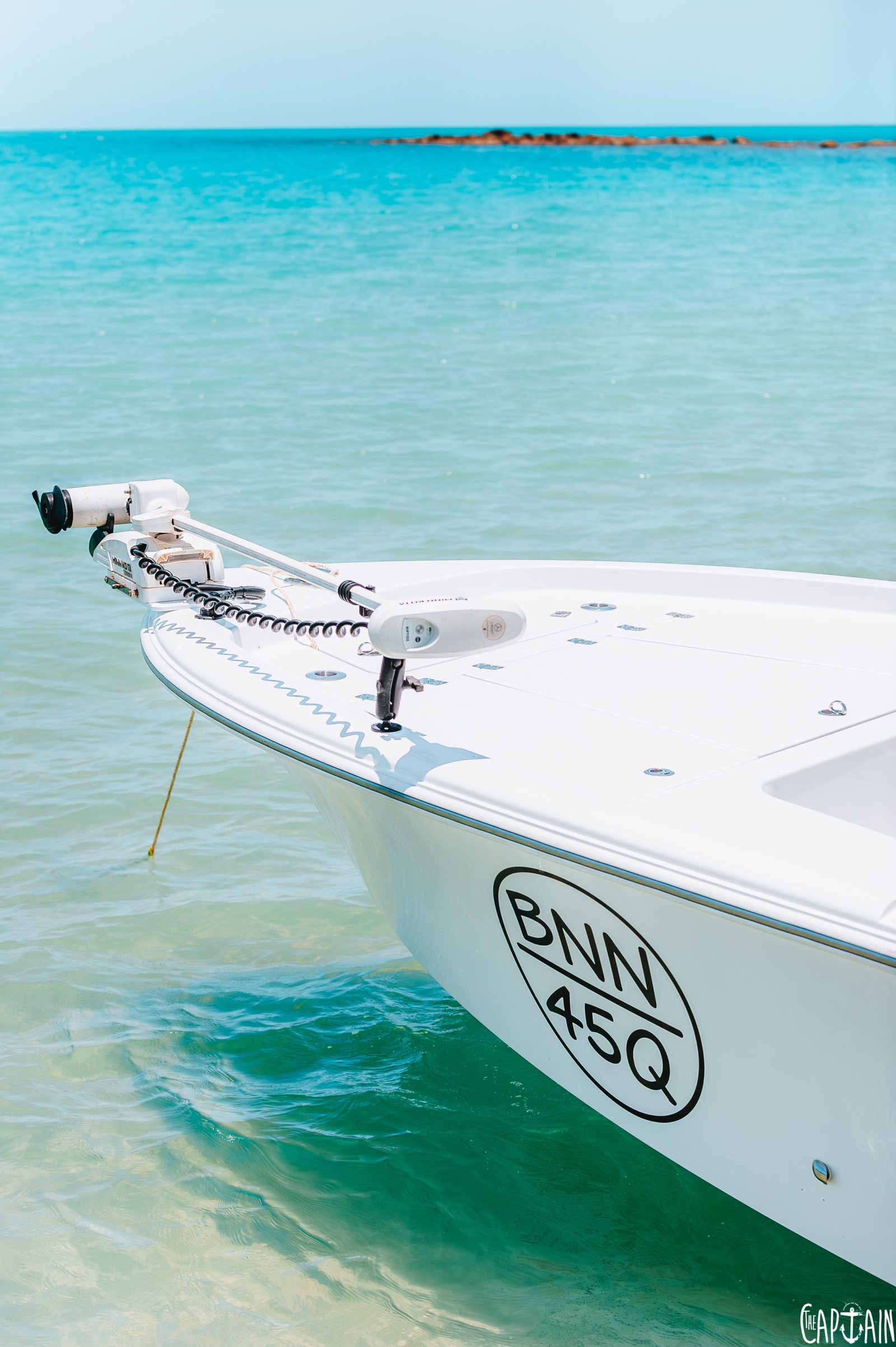
Near the bow are two vertical Gemlux rod holders, a large anchor well on both sides and an alloy bracket mount for the 80lb Minn Kota. “That keeps us on the spots all day long. We can pull up anywhere, it’s easy to deploy and I can operate everything from the helm.”
STANDS TO RESIN
“This is a fully cored, vacuum-infused boat that will never have to be rebuilt,” Tommy says. “It is bulletproof. The hull and stringer set are vacuum-infused vinyl-ester resins. The basic difference between that and a hand-laminated hull is the weight saving and rigidity vinyl-ester resin and infusion can achieve. We save between 13–20 per cent in weight. In a small boat, where weight matters, that equates to a bigger esky, more ice, more beers, more tackle. Resin infusion removes dumb weight and allows each hull build to be easily repeatable. Being in one of these boats is like riding on a granite kitchen bench.”
GREAT PERFORMER
Davo rates the Merino as a perfect all-rounder, whether fly-fishing, chasing billfish or lurking for barramundi. “It works for everything I want to do. Most of the time I’m by myself, but I can launch and retrieve it, no problem. There’s plenty of space, it easily holds four blokes flicking lures and three people overnight is comfortable. At rest, it’s very stable — two or three people can walk around the boat and it hardly moves.”
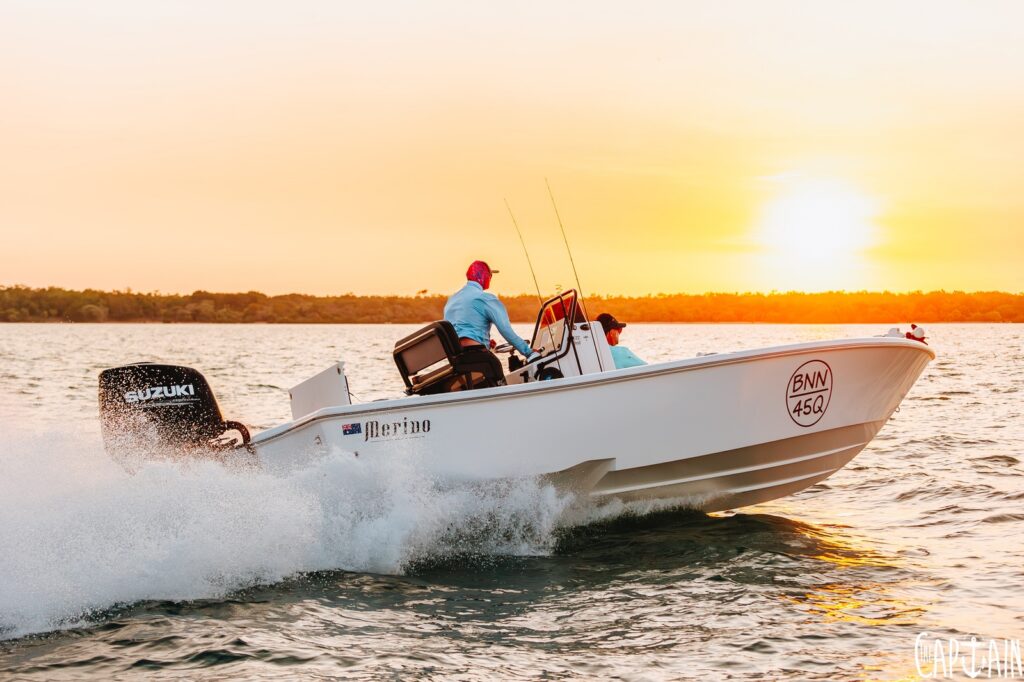
He reckons the way to drive this boat is with the jack plate almost out of the water, trim tabs buried, at 35 knots-plus. “It turns into an absolute beast, but still feels safe and steady. You can feel it getting a bit of air under the tunnel and it sits flat in the water, very horizontal, skipping across those little wind chops. It’s next-level. I’ve never had a jack plate before, but wouldn’t own a boat without one now.”
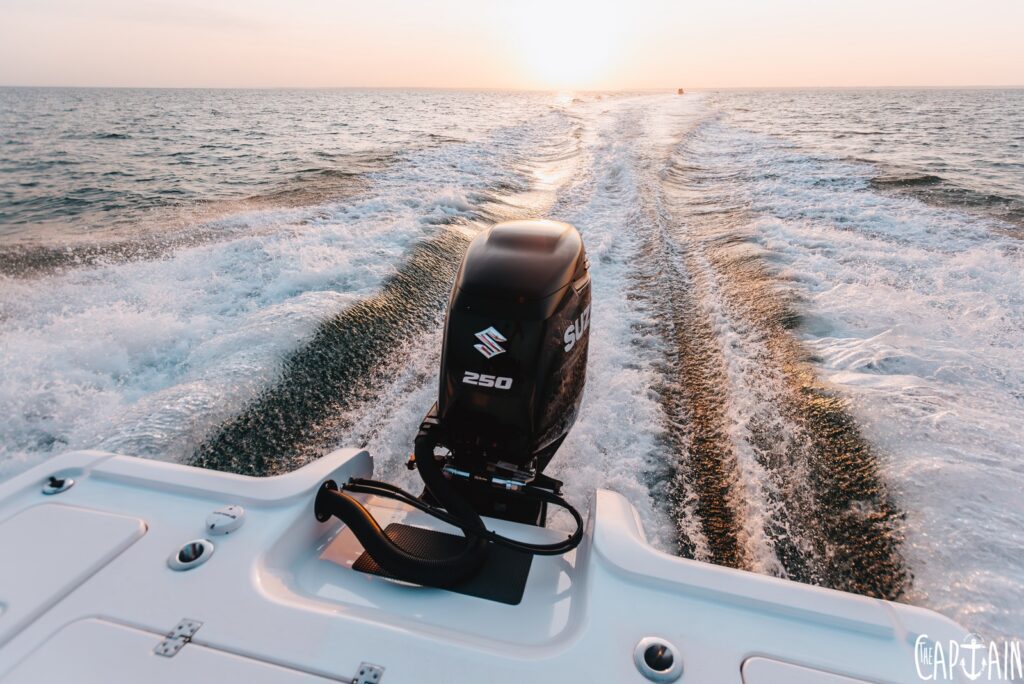
Davo says the stepped hull is where the Merino magic happens. “You can sit in 200mm of water, take off in 500mm, get up on the plane and it’s awesome. When you get up in the rev range, it pops out of the hole easily and burns stuff-all fuel for its size. The motor has done a few hours, but works well. Sitting around the 50kmh mark we’re burning 0.6L of fuel per kilometre. The tank has a 300L capacity and I can stash extra fuel under the front step. So, no problem heading offshore to the outer reef.”
THE HULL TRUTH
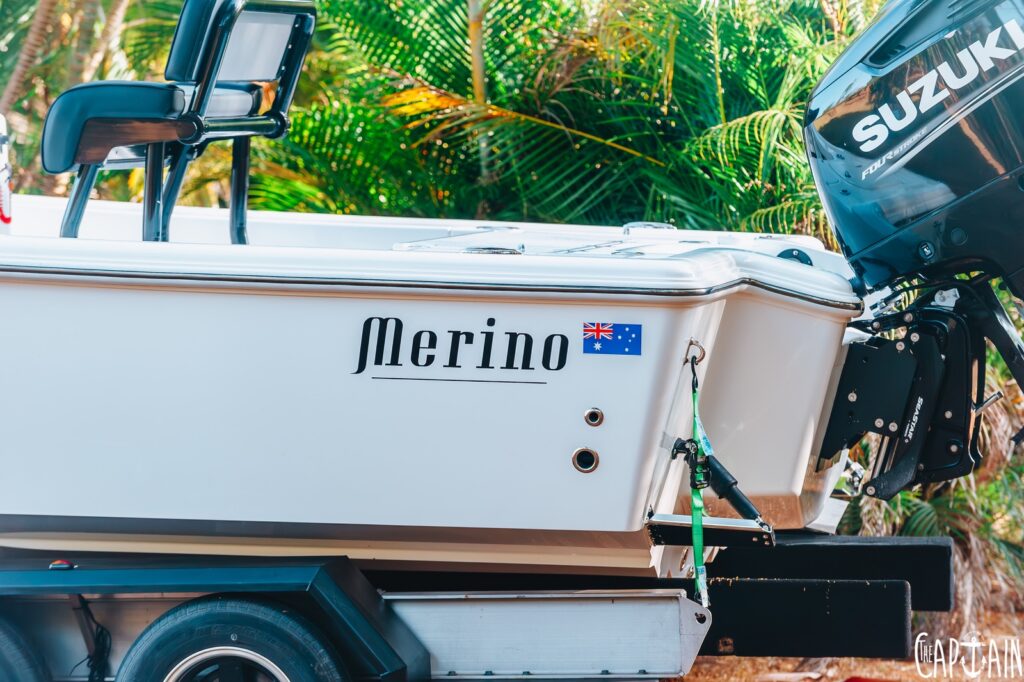
Tommy weighs in with a bit more detail on that stepped hull, which has an offshore racing pedigree in the USA. “The stepped-V ventilated tunnel (SVVT) in the centre of the boat basically breaks the suction at the back, draws in air and forces it through a tunnel in the centre of the boat. This reduces friction, allowing the boat to run at a natural trim level. At high speed, it comes alive. The tunnel fills with air and you get that catamaran feeling — the back picks up, nose sits down and you hang on for dear life. But into a hard turn, these lateral walls grip the water and mitigate any slipping in the arse. Having grip at the back allows the boat to move through the water well when turning. It forces the air through one area and doesn’t wash out your transom or transducers.”
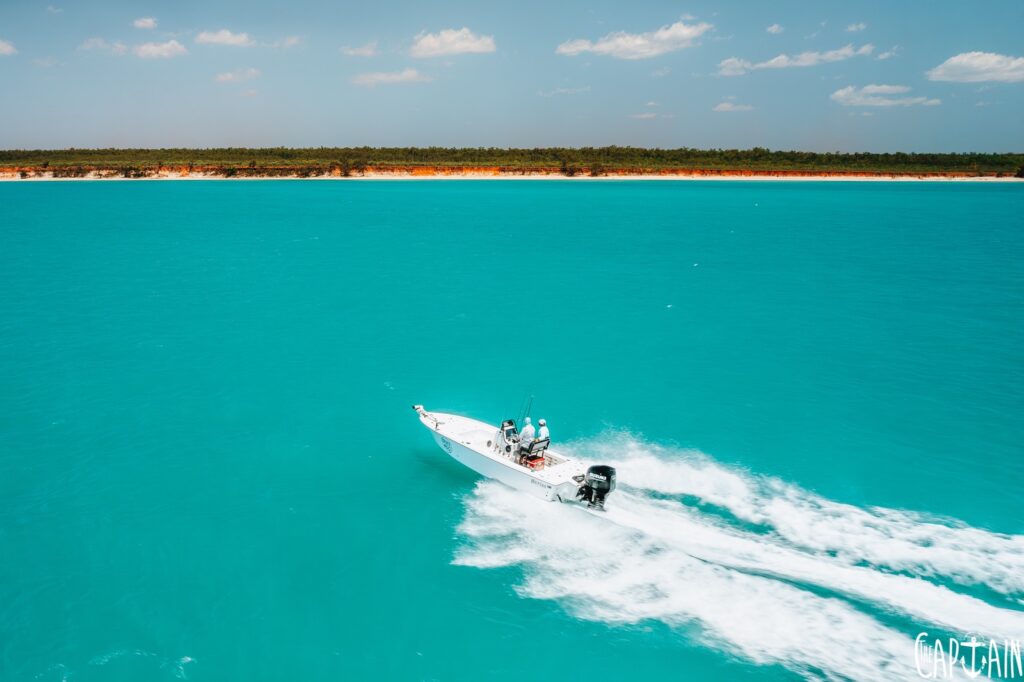
He reckons no other console looks like his Hybrid — and it’s definitely not a bay boat. “It’s an offshore hull retrofitted with a tournament-style deck, which means the nose is very buoyant. All the volume in the front makes it awesome travelling down sea. You don’t get any of the nose bury you do with many centre consoles and it feels safe. You don’t get any nose steer and the flare in the front knocks the water off at a low level because the boat sits so high.
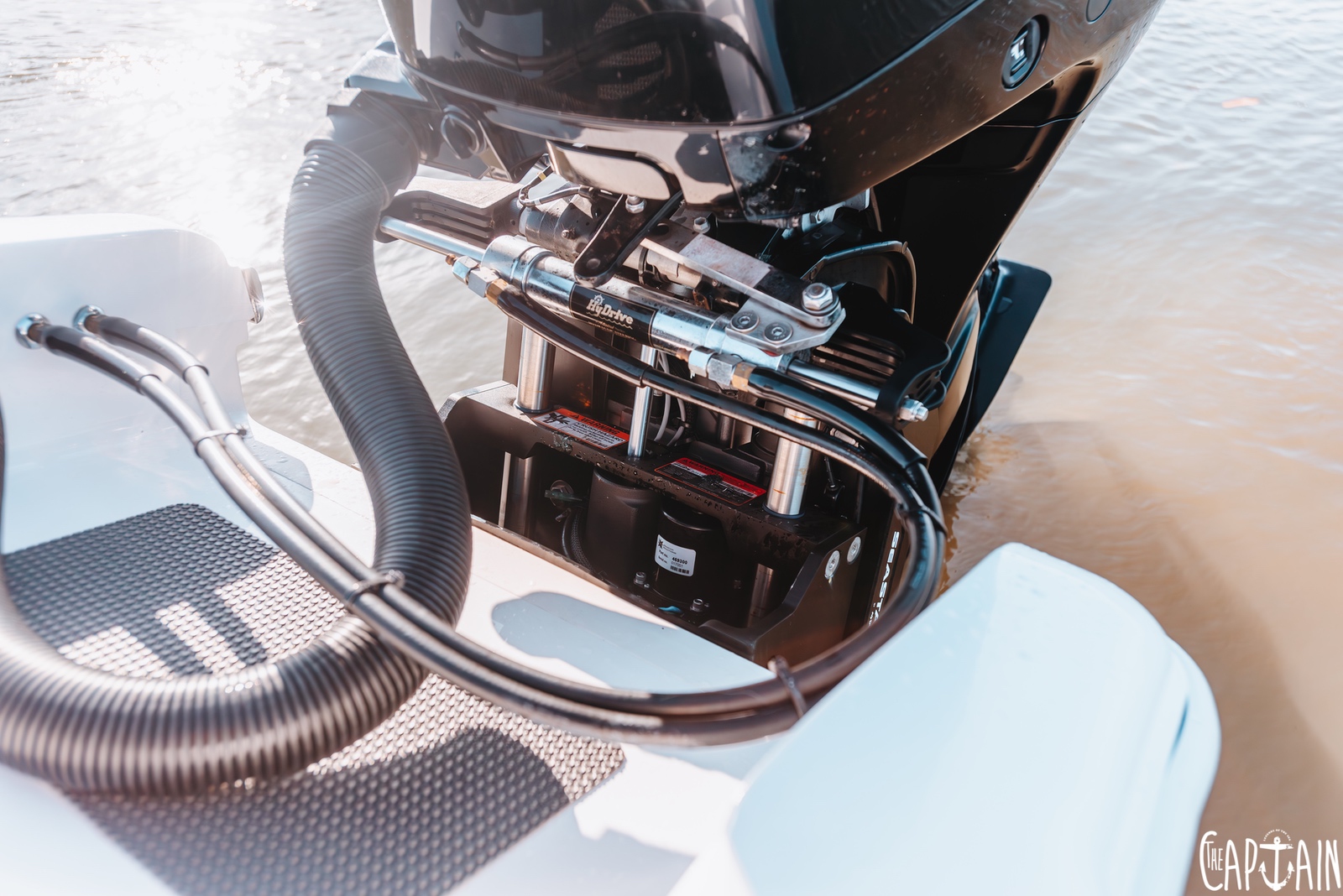
The planing plank generates a lot of lift when you’re trying to get underway at low speeds. The transom offset allows the turbulent ventilated water to become more laminar, so the engine sees cleaner water. Especially with a jack plate, you’d think ventilating the water in front of the pick-ups could starve the engine, but this offset stops that.”
JACKING IT
Speaking of jack plates, Tommy specially designed this boat to have one. It has two purposes. Firstly, at high speed, it’s a way to dial the boat in. “Lifting the jack plate lifts the back of the boat, allowing more air underneath the hull and you can feel the boat free up naturally. You hear the engine start to cavitate because the prop’s so high, then you dial it back down a bit. This adjustment turns the boat into a beast.”
The second purpose is less dramatic, but practical. “While the engine’s up out of the way, you can work in shallow water and across any nasty shoals. Even taking the boat out of the water on a shallow ramp, you can leave the engine down and jack the plate up. All your thrust is going backwards and you can drive the boat onto the trailer without chewing up that new stainless prop.”
DOWN THE DRAIN
“As soon as you’re in a boat with a wet deck, you feel unsafe,” Tommy says. “You don’t want to be on the water in an open boat and have half the ocean inside. You don’t get that in this boat. You can blast it with a fire hose and all your gear stays dry.
A lot of consideration went into the drainage. It’s a big open boat, a space that catches a lot of water. The anchor well is a huge cavity, which naturally free-drains through a fitting on the side. There’s a cavity behind it with three hatches opening into one big catchment tub. The water drains from those gutters onto our deck and is immediately expelled into a peripheral drain at the back, which lets it out through the rear scuppers. We don’t get any water coming back through them in reverse, the deck stays dry. A lot of boats have sacrificed practical drainage because it’s so complex to make the moulds and laminate them.”
BESPOKE BOAT
Davo has sorted his boat to suit his fishing style. “If we’re going to do an overnight run, it’s pretty much set up. We just throw in the gear and head up or down the coast. We’ve got the swags up the front, all the camping gear in the boxes, everything in a hatch. If we want to pull up on a bait ball somewhere, the rods are ready to go. There’s enough storage for two or three blokes for a week’s camping and fishing. We had a full mozzie dome net up on the casting deck the other week — swag and fan inside. At some stage, we’ll go around the tip to TI.”
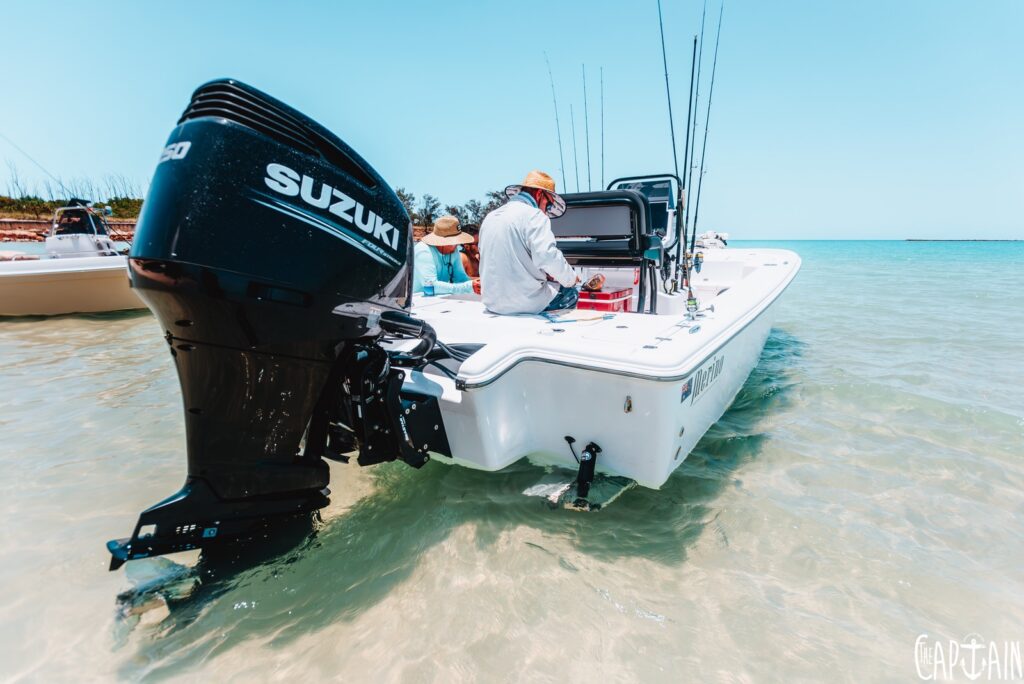
Tommy is stoked because the boat is fulfilling its purpose. “All the remote crap Davo does — overnight trips, coastal runs, going offshore, chasing marlin — it’s what we designed the boat to do.”
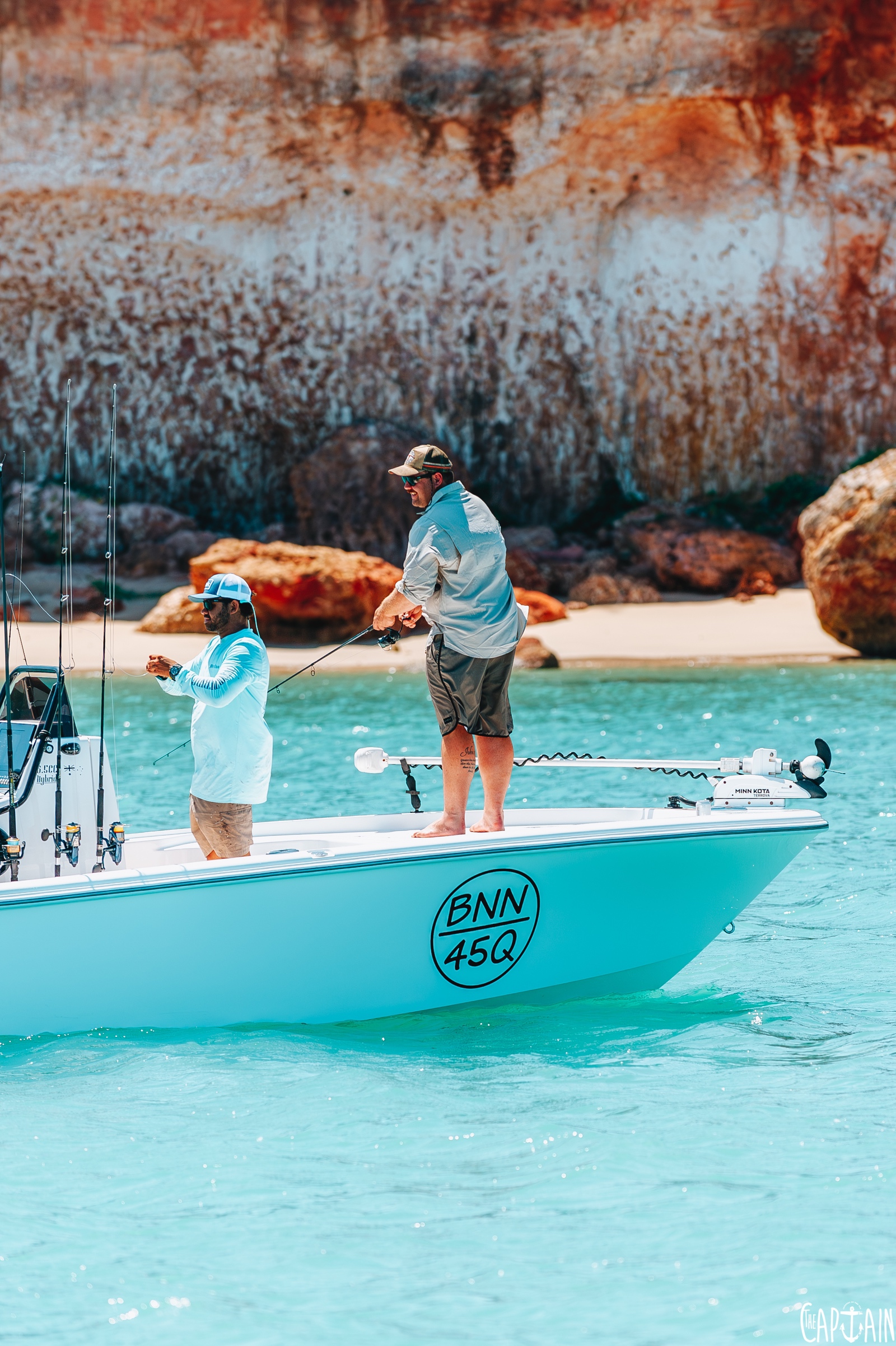
He adds that everything he designed in this boat is inspired by fishing as a kid with his dad. “We used to live on the Fly River in PNG, about 700km upstream, near the border. I’d love to take this boat back there and smash a heap of black bass. There were a lot of barra there, heaps of different weed, catfish — and it’s a deep, treacherous river so this is the boat you want to take. Even at home in Innisfail, we’d be out on the flats at Flying Fish Point, then chasing fingermark in 14m of water. Or we’d scoot to the reef and fish wonky holes (Captain’s note: underwater springs). It’s everything you’d want out of a boat — it just nails it.”
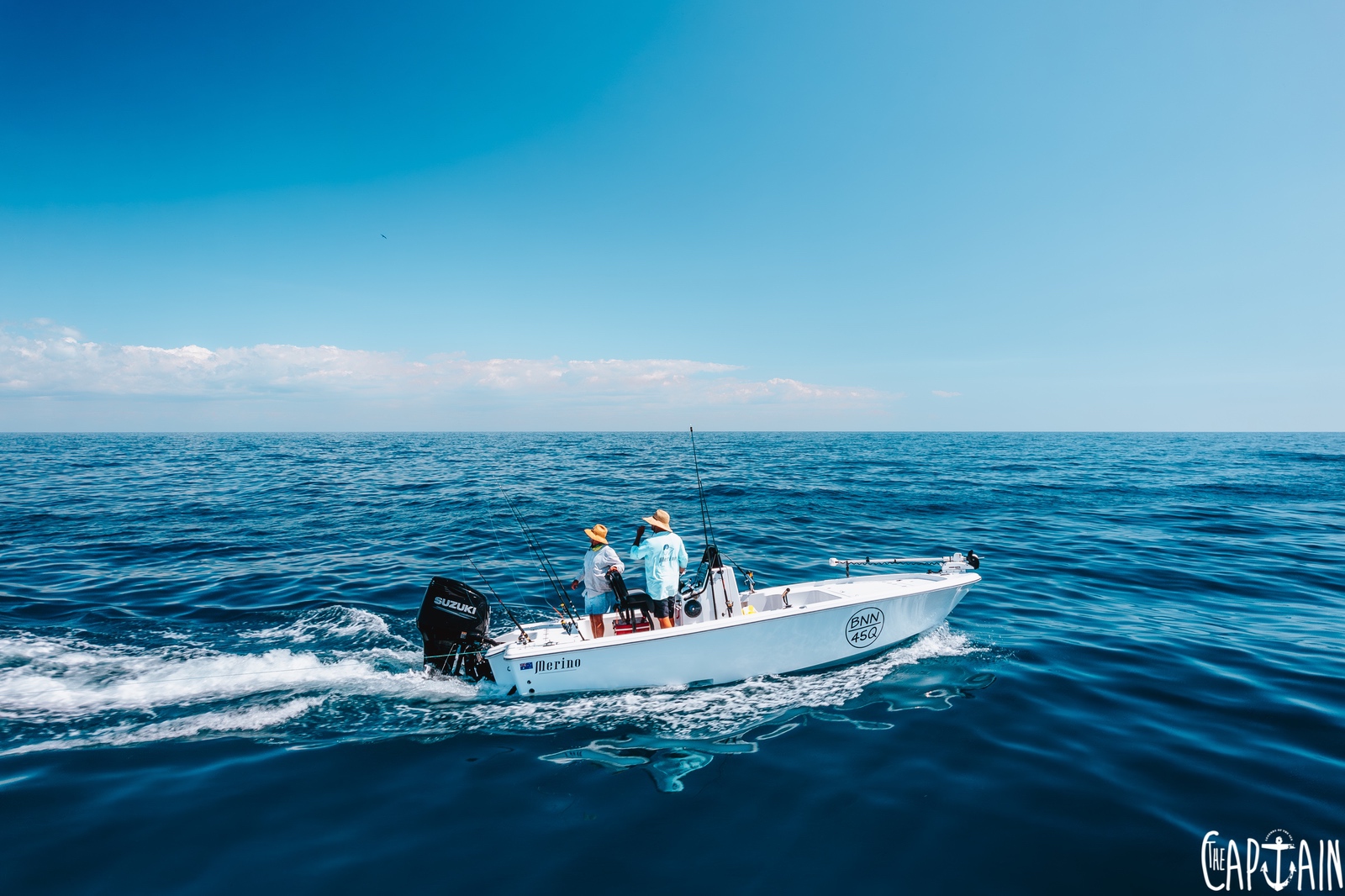
Davo reckons this might be his forever boat. “Even if we move away, I can still be chasing tuna. It’s easy to tow, easy to launch, such a versatile boat. It gets heaps of compliments and everyone wants to come for a spin. It’s my little baby and I spend plenty of time cleaning and looking after it. It was a long time in the making, but definitely worth it.”
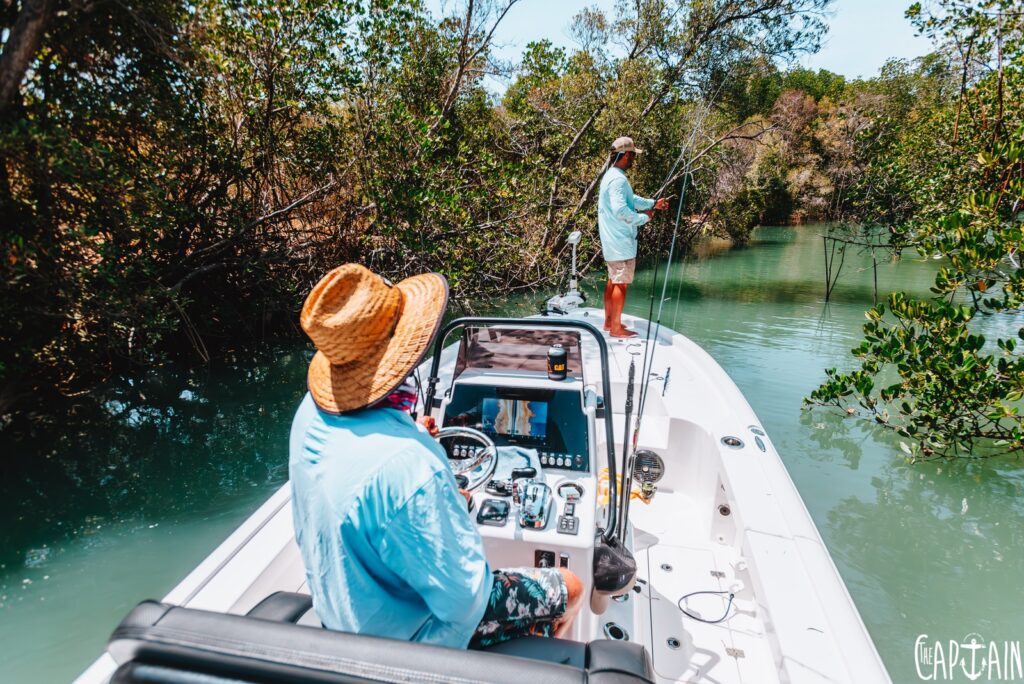
Tommy is just happy his mate bought hull number one. “He put a lot of trust in us and the look on his face says it all. He rings me after every other fishing trip to tell me it’s the best boat ever. Sometimes, I can’t believe we built this bloody thing. It’s a lot more than just our first boat and I feel married to it. It goes to show what a persistent bunch of idiots can achieve. There’s a $20 note, a $1 coin and a Winnie Blue durry laminated in one of the front bulkheads to remind us where we came from.”
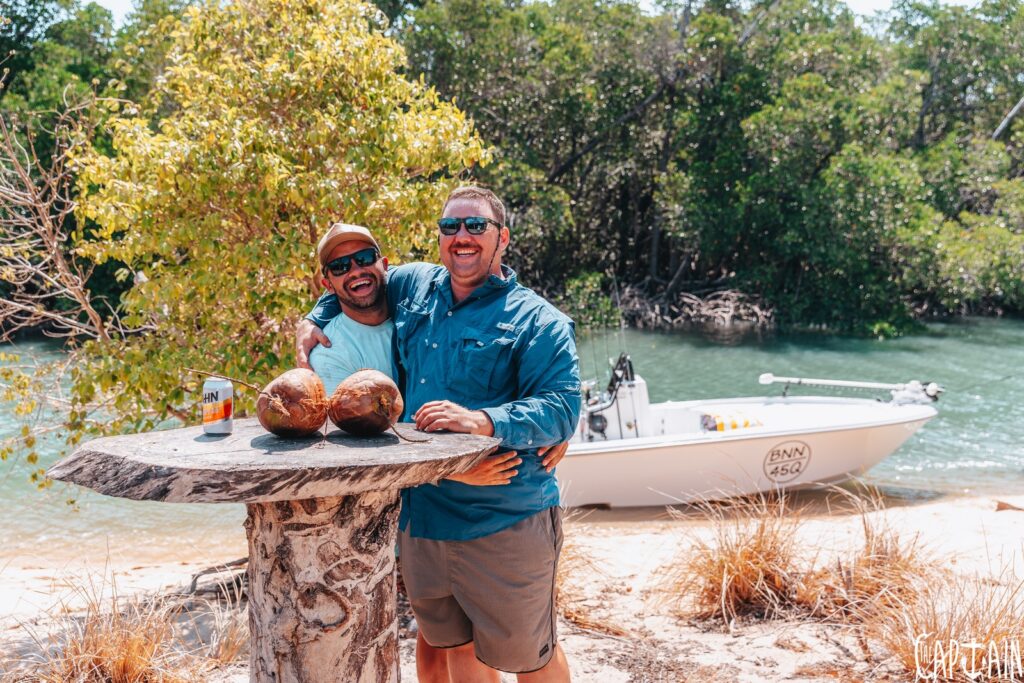
So, would you change anything, Davo?
“It’s only 12 months old, but this boat’s perfect, there’s nothing I’d change. If I had to build another one, maybe I’d put a bit of non-skid on the gunwales. So if you’re standing on the back and want to fight a fish, you can run up the side and not have to worry about slipping over.”
Sounds like a satisfied customer to us.
THE CAPTAIN’S CALL
The Merino Hybrid 6.8m is built for casting and touring. For blokes who rate fly-fishing for permit as heaven, this boat will get you there — no mothership required. If you’re a Top End guide or have a love of fly/sports-fishing, this is a top tool.
The ergonomics are off the hook, it’s a seamless boat to work on, and it’s mounted on a stable pontoon that blasts across the waves at 35 knots, smashes over a two-foot swell or wave chop, but also chases barramundi in 200mm of water.
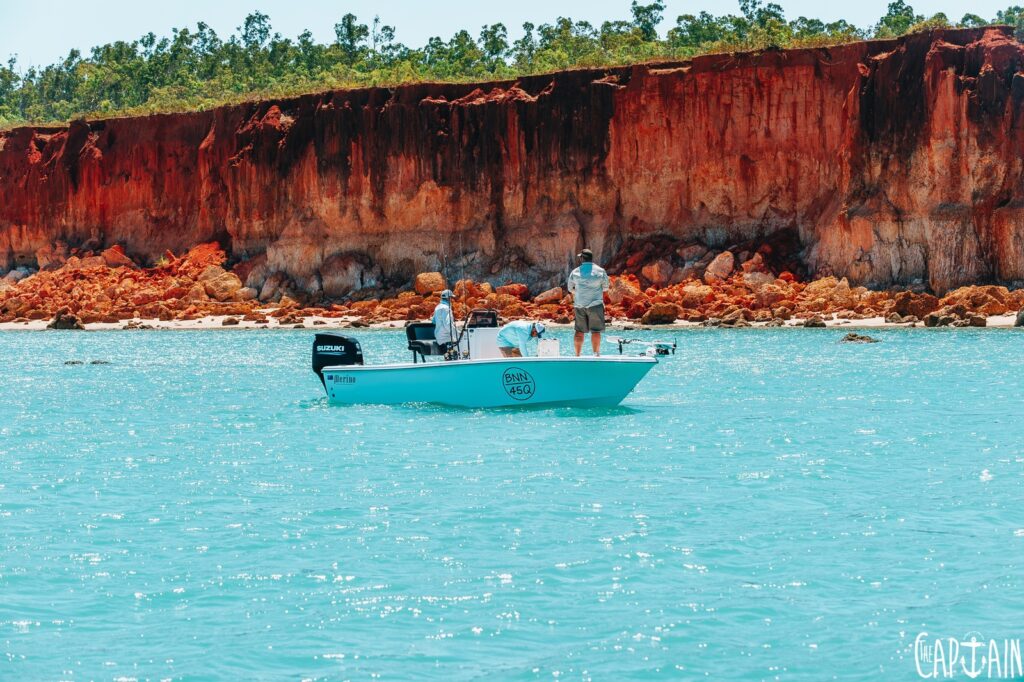
It bridges the waves so well, it can run horizontal. The full bow is confidence-inspiring down sea. It’s not the softest into a head sea, there are softer-riding 22-footers around, but they carry more deadrise. That’s the compromise you pay to sneak up creeks for barra.
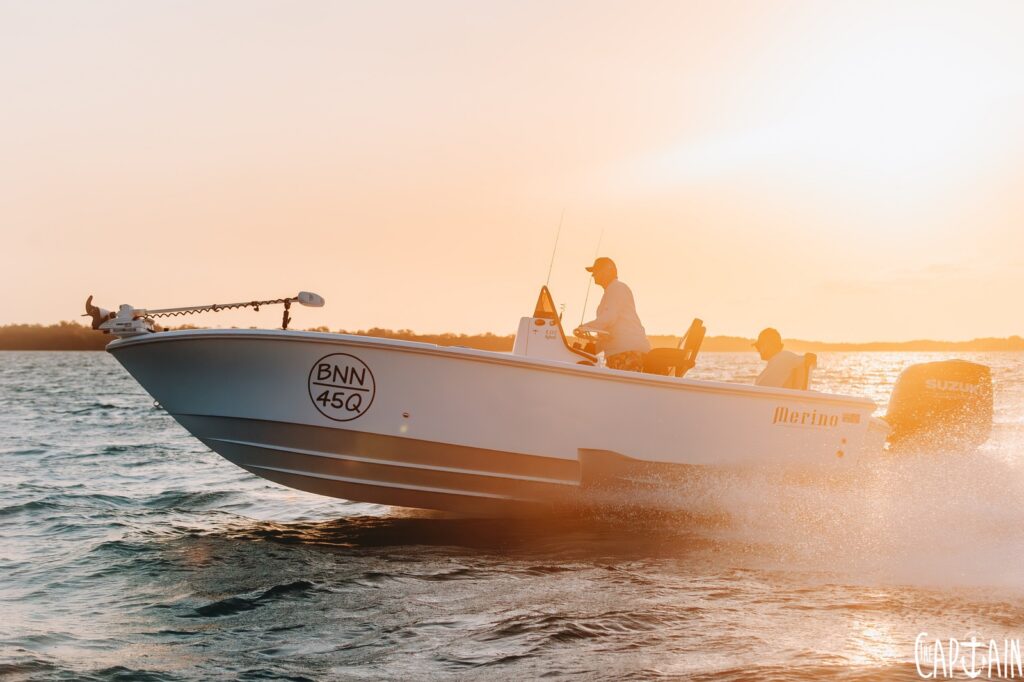
At 27–28 knots, the hull lifts from the surface, much like the SharkCat. It’s liberating, but we’d prefer that feeling at 22–23 knots — probably a safer speed, as not everyone will drive this boat like they stole it. And maybe a four-blade prop to lift the arse up would help.
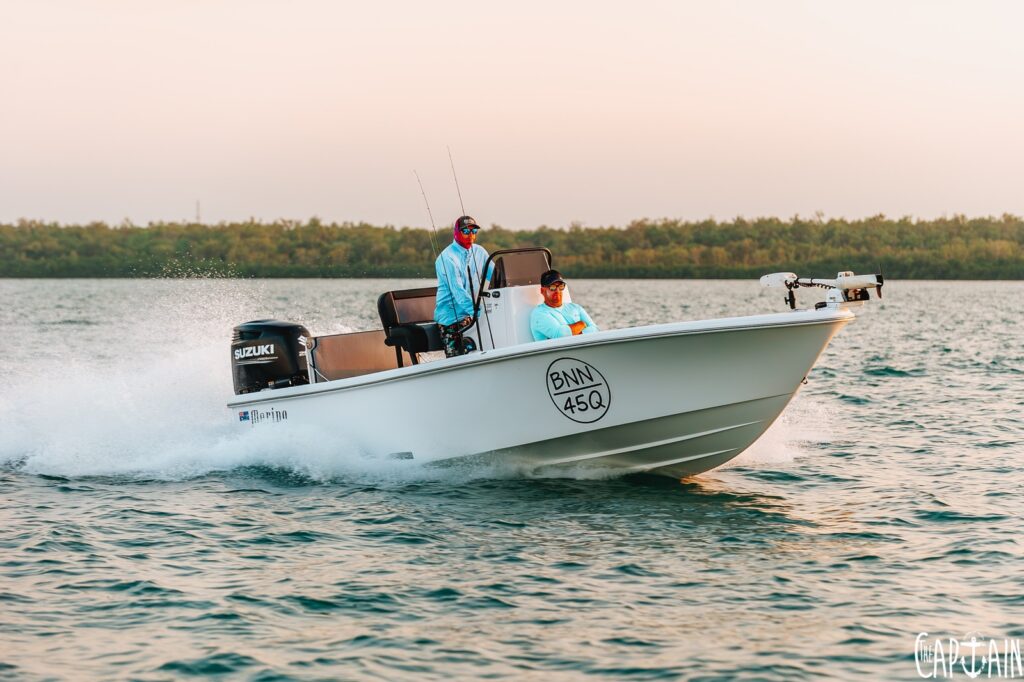
The console is too low and too far back — there isn’t much room at the rear when you’re fishing. We’d move it a bit further forward to open up that space. There’s also not a lot of freeboard, but that’s not what this boat is about.
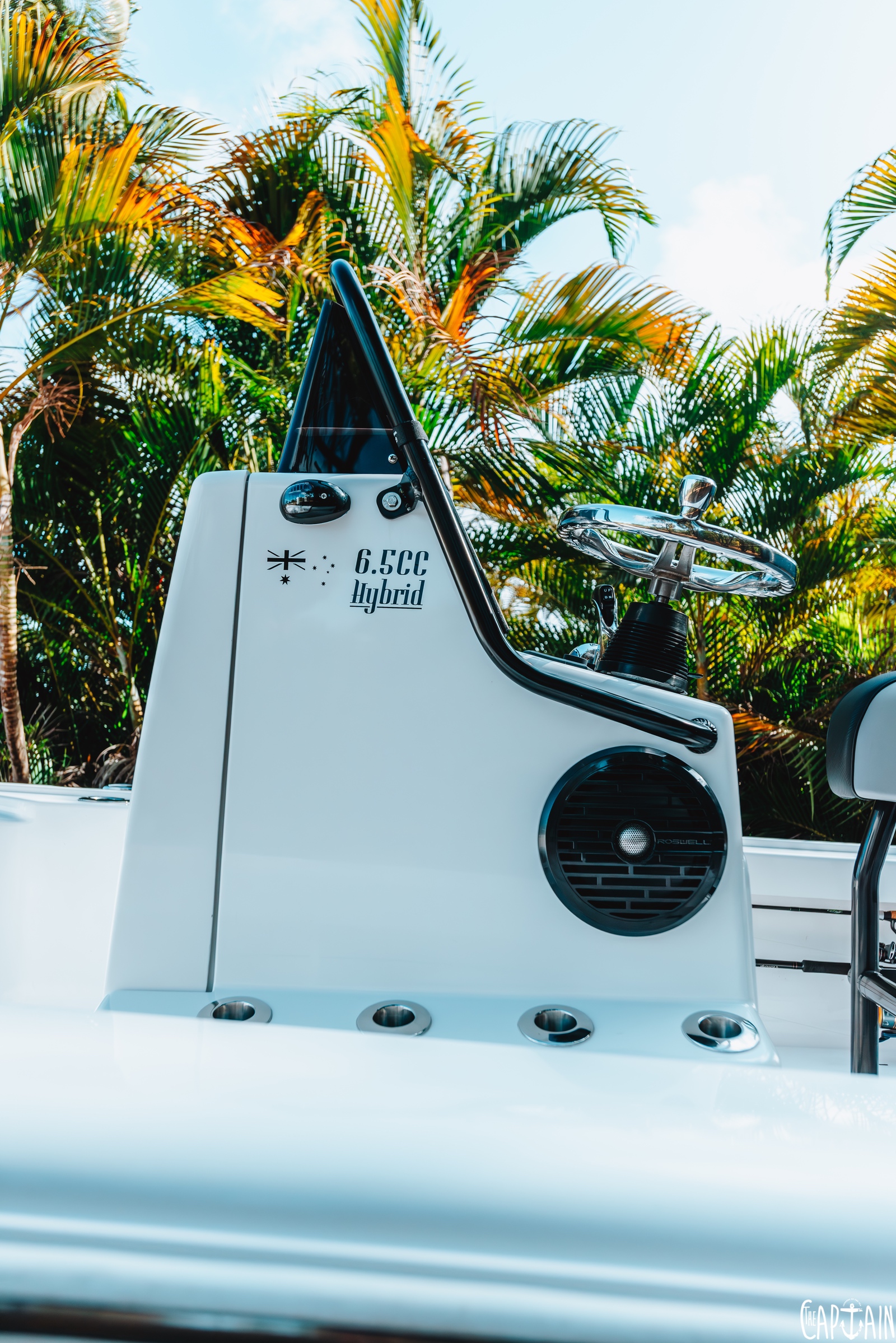
So much thought has gone into building a highly effective tool to provide the best fishing experience. There is the guttering system, resin infusion, copious storage. There are no exposed cleats or hinges to hook up a line. It’s a relatively light, strong boat that stays dry. We punched through some shit and there was not one drop of water in those hatches.
MERINO HYBRID
Length: 6.8m
Beam: 2.4m
Deadrise: 20°
Fuel capacity: 300L
Hull weight: 1000kg
BMT weight: 2100kg
Recommended HP: 225HP
Maximum HP: 300HP
ENGINE SPECS
Model: Suzuki DF250AP
Type: 24-Valve DOHC V6
Displacement: 4L
Weight: 290kg
THUMBS UP
- Ergonomics are off the hook
- Can blast over waves at 35 knots or sit in 200mm of water
- Bridges waves incredibly well
- Liberating when the step kicks in and the hull lifts
- Extensive underfloor storage
- Flush-mounted hinges
- Water drains off the deck
- Underfloor storage is extensive
- Sexiest boat at the boat ramp
THUMBS DOWN
- Would prefer if the step kicked in at 22-23 knots rather than 28 knots
- Console is too low and too far back
- Not a whole lot of freeboard when fishing offshore